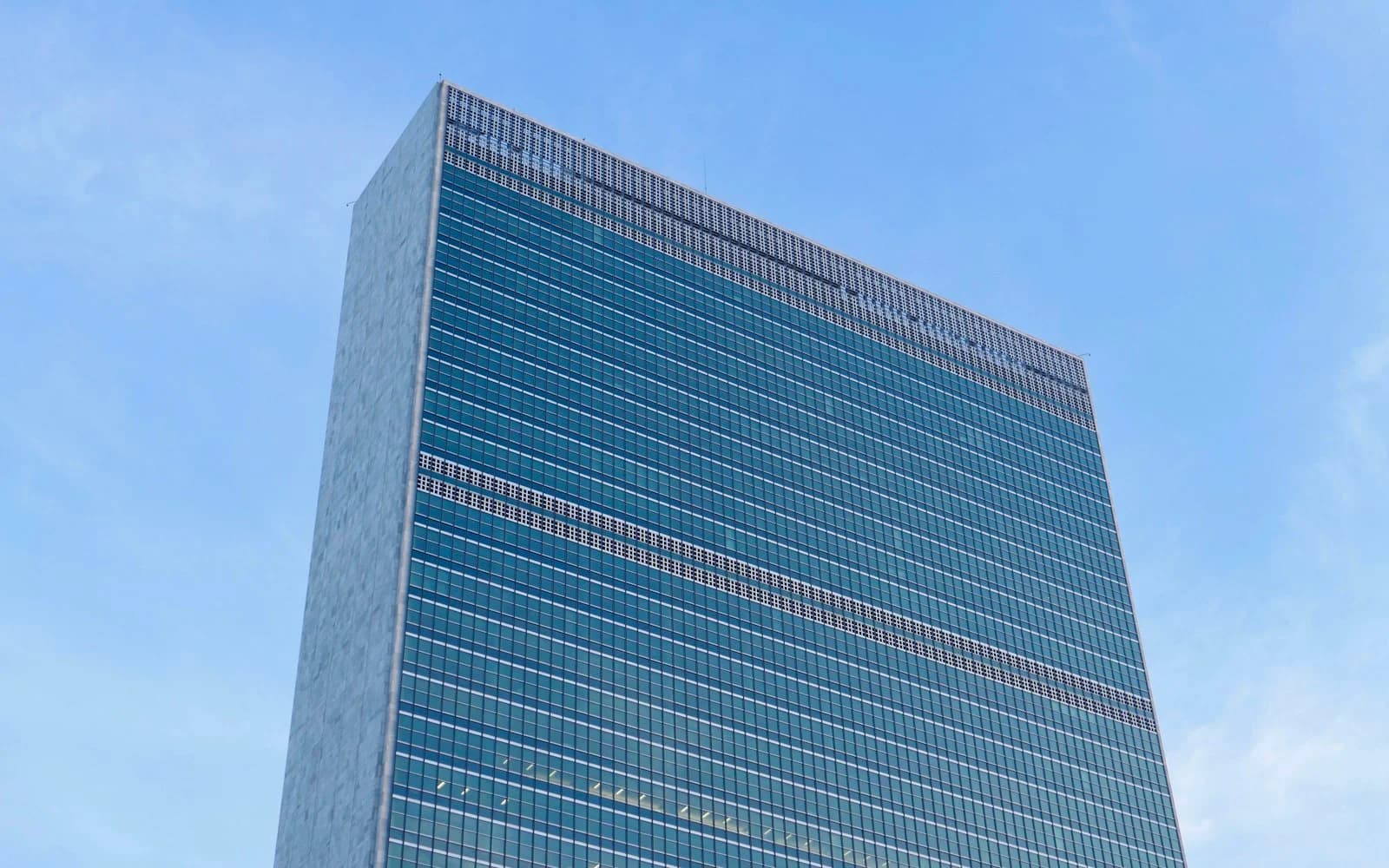
United Nations Secretary-General António Guterres told the UN Security Council in New York on 24 November 2026 that "killer robots must have no place in our future" and renewed his call for urgent negotiations on a legally binding treaty on lethal autonomous weapons, warning that AI-enabled targeting is already shaping life-and-death decisions in today's wars.
He was speaking at a high-level open debate titled "Conflict resolution in an era of rapid technological change", convened by Latvia, which holds the Council presidency for November. According to the UN's meeting programme, Latvian President Edgars Rinkēvičs was expected to chair, with briefings also scheduled from Jenna Russo, Director of Research at the International Peace Institute; Mirjana Spoljaric Egger, President of the International Committee of the Red Cross (ICRC); and Frederick Humphries, Microsoft's Corporate Vice President of US Government Affairs.
What did Guterres say about AI in war?
He said AI has "entered the battlefield in troubling ways", with wars becoming proving grounds for AI-enabled targeting and algorithms reportedly playing a growing role from intelligence gathering to target selection. According to his published remarks, he warned that these tools are within reach of both States and non-State armed groups.
Guterres said machines that choose targets and kill without human control are "morally repugnant and politically unacceptable". He added that when civilians are killed, the answer must never be "the algorithm did it", and said technology companies should weigh the legal risks they face if their services contribute to violations of international law.
On nuclear weapons, he called any integration of AI into nuclear command, control and communication systems "a recipe for catastrophe" and said the decision to use such weapons must rest with human beings alone.
What other risks did he flag?
Guterres named two more dangers. First, he said AI has "turbocharged" the spread of falsehoods, noting that a fabricated voice or video can derail a peace process or incite violence, and that such attacks often target women politicians and peacemakers. Second, he described an "uncontrolled race" driven by commercial interests and geopolitical rivalry, saying the rush for critical minerals and the energy and water use of AI data centres are already inflaming tensions.
He urged the countries with the greatest AI capabilities to adopt confidence-building measures, including direct communication channels to avoid miscalculation, and said the concentration of AI power in a handful of countries and companies "should worry us all".
Does he see any benefits?
Yes. Guterres opened by saying emerging technologies could help anticipate food insecurity and displacement, detect and clear landmines, use uncrewed systems to evacuate the wounded, and make UN peace operations more effective. But he cautioned that more information does not always mean better decisions and that technology cannot replace the human trust on which peace depends.
Why does this matter now?
UN News reported that around 100 countries pushed in Geneva last week for negotiations on a binding instrument on lethal autonomous weapons, an effort that fell short. It also reported that a new informal Council expert group on technology, peace and security held its first meeting on 18 November.
The debate came a day after Guterres asked member states to begin talks on a global AI risk framework, which MapMyTimes reported from Bridgetown, Barbados. On 24 November he again pointed to the Global Dialogue on AI Governance and the Independent International Scientific Panel on AI as forums to agree common baselines for frontier systems and work towards a multilateral risk framework with independent oversight.
What happens next?
The UN's live coverage did not report any resolution or formal statement from the meeting. Whether member states move towards treaty talks on autonomous weapons, as Guterres has repeatedly urged, remains to be seen.