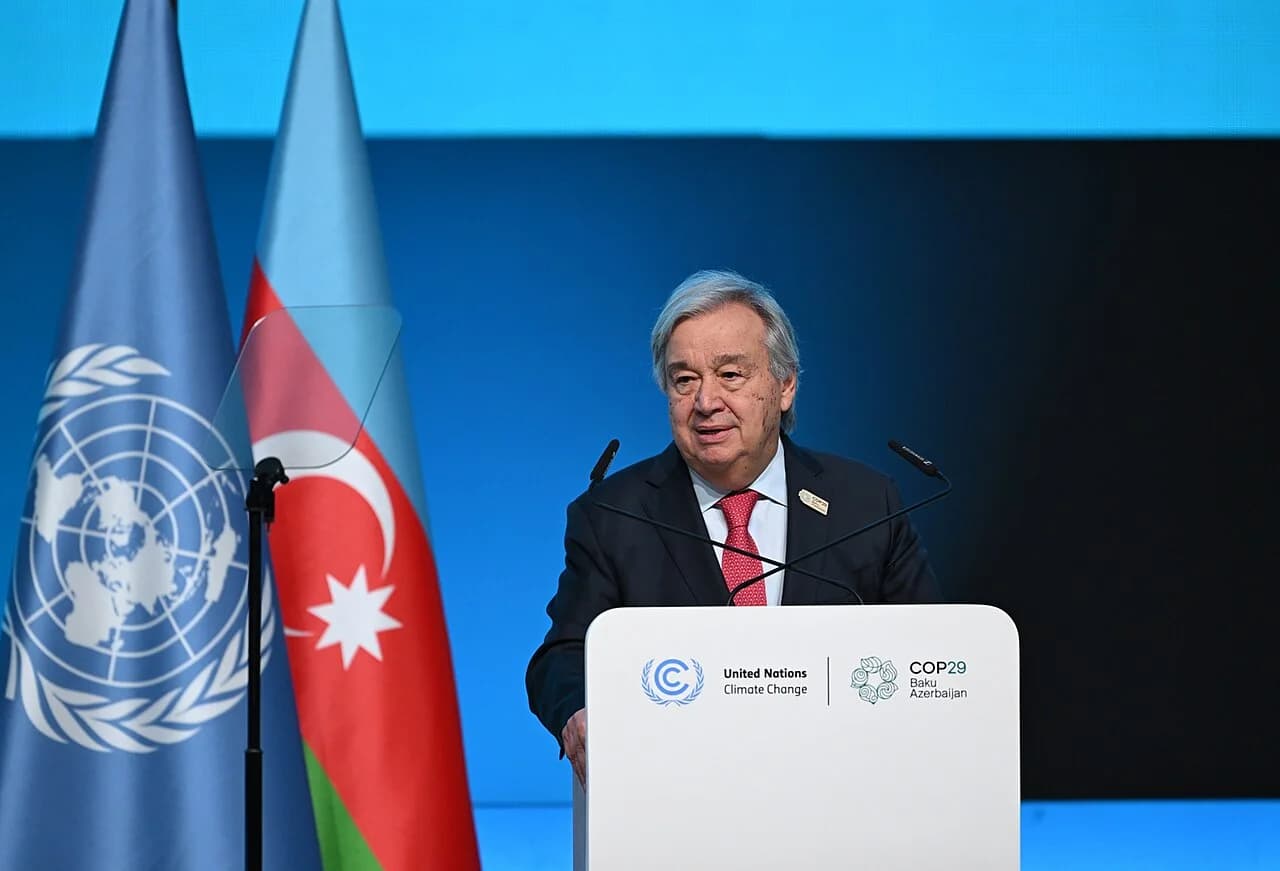
United Nations Secretary-General António Guterres on 24 November 2026 urged Colombia to renew its commitment to the 2016 Final Peace Agreement with the former Revolutionary Armed Forces of Colombia–People's Army (FARC-EP), marking ten years since the accord was signed in Bogotá. His message, issued by spokesperson Stéphane Dujarric, came hours after a car bomb tore through the Meta department government headquarters in the central Colombian city of Villavicencio.
"Ten years ago, the people of Colombia took an inspiring step toward peace," Dujarric said on Guterres's behalf, according to UN News. The agreement, signed on 24 November 2016, ended an insurgency that had lasted more than 50 years.
What did Guterres ask Colombia to do?
Guterres called for "a redoubled commitment" to implementing the deal in full, noting that five years remain in its implementation timeframe. He singled out three areas: the peaceful reintegration of former combatants into society, extending development and State institutions to marginalised territories and communities, and guaranteeing victims' rights through the transitional justice system.
He said he remained "deeply concerned about the violence plaguing regions still affected by conflict", but described the accord as one that "remains a valuable instrument at the disposal of Colombia's authorities" as they try to bring security and development to those areas, Anadolu Agency reported. He also commended the parties, Colombian institutions, civil society and the public, and said the UN would "continue to accompany these nationally led efforts".
Car bomb in Villavicencio on the eve of the anniversary
Late on Monday, 23 November, a car bomb exploded near the Meta Governor's Office in central Villavicencio, destroying parts of the building and damaging nearby properties. President Abelardo de la Espriella wrote on X that "they have just carried out a bombing attack on the Meta Governor's Office" and said no deaths had been reported, according to Agence France-Presse (AFP). Local media cited by AFP put the number of injured at around 20, while Anadolu reported that five security guards at the government headquarters were among those hurt.
De la Espriella blamed drug-trafficking groups, called the blast a terrorist attack and said there would be no dialogue with what he called "narcoterrorism". No group had claimed responsibility. Meta Governor Rafaela Cortés said she was coordinating with the army and police and that the state's response would be "firm, immediate and decisive", Anadolu reported. Ombudsman Iris Marín called the attack "unacceptable and painful", AFP reported.
What is confirmed and what is not
- Confirmed: the UN Secretary-General's anniversary statement and its three priorities; the car bomb in Villavicencio late on 23 November; the president's statement that no deaths had been reported.
- Not yet confirmed: who planted the bomb, and the final number of injured, which varies between reports.
Why it matters
The 2016 accord brought to an end more than five decades of armed conflict with the FARC-EP, and a UN mission has followed its implementation on the ground. Guterres's statement combined praise for what has been achieved with a clear warning that violence persists in former conflict zones. The Villavicencio attack, coming on the eve of the anniversary, underlined that warning.
It also highlights a political shift in Bogotá: De la Espriella's public rejection of talks with armed drug-trafficking groups signals a security-first approach, while the UN continues to stress reintegration, rural development and victims' rights as the core of lasting peace.
What next
With five years left in the agreement's implementation timeframe, attention will turn to whether the government keeps funding reintegration and rural programmes, and to the investigation into the Villavicencio bombing. Police said they would deploy resources to identify and prosecute those responsible.
Photo source · K.sarmientorojas, CC BY-SA 4.0