After decades in which the story of the world's mangrove forests was almost entirely one of loss, satellite records now show the trend has turned. A study based on four decades of Landsat imagery has found that mangroves began a global recovery around 2010, NASA's Earth Observatory reported on 13 November.
What the study found
The research, led by Z. Zhang and published in the journal Science under the title "Unexpected expansion and regrowth in Earth's mangrove forests over the past four decades", examined changes in both the area and the density of mangrove canopies between 1984 and 2023.
- Between 1984 and 2010, the world lost close to 3,000 square kilometres of mangroves.
- After 2010, nearly 2,000 square kilometres were gained back.
- Many of today's mangrove forests have thicker, more closed canopies than they did in 2010, a sign of healthier and less degraded stands, particularly in South America.
Asia, Australia and South America led the recovery. According to Zhang, who is at Tulane University, roughly two-thirds of the gains came from mangroves spreading into new places, while about one-third came from restoration and regrowth on degraded land.
Myanmar's turnaround
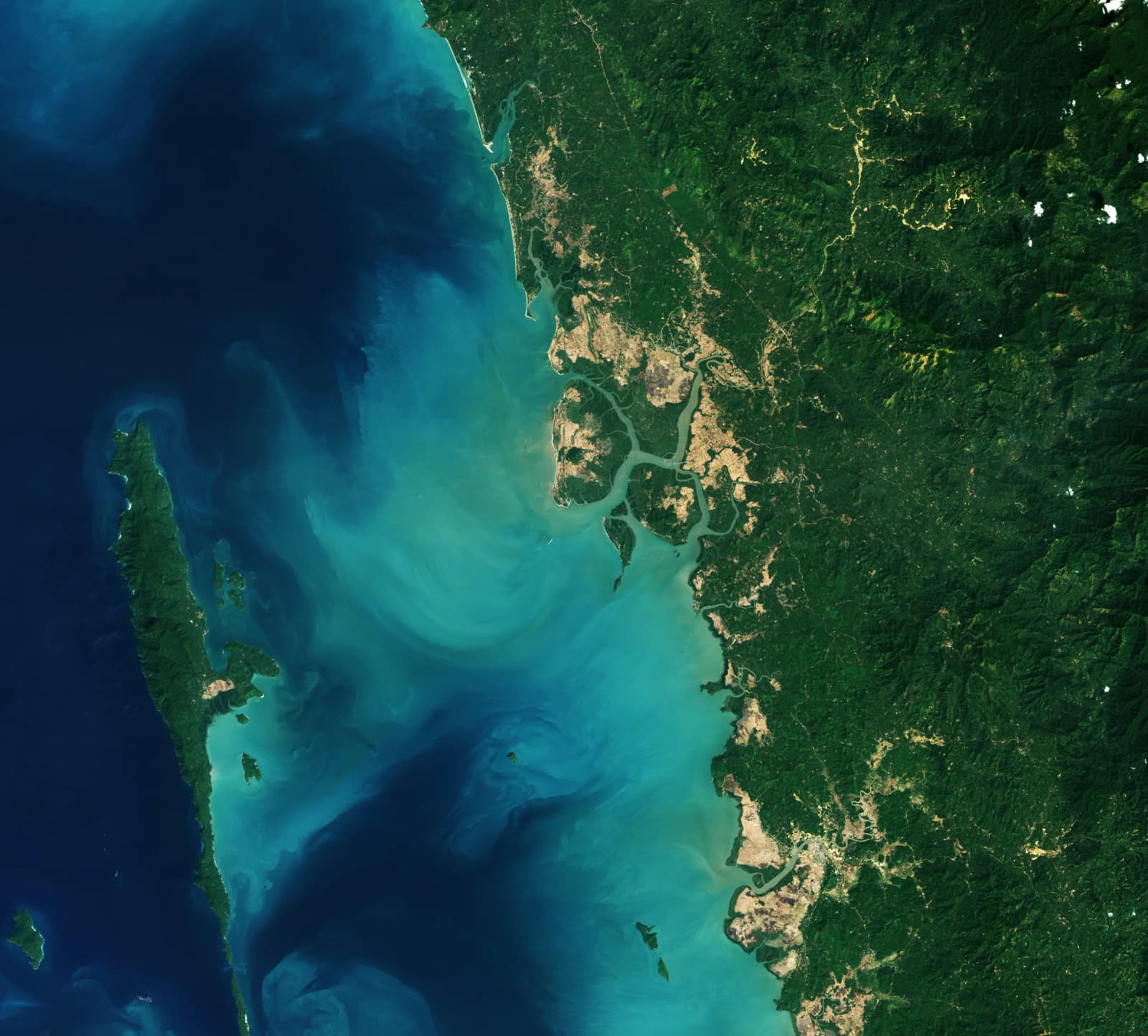
The Earth Observatory highlighted Myanmar (which NASA refers to as Burma) as an example. The country cleared mangroves quickly in the 1980s and 1990s for farming, aquaculture and firewood, losing 28.6 per cent of its mangrove area between the 1980s and 2010. Since then, the area has grown by about 10 per cent.
The study's authors linked the reversal to greater awareness and restoration efforts after the 2004 Indian Ocean tsunami, tougher legal protection for forests, and heavy sediment deposits that formed fresh mudflats. Landsat images of Palaw Township in Myeik District, taken in February 2010 and February 2026, show regrowth largely on abandoned rice fields near Kyauktaung. Deforestation, however, remains a common problem in the country, the agency noted.
Why mangroves matter
Mangrove ecosystems can hold up to four times as much carbon as taller tropical forests inland. They shield coastal settlements from erosion and storm surges, and their stilt-like roots serve as habitat and nurseries for fish, shrimp and crabs.
Gains are not universal
Natural forces have helped in some places. Sediment has built new mudflats near the mouth of the Amazon and in northern Australia, which mangroves have colonised steadily since the 1990s. Warmer conditions and fewer freezes have also let mangroves push towards the edges of their range, including in the southeastern United States.
Elsewhere, losses still outweigh gains. The Niger Delta has lost substantial areas, pulling down the total for West and Central Africa since 2010, while tropical cyclones have caused widespread degradation in North America and southern Africa.
What comes next
Zhang cautioned that the recent improvements "should not be seen as grounds for complacency". He said that protecting existing forests and slowing deforestation, alongside natural spread and regeneration, can make a large positive difference, a message that points to continued monitoring and conservation rather than a declaration of victory.