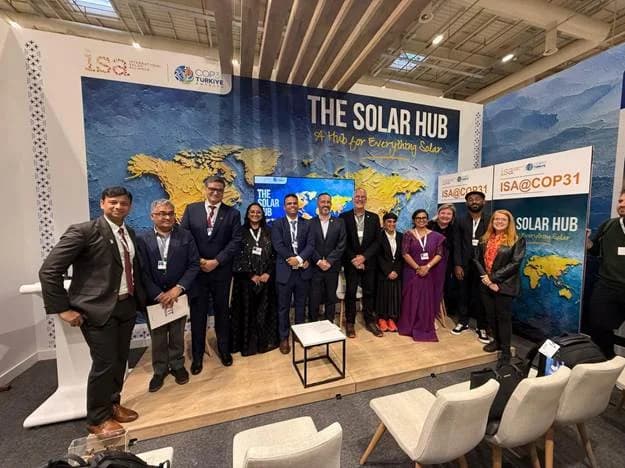
The UN climate summit in Antalya, Türkiye, moves into its second and final week on Monday. Ministers now take charge of the hardest questions, and they arrive with the big fights still open. A draft on how much money should flow to countries adapting to a hotter world is on the table. A proposal to wrap the summit in a single headline "cover decision" is being challenged by some of the largest producers and emerging economies. This explainer sets out where COP31 stands, what India wants, and what to watch before the scheduled close on 20 November. For our report on the climate march and the midpoint of the talks, read our earlier coverage here.
What happened in week one
Talks opened on 9 November without the agenda row that has delayed past summits. Climate Home News reported that UN climate chief Simon Stiell called progress "constructive" and urged governments to tackle the hardest issues quickly. But by the end of the first week, the same outlet described progress as limited. Campaigners marched through Antalya on Saturday, and a stocktaking plenary chaired by the two presidencies was set for Saturday night, where countries were expected to show their first red lines.
COP31 has an unusual arrangement. Türkiye hosts the summit and its minister Murat Kurum leads the voluntary Action Agenda, while Australia's climate minister Chris Bowen runs the formal negotiations. Bowen said the co-presidency had worked "exceedingly well" and suggested it could serve as a model for future summits.
Background: the cover decision fight
A cover decision is an overarching political text that summarises what a summit achieved. It is not on the formal agenda. Simon Evans of Carbon Brief noted that Russia had publicly questioned whether such a decision is legal at all, but pointed to precedent from recent COPs and said he expected the text to go ahead.
The bigger issue is who supports it. Climate Home News reported on 12 November, citing sources, that Russia, Saudi Arabia and the Like-Minded Developing Countries, a negotiating group that includes India and China, had questioned the process Australia proposed and whether a cover decision is needed at all. Cosima Cassel of the think tank E3G told the outlet that the presidency started the process early to give countries "a chance to prepare", but that this had "opened them up for criticism". Analysts quoted in the same report said it was too early to say whether opposition was a red line or a bargaining tactic.
On 13 November the presidencies published a "summary of reflections" from the first consultations. They stressed that it "is not intended to reflect consensus, nor the strength or prevalence of views expressed". According to Climate Home News, the menu includes limiting the size and length of any overshoot of 1.5°C, a target to raise electricity's share of final energy use to 35% by 2035, a follow-up to the goal of tripling adaptation finance, action on methane, welcoming the COP30 presidency's fossil fuel transition roadmap, faster carbon capture and removal, and a time-bound phase-out of "unilateral climate trade measures", which the outlet read as a reference to the EU's carbon border levy. Countries could send written views until Saturday, and a first draft is expected early this week.
Timeline so far
- 3 November: Environment Minister Bhupender Yadav sets out India's priorities in New Delhi.
- 9 November: COP31 opens in Antalya; the UNFCCC schedule lists the session as running to 20 November.
- 10 November: Heads of delegation propose ideas for a cover decision; Russia objects, Carbon Brief reports.
- 13 November: The presidencies publish their non-consensus "summary of reflections".
- 14 November: A draft on the global goal on adaptation appears; written submissions on the cover text close; a stocktaking plenary is scheduled for the night.
- 16–20 November: Ministers take over the most contested files, and closing plenaries are scheduled towards the end of the week.
Verified data: the adaptation money gap
Adaptation finance is one of the main unresolved files that ministers inherit from the first week, according to Climate Home News.
The new adaptation draft carries two directions, according to Climate Home News. Africa's top priority is to triple adaptation finance to "at least $120 billion per year by 2035". Another option would launch a review of the target's baseline, size and scope, which African countries are expected to resist.
Perspectives
The presidency: Bowen has repeatedly said the cover decision should not be a "lengthy political statement". He described the draft on a Just Transition Mechanism as "comprehensive" and said there was "strong interest" in an ambitious outcome.
The EU: Climate Home News reported that EU negotiator Wopke Hoekstra signalled the bloc may drop its demand that the electrification pledge be "clean", to win more signatories, and that the European Commission supports addressing overshoot in the cover text.
Civil society: Tasneem Essop of Climate Action Network said rich countries were "taking one step forward, three steps backward" on finance. Harjeet Singh of the India-based Satat Sampada Climate Foundation warned: "I fear that this COP is not going to be a COP of implementation, but a COP of distraction."
Fossil fuel producers: Saudi Arabia and others questioned the scientific basis of UNEP's overshoot report because it is not peer-reviewed, Climate Home News reported, and the Arab Group opposed references to the COP30 roadmaps in any decision.
What India wants, and why it matters to Indian readers
At a briefing on 3 November, reported by All India Radio, Yadav said India would pursue "solution-oriented and equitable climate action" in Antalya. He made climate finance a key priority and said mitigation talks and the Global Stocktake must remain "Party-driven, facilitative and non-punitive". India said it would coordinate with the G77 and China, the Like-Minded Developing Countries and the BASIC group of Brazil, South Africa, India and China.
Several of the week's decisions touch India directly. The EU carbon border levy affects exporters, and a trade clause in the cover text could reopen that argument. Former Indian negotiator Ajay Mathur told Climate Home News that India and other large developing countries might struggle to accept a global "35 by 35" electrification target, even as India rapidly expands renewables, because countries start from different points. And any finance target for adaptation shapes how much support could flow to climate-exposed sectors, which Yadav has linked to agriculture and small farmers in earlier remarks reported by Indian media.
What is established and what is uncertain
Established
- COP31 is scheduled to run from 9 to 20 November 2026, according to the UNFCCC's overview schedule.
- The presidencies' summary of cover decision ideas is, in their own words, not a consensus document.
- India's stated priorities, from the minister's own briefing, are finance, equity and a non-punitive approach to mitigation.
Uncertain
- Whether a cover decision will be adopted at all, and in what form; Russia, Saudi Arabia and the LMDC group have questioned it, according to sources cited by Climate Home News.
- Whether the adaptation text will set a firm figure such as $120 billion by 2035 or open a review instead.
- India's own public position on the cover decision and the electrification pledge; the reports cite group positions and analysts, not an Indian government statement.
- Whether the "35 by 35" electrification pledge, which the Day 5 bulletin said at least 15 countries have publicly backed, will be referenced in the final text.
Next steps
A first draft of the cover decision is expected early this week, and ministers will lead consultations on the cover text, adaptation finance, the Mitigation Work Programme, electrification and the Just Transition Mechanism. Closing plenaries are listed for the end of the week, though UN summits often run beyond schedule. Whether Antalya is remembered as a summit of implementation or, in Singh's words, of distraction will depend on what ministers can agree in the next five days.