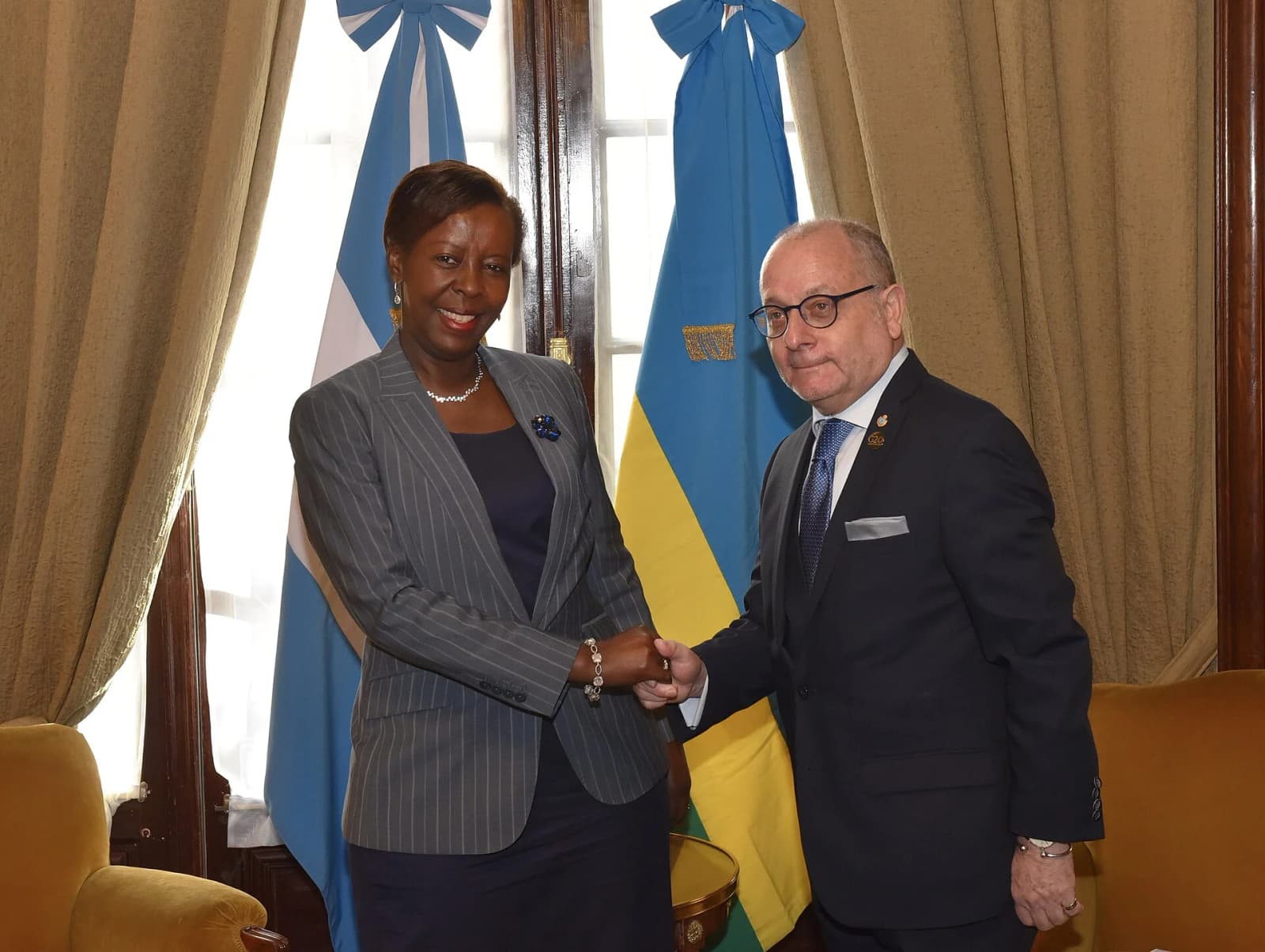
The Organisation Internationale de la Francophonie (OIF), the grouping of French-speaking countries, has put off the election of its next secretary general by a year after the Democratic Republic of Congo threatened to walk out of the body, France 24 and news agency AFP reported on Monday, 16 November, citing sources close to the matter. The vote had been due the same day at the organisation's 20th summit in Phnom Penh, Cambodia.
Under the arrangement described by those sources, Rwanda's Louise Mushikiwabo, the current secretary general, stays in the post until the delayed election, and Rwanda will not put up a candidate when the vote is finally held.
Why the vote was in trouble
DR Congo had warned that it would leave the OIF if Mushikiwabo was handed a third consecutive term, and had entered a candidate of its own, according to the report. Kinshasa accuses Rwanda of backing the M23 armed group operating on Congolese territory; Kigali denies the charge.
The report said four candidates were in the race, among them former Romanian prime minister Dacian Ciolos. Both Congolese President Félix Tshisekedi and Rwandan President Paul Kagame were at the summit, as was French President Emmanuel Macron, who had appealed for unity before the vote. France 24 reported that Macron's attempts to calm the row had angered Rwanda and reopened the debate on how much sway Paris holds in the organisation.
How the sides reacted
DR Congo's Foreign Minister Therese Kayikwamba Wagner welcomed what she called a "wise compromise" that would help "preserve the unity of the Francophonie", in a post on X quoted by AFP.
A source in Macron's office told the agency that the outcome "makes it possible to overcome divisions and preserve consensus within the Francophone family", and said the extra year would be used to reform the way the secretary general is appointed.
Ciolos was far less pleased. In a statement cited in the report he called it a "very sad day" for the organisation and said that "if we want the Francophonie to remain relevant", rebuilding trust among members had to be the "absolute priority".
The report did not carry any comment from the Rwandan government or from Mushikiwabo on the postponement.
Why it matters
The OIF counts DR Congo as the country with the most French speakers after France — 57.3 million by the organisation's own figures — so its exit would have been a heavy blow, France 24 noted. The body, which has 53 members and dozens of associates, already lost Mali, Niger and Burkina Faso last year, when the three military-led governments withdrew.
What happens next
The election is now expected in a year's time, with Mushikiwabo remaining in office in the interim. According to the source in the French presidency, members are to use the period to rework the appointment process. The details of the deal come from unnamed sources and officials' statements reported by AFP.