The United States Federal Communications Commission (FCC) on 25 November 2026 authorised SpaceX to put up to one million satellites into low Earth orbit that would work as data centres for artificial intelligence (AI). The constellation, which SpaceX calls Starmind, is far larger than anything launched so far, and the licence comes with deadlines and conditions that will decide how much of it is ever built. MapMyTimes reported the approval; this explainer looks at what the licence actually allows and what remains open.
What is an orbital data centre?
An orbital data centre is a satellite that carries computer chips to run computing workloads, such as AI processing, in space instead of in a building on the ground. The pitch is that a satellite can draw near-continuous solar power and does not compete for land, grid connections or water the way large ground-based data centres do. Space.com reported that SpaceX founder Elon Musk believes the future of AI compute lies in space, and that Starcloud and Google have already launched AI pathfinder satellites. Blue Origin asked the FCC in March 2026 for permission to launch up to 51,600 satellites under its Project Sunrise, according to CNBC.
Why is it in the news?
It is in the news because the FCC's Space Bureau granted SpaceX's application in a Memorandum Opinion and Order, DA 26-1273, adopted and released on 25 November 2026. The application had been filed on 30 January 2026 and accepted for filing on 4 February 2026, the order says. FCC Chairman Brendan Carr announced the decision on X, saying it "opens a bold new frontier for the computing infrastructure needed to power America's leadership and growth", as quoted by Space.com.
The order describes a constellation of 1,000,000 satellites in orbital shells between 500 km and 1,002 km altitude, at 30-degree and sun-synchronous inclinations. Space.com reported that SpaceX aims to launch the first Starmind satellites in the third quarter of 2027 on its Starship rocket. For scale, about 28,000 satellites have been launched since 1957, and the existing Starlink network has about 11,000 spacecraft, according to the same report.
What exactly did the FCC approve?
The FCC approved radio spectrum only for backup and emergency tracking, telemetry and command, because Starmind is designed to rely on laser (optical) links for its main communications. The grant allows Ka-band frequencies of 18.8–19.3 GHz (space-to-Earth) and 28.6–29.1 GHz (Earth-to-space) on an unprotected, non-interference basis, meaning SpaceX must stop if it causes harmful interference.
The licence is "granted-in-part, deferred-in-part". Key conditions in the order include:
- Deployment deadlines: one satellite in orbit by 25 November 2033, 10% of the authorised number by 25 November 2035, 50% by 25 November 2038 and the full constellation by 25 November 2040. Missing them voids the authorisation.
- Higher orbits on hold: before deploying any satellite above 600 km, SpaceX must file a modification application with a final orbital debris plan. Its request to dispose of some satellites in high "disposal" or heliocentric orbits instead of burning them up in the atmosphere was deferred.
- Licence term: 15 years, starting when SpaceX certifies its first Starmind satellite is in orbit and compliant.
- International filings: the constellation must be operated consistently with SpaceX's International Telecommunication Union (ITU) filings.
Who objected, and how did the FCC respond?
Amazon's satellite unit Kuiper Systems (Amazon Leo), Viasat and the American Astronomical Society (AAS) filed petitions to deny, the order records. CNBC reported that Amazon's March petition called Starmind a "lofty ambition rather than a real plan".
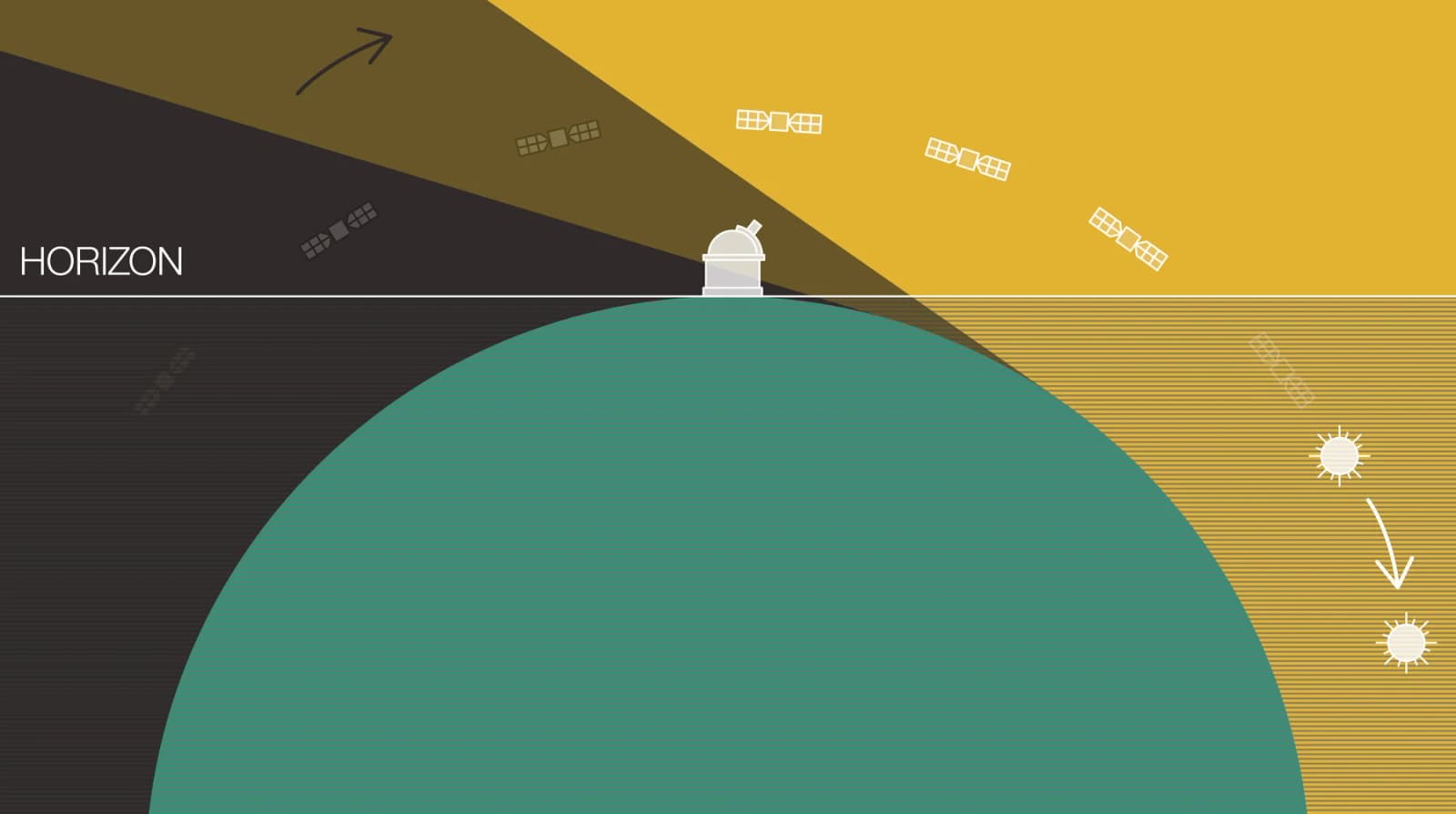
The FCC said it would not require further environmental review under the National Environmental Policy Act (NEPA), citing its October 2026 order treating space-based operations as outside US territory, and described concerns about re-entering satellites affecting the atmosphere as "speculative". On astronomy, it relied on SpaceX's commitment to coordinate with the US National Science Foundation, and said the AAS concern about waste heat brightening the infrared sky fell outside the scope of a radio licence. Earthjustice senior attorney Jan Hasselman criticised the decision for skipping NEPA review, according to CNBC.
How does it affect you?
For now it does not change any service people use, because Starmind is a computing network, not a broadband service, and no satellite has been launched. The longer-term effects would be felt more widely: more satellites mean more traffic in low Earth orbit, where collision avoidance becomes harder, and more objects that can streak across telescope images and the night sky seen from anywhere, including India. SpaceX told the FCC it would steer satellites to re-enter over the ocean and that each satellite is designed to burn up fully, the order notes.
What is established, and what is uncertain?
Established: the FCC granted the licence on 25 November 2026 with the conditions listed above; the 600 km limit and the deployment deadlines are written into the order.
Uncertain: whether the technology is commercially viable, how many satellites will actually fly, and how quickly. Space.com noted that Starship carries up to 60 next-generation Starlink satellites per launch and that each satellite is expected to last about five years, implying a very large and continuing launch cadence. The order also gives SpaceX 30 days from release to decline the grant as conditioned.
What happens next?
SpaceX has to return to the FCC with a final debris plan before using orbits above 600 km, coordinate its backup radio links with US federal users, and launch its first satellite by November 2033 to keep the licence alive. Rival filings, including Blue Origin's, remain pending, and objectors could seek further review of the decision.
Photo source · ESO/L. Calçada, CC BY 4.0