Nepal's Prime Minister Balendra Shah arrived in New Delhi on Sunday, 22 November 2026, for a two-day State visit, and he holds delegation-level talks with Prime Minister Narendra Modi on Monday, 23 November. It is Shah's first bilateral visit abroad since he took office in March. This explainer sets out what the relationship involves, why this visit matters, what it could change for ordinary people and what is still undecided. Our news report on Shah's arrival has the day-one details.
What is the India-Nepal relationship built on?
India-Nepal ties rest on an open land border, deep trade dependence and a growing exchange of electricity. India is by far Nepal's largest trading partner. According to the Commerce Wing brief of the Embassy of India in Kathmandu, two-way merchandise trade was worth about US$ 9.38 billion in 2025-26, roughly 62.3% of Nepal's total merchandise trade. The same brief says India accounts for more than 32.3% of Nepal's foreign direct investment stock, as of mid-July 2024.
The trade is lopsided. Nepal's Department of Customs data for its fiscal year 2025/26, which ended in mid-July 2026, show imports from India of Rs 1,210.60 billion (Nepali rupees) against exports to India of Rs 258.65 billion, leaving a deficit of more than Rs 951.95 billion, as reported by Himal Press. Landlocked Nepal also relies on India for transit: a revised Treaty of Transit was signed on 1 June 2023 for seven years.
Electricity has become a two-way business. India first allowed Nepal to export 39 megawatts into its market in October 2021. By July 2026, the Nepal Electricity Authority said it was exporting about 1,000 MW on average, and Nepal earned a record Rs 29.32 billion from power sales to India and Bangladesh in 2025-26, according to The Kathmandu Post.
Why is it in the news?
It is in the news because a new Nepali government is setting out its India policy for the first time at the highest level. Shah, a 35-year-old former mayor of Kathmandu, was sworn in on 27 March 2026 after his Rastriya Swatantra Party won 182 of 275 seats in the 5 March election. That vote was the first since youth-led "Gen Z" protests toppled the previous government in September 2025, leaving 76 people dead, Al Jazeera reported.
Shah was received at the airport by Minister of State for Commerce and Industry Jitin Prasada and met External Affairs Minister S. Jaishankar on Sunday. On Monday he is scheduled to hold talks with Modi, followed by a joint press conference and an official lunch, and to call on President Droupadi Murmu. A Nepal-India Business Forum aimed at drawing Indian investment is also planned. His 34-member government delegation includes Finance Minister Swarnim Wagle and Foreign Minister Shisir Khanal.
India's Ministry of External Affairs said in a post on X that the visit "provides an opportunity to strengthen the enduring and multifaceted partnership", and placed it under India's "Neighbourhood First" policy.
What is on the table?
The main items are flood recovery, energy and connectivity projects. Floods in Nepal this year damaged hydropower plants. In September, India's Ministry of Power approved supplying Nepal with electricity for 18 hours a day until 31 December: 600 MW through the Muzaffarpur-Dhalkebar line and 54 MW through the Tanakpur-Mahendranagar line.
The Kathmandu Post reported on 5 November that Nepal is seeking more than US$ 2 billion for reconstruction: a US$ 1 billion line of credit, US$ 500 million in grants and US$ 500 million for rebuilding. Foreign Secretary Vikram Misri said in Kathmandu that India was "keen to engage in further, more detailed discussions" on the request.
The same report listed projects expected to be inaugurated, including the Bhairahawa integrated check post and the Nepal Police Academy at Panauti, and projects expected to begin, including the Dodhara Chandani check post, the Lower Arun hydropower project and a petroleum pipeline from Siliguri to Charali in Jhapa. Older commitments remain slow: Jagran English reported that the 669 MW Lower Arun and 480 MW Phukot-Karnali projects had not progressed, and that the Raxaul-Kathmandu railway has seen little movement after its surveys.
How does it affect you?
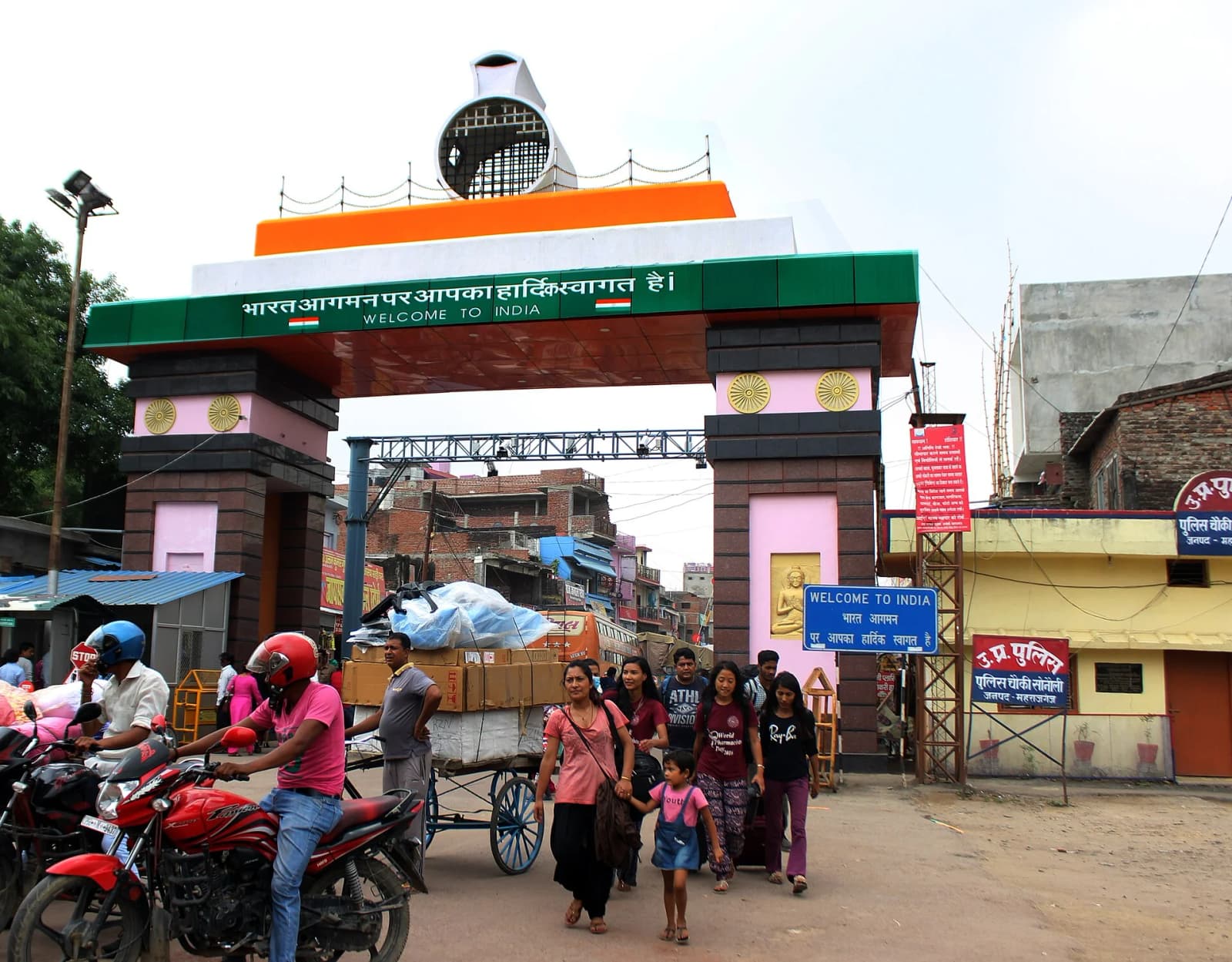
For most Indians, the effects show up at the border, on the power grid and in travel. Traders and transporters in towns along the open border depend on smooth crossings, so new check posts and transit arrangements matter to them directly. Electricity trade links Nepal's hydropower to Indian grids, and Nepal's exports rise in the monsoon while it imports in the dry season. For pilgrims, the planned Ayodhya-Janakpur train, which had a trial run on 5 November, could open a direct religious route; our explainer on the Ayodhya-Janakpur train covers what is known about it.
What is the border dispute?
The two countries disagree over Lipulekh, Kalapani and Limpiyadhura in the far west of Nepal, next to India's Uttarakhand. In June 2020, Nepal amended its constitution to adopt a new map showing these areas as Nepali, after India opened an 80-km road to the Lipulekh pass for the Kailash Mansarovar pilgrimage. All 258 members present in Nepal's House of Representatives voted for the amendment. India's then MEA spokesperson Anurag Srivastava said Nepal's claim was "not based on historical fact or evidence and is not tenable". The dispute remains unresolved, and reports describe it as on the agenda without saying what form any discussion will take.
What is established and what is uncertain?
Established: the visit dates, the official programme on 23 November, the make-up of Nepal's delegation, and the trade and electricity figures published by both governments' agencies.
Uncertain: which agreements will actually be signed, the size and form of any Indian flood-reconstruction package, and whether the boundary question will see any movement. India's assistance had not been finalised as of early November, according to The Kathmandu Post.
What happens next?
The next step is the Modi-Shah talks and joint press conference on 23 November, where any agreements and project launches are expected to be announced. After that, the test will be follow-through: several India-Nepal projects announced in past years, including the Pancheshwar multipurpose project, are still pending. MapMyTimes will update readers on what is signed.
Photo source · Sanu N, CC BY-SA 4.0