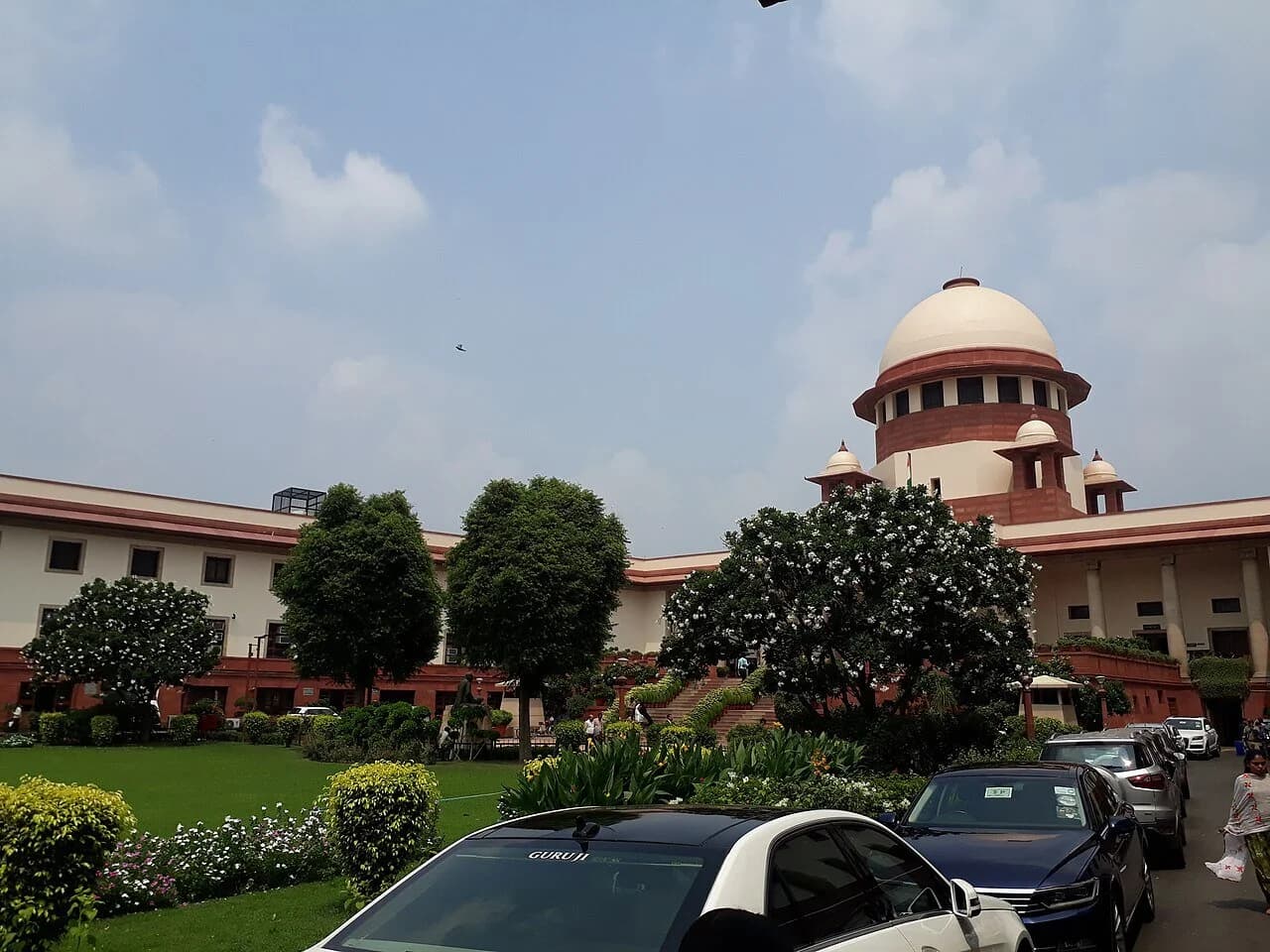
The Supreme Court on 20 November 2026 dismissed two applications from the Tamil Nadu government that asked for Karnataka to be directed to release about 11 thousand million cubic feet (TMC) of extra Cauvery water. The order by Justice Vikram Nath and Justice Aparesh Kumar Singh in New Delhi, reported by MapMyTimes, has put one of India's oldest inter-state river disputes back in the headlines. Here is what the case was about, how water-sharing is supposed to work, and what is still unclear.
Why is the Cauvery in the news?
The Cauvery is in the news because the Supreme Court refused Tamil Nadu's request for extra water from Karnataka. "We have dismissed (the application)," the court said while pronouncing the order, Bar and Bench reported. According to LiveLaw, Justice Nath also noted that Tamil Nadu had filed a third application the same day and said orally that it too would be dismissed.
What is the Cauvery water dispute?
The dispute is a long-running disagreement between Karnataka and Tamil Nadu over how the Cauvery's water should be shared. According to Bar and Bench, it goes back to two agreements, of 1892 and 1924, between the Madras Presidency and the princely state of Mysore.
After negotiations failed, the Supreme Court directed that a Cauvery Water Disputes Tribunal be set up. The tribunal gave its award in 2007, allowing Tamil Nadu to draw a fixed amount of water, but both states sought a review and the dispute continued. In 2016, Tamil Nadu went back to the Supreme Court after Karnataka said it had no more water to share from its reservoirs, and the court later asked the Centre to set up a management body. In 2023, the court declined to entertain a Tamil Nadu plea to raise its daily share from 5,000 to 7,200 cubic feet per second (cusecs), Bar and Bench reported.
What exactly did Tamil Nadu ask for?
Tamil Nadu asked the court to order Karnataka to make up a shortfall in the water it says it was owed this year. According to LiveLaw, the state said flows at Biligundlu, the measuring point on the inter-state border, were short by 11.719 TMC up to 6 October, and accused Karnataka of withholding water despite having enough in storage.
LiveLaw reported that Tamil Nadu claims an annual entitlement of 64 TMC under the tribunal's sharing arrangement. At an earlier hearing, the state said it had received only 14 TMC and argued that, even after allowing for lower flows in the basin, it was entitled to a proportionate 55.29% share, leaving a shortfall of about 20 TMC. Its application also said that Karnataka's four major Cauvery basin reservoirs held 77.537 TMC of gross storage as of 3 August.
In August, Tamil Nadu told the court it was facing a rain-deficient year and that the shortfall left it unable to supply water for irrigation, according to Bar and Bench.
What did Karnataka say?
Karnataka denied Tamil Nadu's allegations and said it was complying with the orders of the Cauvery Water Management Authority (CWMA), Bar and Bench reported. At a hearing on 17 August, Karnataka cited distress conditions in the Cauvery basin, according to LiveLaw.
Who decides how much water is released?
Day-to-day releases are handled by two bodies: the Cauvery Water Regulation Committee (CWRC), which recommends releases, and the CWMA, which endorses them. This year's sequence, as reported by LiveLaw, shows how it works:
- On 28 July, at its 139th meeting, the CWRC directed Karnataka to release water from the Krishnaraja Sagar and Kabini reservoirs so that 3,500 cusecs reached Biligundlu for 15 days from 29 July.
- On 30 July, the CWMA endorsed that recommendation at an emergency meeting. Tamil Nadu then told the Supreme Court that Karnataka had not complied.
- The CWRC later recommended 12,000 cusecs a day for 15 days from 12 August, which the CWMA upheld.
- On 17 August, the Supreme Court directed Karnataka to comply with the CWMA's directions and asked for a status report.
- On 24 August, Tamil Nadu said it had received the water directed by the CWMA but argued that the authority had not ordered Karnataka to make up the earlier deficit. It said it would raise the issue before the CWMA.
How does it affect people in the basin?
The ruling matters most to farmers who depend on Cauvery water, because releases from upstream reservoirs decide how much water reaches the delta. Tamil Nadu's own pleading, as reported by Bar and Bench, was that the shortfall had left it unable to supply water for irrigation. With the court declining to order extra releases, any claim for making up past shortfalls now rests with the CWMA process rather than a court direction. For people in Karnataka, the order means no additional court-ordered release beyond what the authority directs.
What is established and what is still uncertain?
Established: the Supreme Court dismissed Tamil Nadu's two applications on 20 November 2026, and Justice Nath said orally that a third application would meet the same fate. Both Bar and Bench and LiveLaw reported this.
Uncertain: the court's detailed reasons. Neither report quoted a written order explaining why the applications were dismissed, so it is not yet known whether the court rejected Tamil Nadu's figures, found that the CWMA was the right forum, or relied on some other ground. How the two state governments will respond had also not been reported.
What happens next?
For now, water releases continue to be handled through the CWRC and CWMA. Once the written order is uploaded, its reasoning will show how much room Tamil Nadu has to pursue the shortfall before the authority. Separately, the two states have another water dispute pending in the Supreme Court, over the Pennaiyar river, in an original suit Tamil Nadu has filed against Karnataka and the Centre, Bar and Bench reported.
Photo source · Rangan Datta Wiki, CC BY-SA 4.0