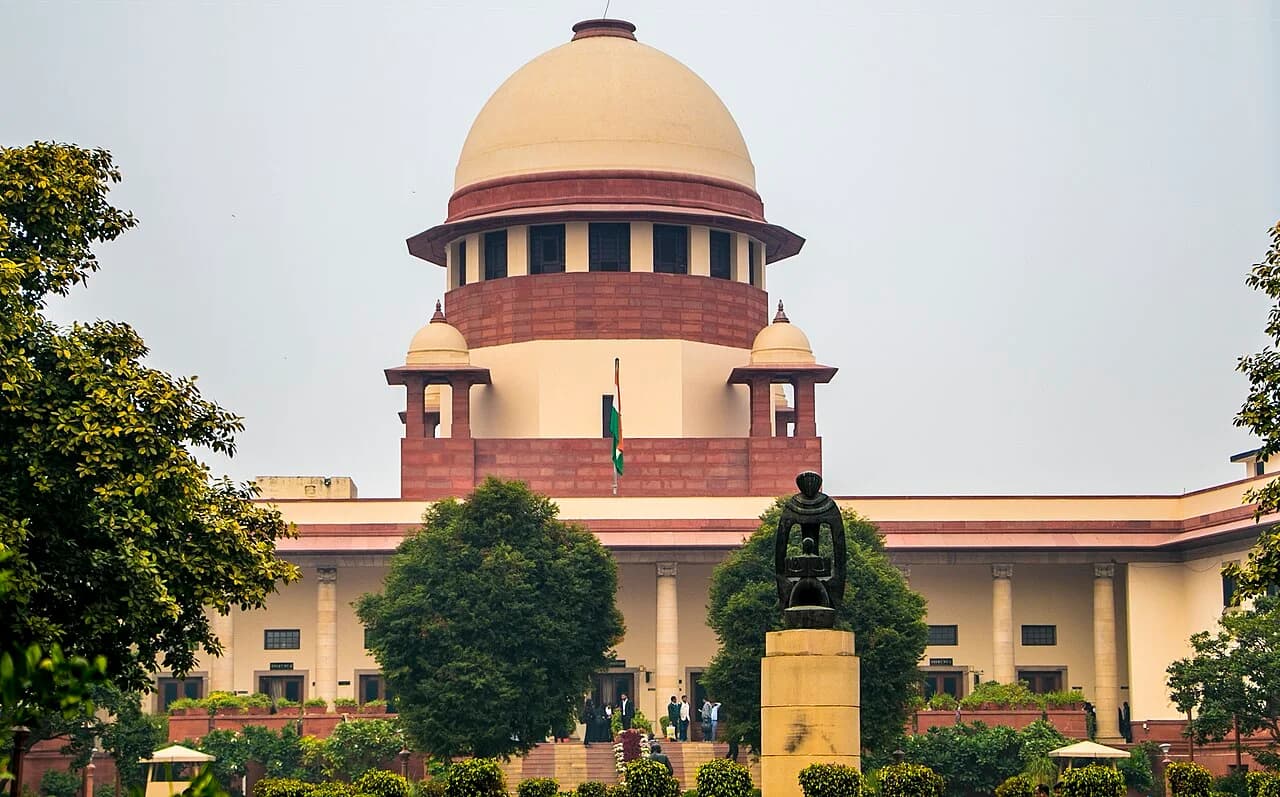
The Supreme Court of India on 23 November 2026 issued notice in New Delhi on a public interest litigation (PIL) that asks a simple question with large consequences: can a Member of Parliament (MP) or Member of a Legislative Assembly (MLA) escape the anti-defection law by resigning before the Speaker decides the case? A bench of Chief Justice of India Surya Kant and Justices Joymalya Bagchi and V Mohana sought replies from the Union government, the Election Commission of India and the Law Commission, among others, as MapMyTimes reported earlier on Monday. Here is what the law says, what the petition wants and what remains open.
What is the anti-defection law?
The anti-defection law is the Tenth Schedule of the Constitution, which allows a legislator to be disqualified for switching sides after an election. It was added by the 52nd Amendment, passed by Parliament in January 1985 and in force from 18 March 1985.
Under Paragraph 2 of the Schedule, a member can lose the seat for voluntarily giving up membership of the party on whose ticket they were elected, or for voting or abstaining against the party's direction in the House. Paragraph 4 provides an exception when at least two-thirds of a legislature party agree to merge with another party. The 91st Amendment of 2003 removed an older exception for a "split" by one-third of members and barred disqualified defectors from being appointed ministers or to other paid political posts.
The Speaker of the Lok Sabha or an Assembly, or the Chairman of a Rajya Sabha or Legislative Council, decides disqualification petitions. In the Kihoto Hollohan case of 1992, the Supreme Court held that those decisions can be challenged in court.
Why is it in the news?
It is in the news because a petitioner, A Sethu, argues that legislators facing disqualification are resigning first so that the pending case ends without a decision. According to a report by the legal news portal LawTrend, the petition seeks a declaration that a resignation should not automatically end disqualification proceedings under the Tenth Schedule.
The plea, as reported, also asks that:
- Speakers and Chairpersons examine a resignation and any pending disqualification petition separately, with a reasoned order on whether the resignation is voluntary and genuine;
- disqualification proceedings continue even after a resignation;
- resignations and disqualification petitions be decided through a transparent, time-bound process;
- the system in which the presiding officer decides disqualification be reviewed; and
- a government's majority be proved by a floor test in a duly constituted Assembly, after members take oath under Article 188, and not through letters of support or parades outside the House.
Notices also went to the Ministry of Law and Justice and the Ministry of Parliamentary Affairs, the report said.
Why does resigning matter if the member loses the seat anyway?
Resigning matters because, the petitioner argues, an accepted resignation can bring the pending disqualification case to an end without any finding, leaving the former member free to seek re-election in the by-election that follows.
The Supreme Court has dealt with this before. On 13 November 2019, it upheld the disqualification of 17 Karnataka MLAs whose resignations the then Speaker had not accepted, and said that resignation does not take away the Speaker's power to disqualify. But it also ruled that the Speaker cannot fix how long a disqualification lasts, which allowed those MLAs to contest the by-elections held on 5 December 2019, according to contemporary reports.
A related dispute is already before the court. On 26 October 2026, the same Chief Justice-led bench issued notice on an appeal by advocate K Suthan against a 24 September Madras High Court judgment. According to the appeal, as reported by Siasat, six AIADMK MLAs in Tamil Nadu resigned while disqualification petitions were pending, had their resignations accepted the same day and joined the ruling Tamilaga Vettri Kazhagam, with some named as its candidates for the same seats.
How does it affect you?
It affects voters because every such resignation leaves a constituency to be re-contested and can change which party holds a majority in a House. The PIL itself argues that resignations can alter the numerical strength of Assemblies and so decide whether a government survives. A by-election also means another round of polling, campaigning and public spending for the same seat within one term.
What is established and what is still uncertain?
What is established is that the court has only issued notice; it has not accepted any of the petitioner's arguments or stayed any resignation. The Union government and the Election Commission have not yet filed replies, and no next hearing date was reported.
The court has signalled concern about delays before. In its judgment of 21 January 2020 in the Keisham Meghachandra Singh case, it said Speakers should decide disqualification petitions within three months in the absence of exceptional circumstances, and suggested that Parliament consider handing the job to a permanent tribunal headed by a retired judge. Parliament has not made that change. Judges have also been cautious: on 27 July 2026, while issuing notice on a separate petition by senior advocate Kapil Sibal against the merger route, Justice PS Narasimha remarked that such issues are typically raised on the floor of the House or before political parties, LiveLaw reported.
What happens next?
What happens next is that the respondents will file their replies, after which the court will decide whether to hear the matter in detail. Any ruling could clarify how presiding officers handle resignations, but a wider change, such as moving disqualification cases away from Speakers, would need a constitutional amendment by Parliament. Separate petitions on the merger exception and on the Tamil Nadu resignations remain pending, and how the court sequences them is not yet known.
Photo source · Subhashish Panigrahi, CC BY-SA 4.0