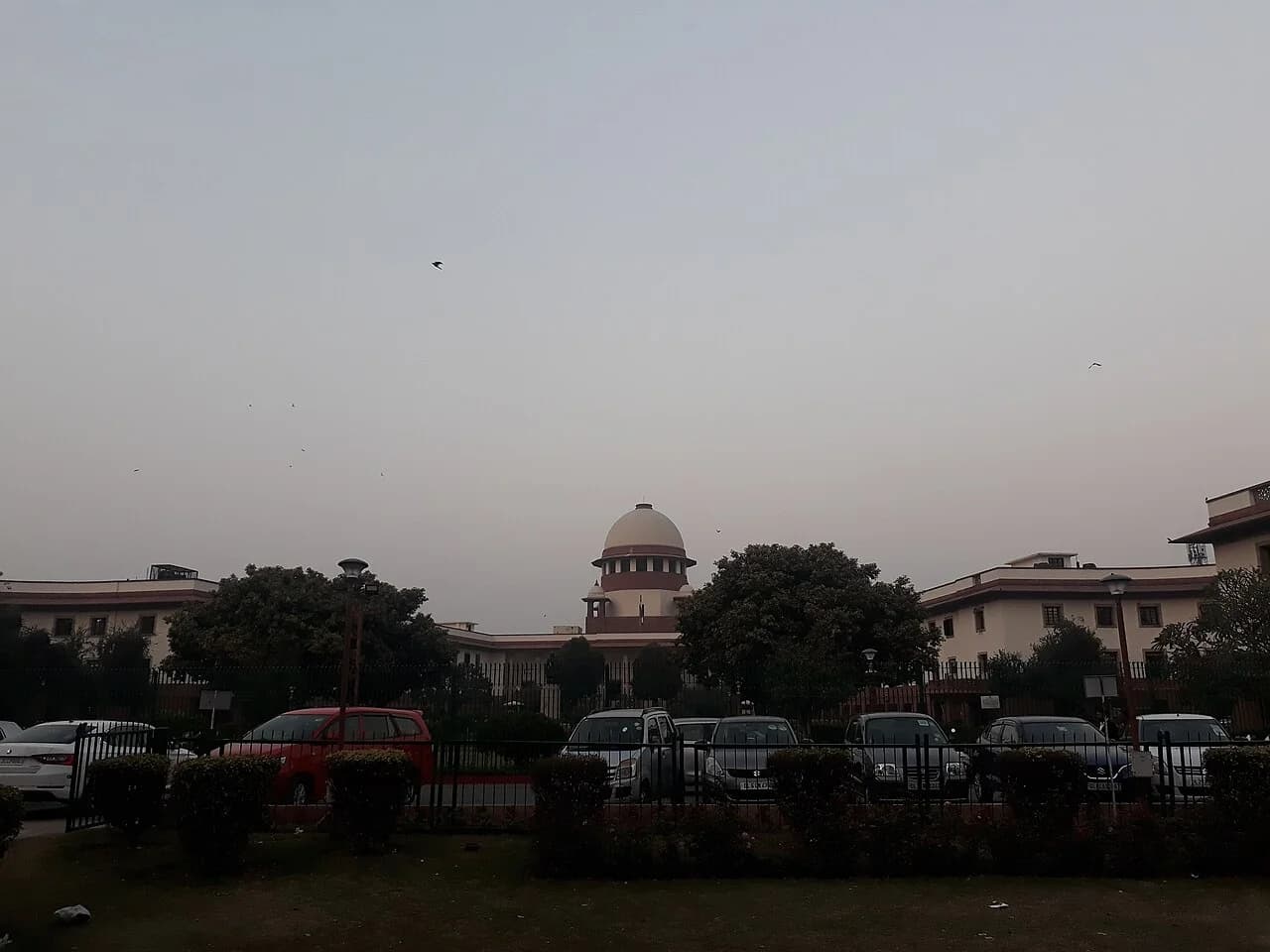
The Supreme Court of India on 23 November 2026 issued notice to the Union government and the Election Commission of India on a public interest litigation (PIL) that asks the court to stop Members of Parliament and Members of Legislative Assemblies from using resignations to escape disqualification under the anti-defection law. The bench of Chief Justice of India Surya Kant, Justice Joymalya Bagchi and Justice V Mohana, sitting in New Delhi, also sought responses from the Law Commission of India, the Union Ministry of Law and Justice and the Union Ministry of Parliamentary Affairs.
The petition, titled A Sethu v. Union of India & Ors., was argued by Senior Advocate A Sirajudeen and filed through advocates R Satish Kumar and Jatin, legal news outlet Bar & Bench reported.
What does the petition want the Supreme Court to decide?
The petition wants the court to declare that a legislator's resignation does not, by itself, end disqualification proceedings that are already pending or reasonably imminent under the Tenth Schedule of the Constitution, the part of the Constitution commonly known as the anti-defection law. According to Verdictum's report on the hearing, the plea says such a resignation "shall not ipso facto terminate or render infructuous such disqualification proceedings."
The petitioner argues that strategically timed resignations, combined with slow decisions on disqualification petitions, allow legislators to avoid the consequences of alleged defection. By the time a petition is decided, the plea says, the House's term may have ended, a by-election may have been held, or the government in question may already have fallen or survived. In its words, this "impairs the integrity of the electoral mandate".
What other directions are being sought?
As reported by Bar & Bench, the petition also asks that:
- legislators who resign while facing anti-defection proceedings should not be made ministers or given remunerative political posts until the disqualification question is settled in their favour or they are re-elected;
- Speakers and Chairpersons should pass reasoned orders, based on objective material, on whether a resignation is voluntary and genuine, and on the disqualification petition itself;
- a statutory deadline, ordinarily not exceeding three months, should be considered for deciding disqualification petitions, with narrow exceptions backed by recorded reasons;
- the Speaker-led system of deciding such cases should be reviewed within a fixed time, including whether an independent, permanent tribunal is feasible;
- Parliament and state legislatures should promptly publish resignation letters, notices, replies, hearing dates and orders in Tenth Schedule matters, subject only to narrow redactions.
Why does the hung-assembly question matter?
The plea also seeks a declaration that, in a hung assembly, a party or coalition must prove its majority on the floor of the House after members have taken their oath under Article 188 of the Constitution. It asks the court to rule that letters of support, delegations or parades of legislators before the Governor cannot replace or pre-empt such a floor test, according to both reports.
If granted, these directions would affect how Speakers, Governors and legislators act during political crises in states, where resignations and rival claims of support have often decided which side forms the government.
What has been decided so far, and what happens next?
The matter is at the notice stage. The court has not ruled on any of the prayers, and neither report recorded remarks from the bench on the merits. The Centre, the Election Commission and the other respondents are expected to file their replies before the court decides whether any guidelines are needed. Neither report mentioned a date for the next hearing.
Photo source · Pinakpani, CC BY-SA 4.0