The Antarctic ozone hole grew to its largest size in a decade this year, reaching 27.1 million square kilometres on 18 September 2026, according to a joint NASA and NOAA assessment published on 4 November 2026. MapMyTimes reported the latest European Copernicus satellite readings on 29 November. Here is what the ozone hole is, why this year's was so large, and what it means.
What is the ozone hole?
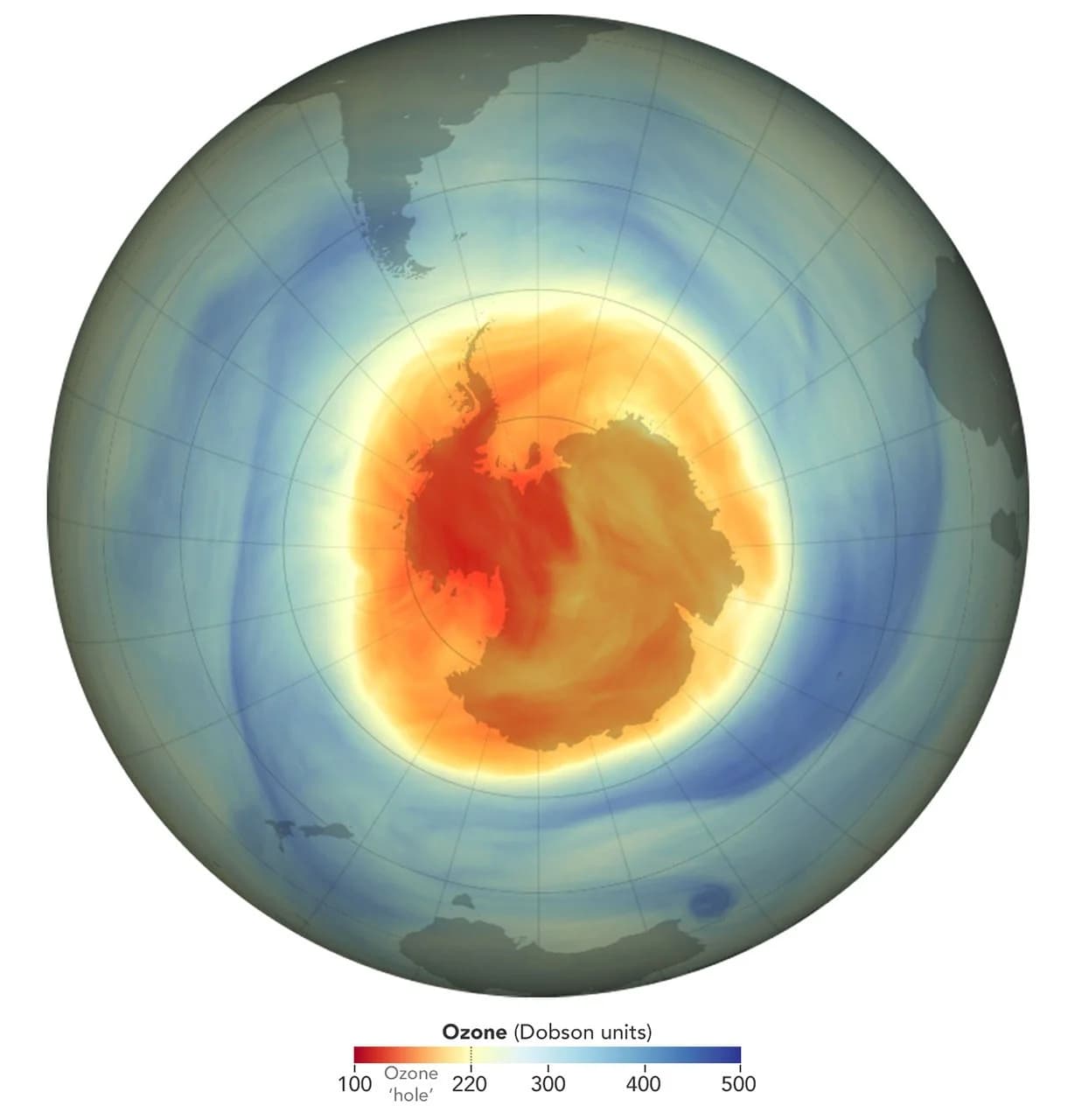
The ozone hole is the area over Antarctica where the amount of ozone in the atmosphere falls below 220 Dobson units, the threshold NASA and NOAA use to define it. Ozone high in the atmosphere absorbs much of the Sun's harmful ultraviolet radiation. Each southern spring, chlorine and bromine released from human-made compounds destroy ozone over Antarctica in very cold conditions, opening a seasonal hole that later closes.
Why is it in the news?
It is in the news because the 2026 hole was the biggest in ten years. NASA and NOAA say it averaged about 25 million square kilometres between 7 September and 13 October, the peak season, making it the seventh largest in 48 years of monitoring by that measure. Its single-day maximum of 27.1 million square kilometres came on 18 September. Estimates from other services, such as Europe's Copernicus programme, differ slightly because they use their own data and methods.
Why did it grow so large this year?
It grew large mainly because of weather. According to NASA and NOAA, an unusually large and strong polar vortex, the ring of winds circling Antarctica, kept the coldest air in place and extended the period of depletion. Amy Butler, a research scientist at NOAA's Chemical Sciences Laboratory, explained in the release that weak wave activity kept the strongest vortex winds farther from the pole than usual. That widened the area where ozone could be destroyed. Weak planetary-scale weather waves in August and September failed to disrupt the vortex as they normally would.
Does a bigger hole mean the ozone layer is getting worse?
No, not according to the agencies, because size is only one measure and the depth of depletion was less severe. The lowest ozone level over the South Pole this year was 105 Dobson units on 17 October. The record low was 92 Dobson units in October 2006. The release says the 2026 hole was shallower than several large holes on record. Paul Newman, who has long led NASA's ozone research team at Goddard Space Flight Center, said the ozone layer is healing, and noted that in recent years the hole has been forming later in the season, which he sees as a sign of recovery.
What is the Montreal Protocol and is it working?
The Montreal Protocol is the 1987 international agreement that controls ozone-depleting substances, and the agencies say it continues to drive long-term recovery. According to Stephen Montzka of NOAA's Global Monitoring Laboratory, chlorine from these substances in the Antarctic stratosphere has fallen by about one-third from its peak in the 1980s. The largest ozone hole on record formed in September 2000; this year's maximum was roughly 90% of that size, according to reports on the NASA-NOAA findings.
How is the ozone hole measured?
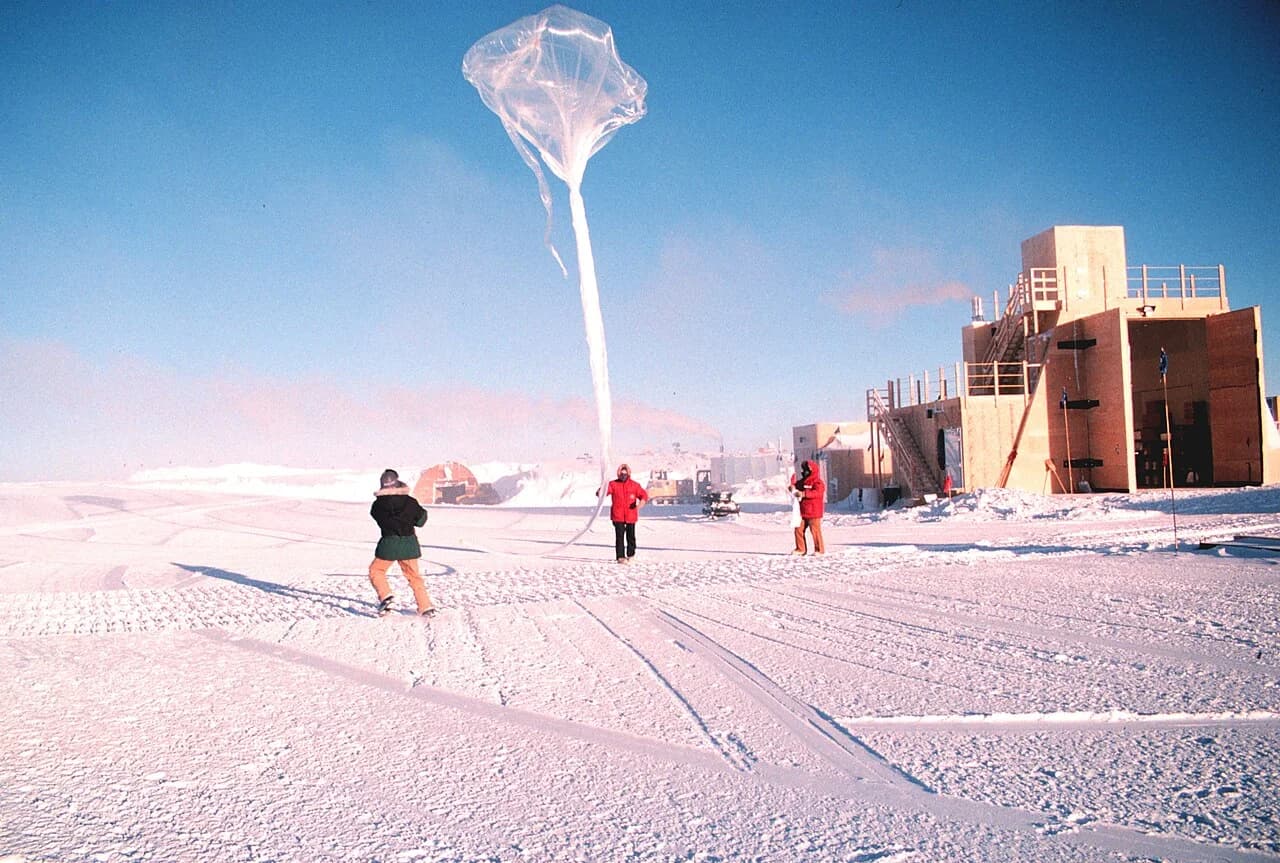
It is measured by balloons, ground stations and satellites working together. NOAA launches balloon-borne instruments called ozonesondes from its South Pole Baseline Atmospheric Observatory. Satellite data come from NASA's Aura, NOAA-20, NOAA-21 and the jointly operated Suomi NPP. Satellite monitoring of the ozone layer began in 1979, which is what allows scientists to rank one year against nearly five decades of others.
How does it affect you?
For most readers in India the direct effect is limited, because the hole sits over Antarctica and forms seasonally. Its wider importance is as a test of whether global environmental rules work. The ozone layer as a whole shields life on Earth from ultraviolet radiation, and its recovery depends on countries continuing to keep ozone-depleting chemicals out of use.
What is established and what is uncertain?
What is established is the 2026 size, depth and ranking reported by NASA and NOAA, the role of the polar vortex, and the long-term fall in stratospheric chlorine. What remains uncertain is how large any particular future season will be, because the hole depends heavily on year-to-year weather over Antarctica. Scientists can project the long-term trend more confidently than any single year.
What happens next?
The seasonal hole closes as the southern spring advances, and monitoring will resume with next year's season. NASA and NOAA estimate the ozone hole will recover by the 2070s as long-lived ozone-depleting chemicals continue to break down. Until then, large holes in cold, stable years remain possible even as the overall trend improves.