Union Environment Minister Bhupender Yadav on Saturday, 14 November 2026, told Delhi, Haryana, Uttar Pradesh and Rajasthan to stop treating winter air pollution as a planning exercise and start delivering visible enforcement on the ground, according to a statement issued by the Ministry of Environment, Forest and Climate Change through the Press Information Bureau.
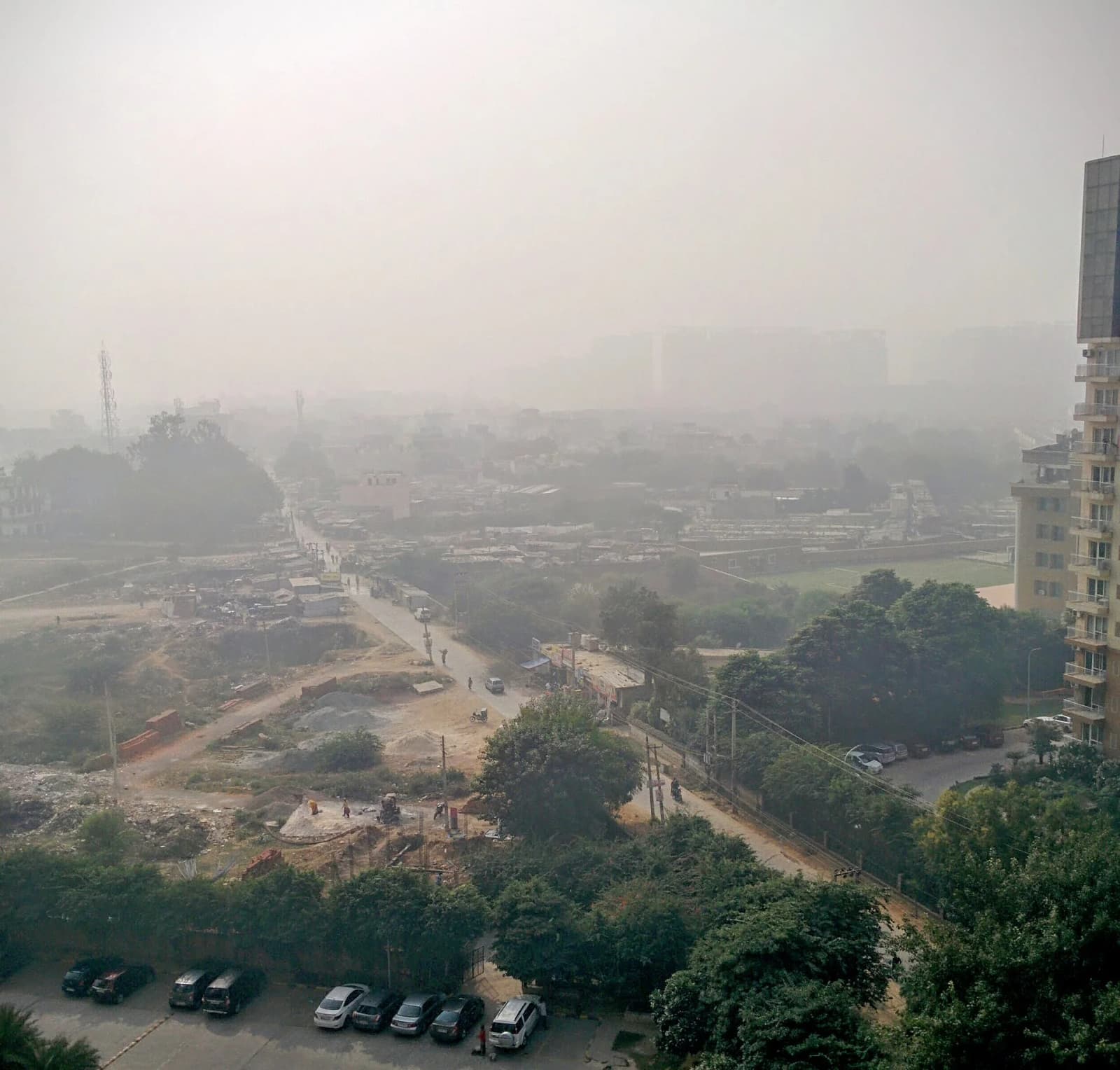
The review meeting came as winter pollution intensifies across the National Capital Region. The ministry said the Central Pollution Control Board (CPCB) has been directed to immediately seal 191 non-conforming polluting industries that had not even ordered air pollution control devices despite repeated directions.
Who was in the room
Delhi Environment Minister Manjinder Singh Sirsa, Haryana's Rao Narbir Singh and Uttar Pradesh's Arun Kumar Saxena joined virtually, the ministry said. Environment Secretary Narendra Bhooshan and CPCB Chairman Dr Amandeep Garg dialled in from Antalya, Türkiye, the venue of the ongoing climate talks. Tarun Pithode, Member Secretary of the Commission for Air Quality Management (CAQM), presented the states' progress, while CAQM Chairperson Rajesh Verma reviewed what remains to be done.
The ministry noted that Yadav has held more than 30 such review meetings with NCR governments and civic bodies over the past year.
Deadlines and accountability
- Named officers: States must nominate Secretary-level officials for seven cities in Haryana, four in Uttar Pradesh and four in Rajasthan, who will report weekly to CAQM. CAQM was asked to issue notices to non-performing officers.
- ANPR cameras: If states fail to install automatic number plate recognition cameras, CAQM will initiate criminal prosecution against delinquent transport department officials after 30 November 2026, the statement said.
- Border entry points: The Municipal Corporation of Delhi must complete Multi-Lane Free Flow systems at 154 border entry points by 31 December 2026.
Roads, vehicles and industry
According to the ministry, only 3,221 km of a targeted 5,480 km of roads have been redeveloped. Road-owning agencies were told to prioritise pothole repairs, footpaths and end-to-end paving, and to run mechanical sweepers in double shifts. Immediate action was ordered at 233 identified congestion points across the NCR.
On vehicles, the minister sought faster progress under the PARIVARTAN scheme, which aims to replace pre-BS-VI trucks and buses with BS-VI, CNG and electric vehicles by 2028, and asked Uttar Pradesh, Rajasthan and Haryana to hold PARIVARTAN Melas to boost registrations.
On industry, the ministry said 2,298 of 2,345 targeted units, or 98%, are now linked to online continuous emission monitoring systems, with the remaining 47 closed or sealed. Units breaching the 50 mg/Nm³ particulate emission norm face closure, power disconnection and sealing.
Waste, dust and hotspots
The statement reiterated that a CAQM order dated 30 October restricts dust-generating construction and demolition activity across the NCR from 5 to 20 November 2026. States were asked to close a 6,747 tonnes-per-day gap in municipal solid waste processing and speed up legacy waste clean-up at Okhla, Ghazipur, Bhalswa and Bandhwari. Civic bodies, resident welfare associations and private establishments were asked to give security and sanitation staff non-polluting heating options to curb open burning.
All NCR states must also prepare hotspot action plans covering markets, schools, hospitals, railway stations and bus terminals.
Why it matters and what next
The directions put named officials and fixed dates on measures that have often slipped in past winters. The ministry said the Environment Secretary, the Housing and Urban Affairs Secretary, the CPCB Chairman and the CAQM Chairperson will regularly review each state's hotspot plans, and that Yadav and state ministers will carry out field inspections. Monitoring will lean on Delhi's Integrated Command and Control Centre, launched on 5 October, and CAQM's PAVAN data platform. The 30 November ANPR deadline is the next marker to watch.
PS · Saurabh Kumar, CC BY-SA 4.0