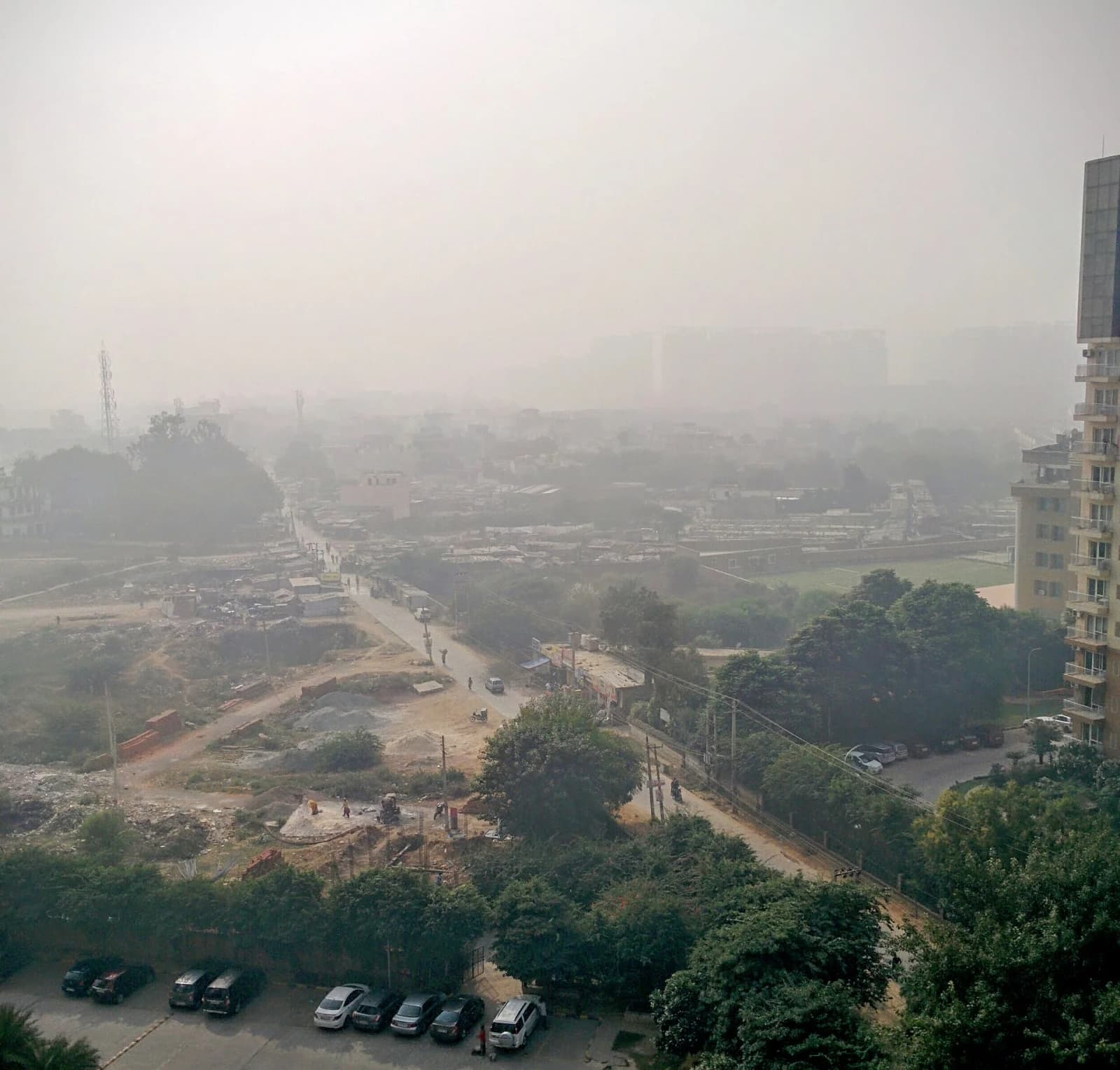
Union Environment Minister Bhupender Yadav on Saturday ordered the immediate sealing of 191 polluting industries in the National Capital Region and warned that transport officials in states that fail to install number-plate recognition cameras could face criminal prosecution after 30 November, as he pressed Delhi and its neighbours to shift from planning to enforcement against winter air pollution.
Chairing a review with Delhi, Haryana, Uttar Pradesh and Rajasthan on 14 November, Yadav told agencies that action on the ground had to be strict, time-bound and coordinated, the Ministry of Environment, Forest and Climate Change said. Pollution, he said, does not respect state boundaries, so control measures across the NCR must match.
Sealing orders and named officers
According to the ministry, the Central Pollution Control Board (CPCB) was told to seal 191 non-conforming industries that, despite repeated directions, had not even ordered air pollution control devices. States were asked to nominate Secretary-level officers for seven cities in Haryana, four in Uttar Pradesh and four in Rajasthan, who will be responsible for pollution control in those cities and will report to the Commission for Air Quality Management (CAQM) every week. CAQM was asked to issue notices to officers who do not perform.
All states must install ANPR (automatic number plate recognition) cameras, the minister said; otherwise CAQM would start criminal prosecution of the transport department officials concerned after 30 November 2026.
Roads, traffic and construction
The review found that only 3,221 km of a targeted 5,480 km of roads had been redeveloped to curb road dust. Yadav asked road-owning agencies to prioritise pothole repairs, footpaths and end-to-end paving, and to run mechanical sweepers in double shifts with digital tracking. He sought immediate action at 233 identified traffic congestion points across the NCR and asked the Municipal Corporation of Delhi to finish installing Multi-Lane Free Flow systems at 154 border entry points by 31 December 2026.
The ministry noted that, under a CAQM order of 30 October, dust-generating construction and demolition work has been restricted across the NCR from 5 to 20 November. States were also urged to adopt Delhi's hotspot-focused winter action plan, covering traffic management, work-from-home measures, construction curbs and prevention of open burning, and to enforce the Graded Response Action Plan (GRAP) strictly.
Industry, vehicles and waste
Of 2,345 targeted industries, 2,298, or 98%, are now linked to online continuous emission monitoring systems, while the other 47 have been closed or sealed, the ministry said. Yadav called for strict enforcement of a 50 mg/Nm³ particulate emission norm, with closure, power disconnection or sealing for violators.
On vehicles, he asked Uttar Pradesh, Rajasthan and Haryana to speed up registrations under the PARIVARTAN scheme, which aims to replace pre-BS-VI trucks and buses with BS-VI, CNG and electric vehicles by 2028, including by holding state-level PARIVARTAN melas. States must close a 6,747 tonnes-per-day gap in municipal solid waste processing, stop open dumping and burning, and speed up clearing legacy waste at Okhla, Ghazipur, Bhalswa and Bandhwari. More than 3,000 active construction sites are to be physically inspected.
What happens next
The ministry said hotspot plans for each state will be reviewed regularly by the environment and housing secretaries, the CPCB chairman and the CAQM chairperson, and that Yadav and state ministers will carry out field inspections. The minister has held more than 30 such reviews with NCR governments over the past year, according to the ministry. The key dates to watch are 20 November, when the construction curbs are due to end, 30 November for the camera deadline and 31 December for the border toll systems.
PS · Saurabh Kumar, CC BY-SA 4.0