Pollen preserved in a wetland inside Bandhavgarh Tiger Reserve in Umaria district, Madhya Pradesh, has helped scientists rebuild about 2,700 years of monsoon and forest history in central India, the Union Ministry of Science and Technology said in a release on 20 November 2026. The record shows the region's forests shrank and recovered with swings in the Indian Summer Monsoon, which the researchers say points to the regenerative capacity of tropical forests when the climate turns favourable.
The study was carried out by Dr Anjali Trivedi, Anupam Nag and Prof. M. G. Thakkar of the Birbal Sahni Institute of Palaeosciences (BSIP), an autonomous institute of the Department of Science and Technology (DST). It has been published in the journal Quaternary Research.
What did the scientists study?
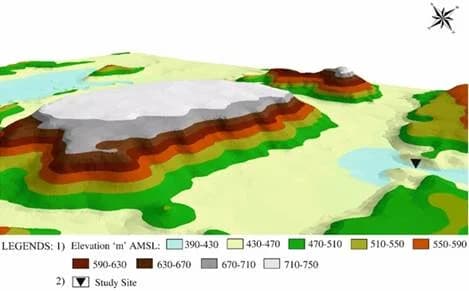
They analysed a sediment core from the Chakradhara wetland in the reserve, dated its layers with radiocarbon and identified the pollen in each layer to work out which plants grew around the site over time. According to the ministry, they compared this pollen record with Earth System Palaeoclimate Simulation (ESPS) models to check the reliability of their reconstruction of past climate.
Bandhavgarh lies in what climate scientists call the Core Monsoon Zone of central India. The ministry said high-resolution climate records for the last few thousand years are scarce for this zone, which is why the new record matters.
What does the pollen record show?
It shows that the monsoon in central India has gone through clear strong and weak phases, with forests following them. The release describes these stages:
- About 2,700 to 2,300 years ago: a strong monsoon supported dense moist deciduous forests dominated by sal (Shorea robusta), which the researchers link to annual rainfall of roughly 1,100–1,200 mm or more and a timely monsoon onset.
- About 2,300 to 1,600 years ago: several shifts, including humid spells, prolonged drought, gradual recovery and then a stronger monsoon, which changed the make-up and spread of the forest.
- About 1,600 to 820 years ago: relatively stable monsoon conditions and dense tropical forests.
- About 820 to 400 years ago: a weaker monsoon, a decline in moist deciduous forest and the spread of dry deciduous vegetation, along with more pollen from cereals and other crops, which the researchers read as growing farming and human influence.
- The last 400 years or so: a strengthening monsoon and the recovery of moist deciduous forests.
Why does this matter today?
It matters because the monsoon drives India's farming, water supply and ecosystems, and long records help separate natural variability from recent change. The ministry noted that even small changes in the strength or timing of the monsoon can affect crop yields, food security and the economy, and said the findings could inform climate adaptation, sustainable agriculture and planning for climate resilience.
The work adds to other recent BSIP research using natural archives to track environmental change, such as its study of Himalayan marmot droppings reported by MapMyTimes on 19 November.
What is established and what is not
The sequence of wet and dry phases comes from the pollen and radiocarbon dating of a single wetland core, checked against climate model simulations, as described by the ministry. The release does not say how far the record from this one site can be applied to the rest of central India, and it does not make forecasts about future monsoons.
Photo source · Press Information Bureau / Birbal Sahni Institute of Palaeosciences (handout figure)