The new head of the World Food Programme (WFP), Luke Lindberg, has warned that funding cuts are deepening hunger in war-torn Sudan, saying that for many people there the UN agency is "their only hope in a time of unprecedented conflict." His remarks, reported by UN News on 12 November, followed his first field mission to the country as Executive Director.
During the visit, Lindberg met families who had been forced from their homes by the fighting and were struggling to feed their children. Among the places he visited was the Goz El Salam camp in Kosti, according to UN News.
Fewer people reached as money dries up
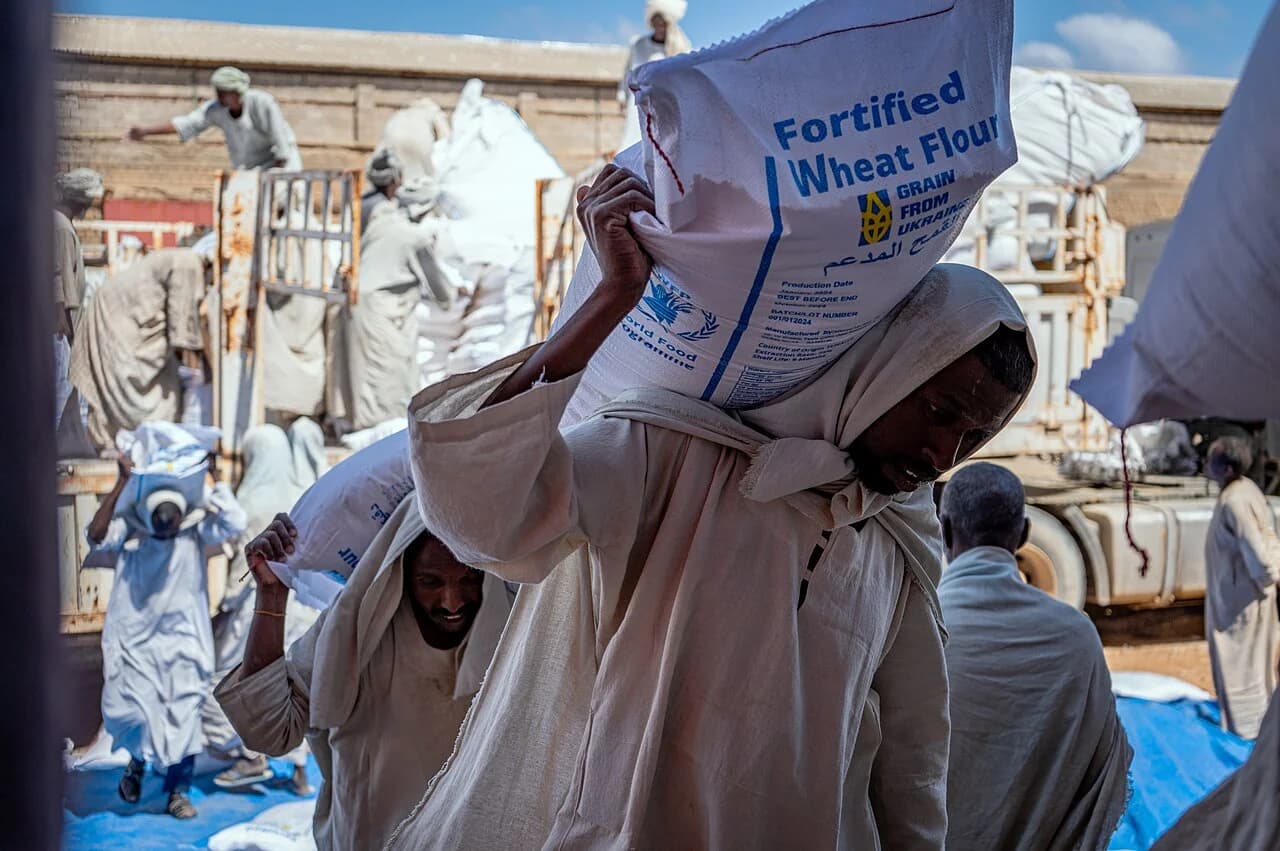
According to the UN agency, WFP was delivering food aid to more than four million people in Sudan in August, including 880,000 living in areas at risk of famine. Funding shortfalls have since forced it to scale back. It now reaches only a little over three million people, and an estimated 900,000 vulnerable people have lost their food assistance.
Money is not the only obstacle. Insecurity, blocked roads and flood damage are also slowing aid deliveries as the conflict escalates, UN News reported.
WFP says it urgently needs $520 million to provide lifesaving food and nutrition support to 5.4 million people through April 2027.
"Rebel, migrate or starve"
Lindberg called for an end to the fighting and for stronger international backing. "People facing acute hunger have three unfortunate choices: rebel, migrate or starve," he said.
"In the simplest of terms, peace opens the door to food while conflict opens the door to hunger," he added. He struck a note of hope as well: "With collective action and additional resources, we can turn this crisis around. WFP has teams on the ground and stands ready to scale our assistance."
Background: one of the world's largest crises
Sudan has been at war since 2023. UN News describes the situation as one of the largest humanitarian crises in the world, with millions displaced, hundreds of thousands killed and famine now widespread.
The warning adds to repeated appeals from aid groups. On 6 November, humanitarian teams working with millions of uprooted Sudanese called for more international help, pointing to desperate funding shortages, empty warehouses and overwhelming needs, UN News reported at the time.
What comes next
The immediate test is whether donors close the $520 million gap. Without fresh funding, the number of people cut off from WFP food in Sudan could keep growing just as insecurity and damaged roads make it harder to reach those still on the agency's lists. Lindberg's message was that the agency has the staff and systems to expand quickly if resources arrive — but that lasting relief depends on the guns falling silent.