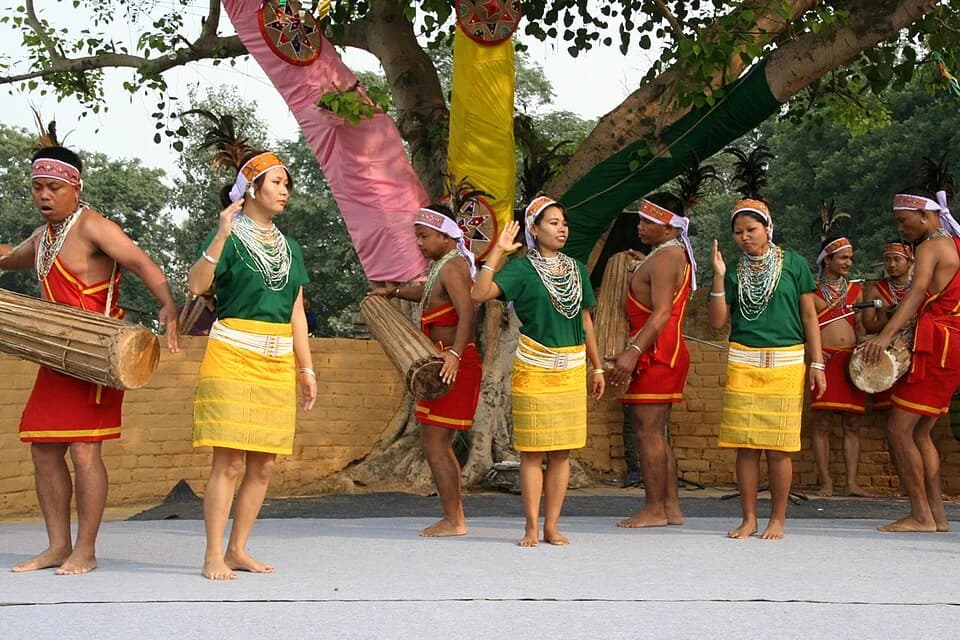
A thousand drummers playing the Dama, the traditional drum of the Garo community, performed together in Meghalaya on Saturday as the Wangala Festival marked its Golden Jubilee, Union Tourism and Culture Minister Gajendra Singh Shekhawat said while addressing the celebrations.
Calling the 50-year run of the festival a remarkable cultural achievement, the minister said Wangala was not merely a festival but the shared commitment of several generations to protecting and celebrating Garo heritage, according to a statement issued by the Ministry of Tourism on 14 November 2026.
Tribute to the festival's founders
Shekhawat paid tribute to those who first imagined a common platform to promote Garo culture. He singled out Meghalaya's first Chief Minister, the late Captain A. Williamson Sangma, and former Chief Minister the late P. A. Sangma, along with everyone who helped the festival grow over five decades.
He described the thousand-drum performance as a historic show of collective strength, discipline and unity, summing it up as a thousand artists and a thousand drums moving to one rhythm. He noted that an ensemble of that size needed months of practice and coordination, and congratulated the Meghalaya Chief Minister, the organisers and the performers. He said the effort could carry Garo cultural identity to a global stage and hoped Wangala would become a major cultural landmark of the Northeast.
A harvest festival with a climate message
Wangala, the minister said, expresses gratitude to nature and Mother Earth for a good harvest and reflects the close bond between people and the natural world. With the world grappling with climate change and environmental damage, such traditions carry a message of respect and coexistence with nature, he said, adding that traditional wisdom and sustainable development must go together.
He called for documenting traditional songs, folklore and rituals so they survive for future generations, but stressed that such work must be guided by the rights, knowledge and participation of the communities themselves. The real essence of any tradition, he said, lies in the community that has kept it alive.
Chibragre and Garo Heritage Village flagged for tourism
Turning to tourism, Shekhawat said Meghalaya's landscapes, cuisine, handicrafts, folk music and way of life offer large scope for cultural tourism. He named Chibragre and the Garo Heritage Village as sites that could develop into important cultural destinations.
Tourism, he argued, should be measured not just by visitor numbers but by the jobs, incomes and economic self-reliance it brings to local communities. He said young people should get opportunities to work as guides, homestay operators, hospitality professionals, entrepreneurs and cultural storytellers.
- Digital platforms, he said, can take Garo music, dance and handicrafts to audiences around the world.
- Heritage, in his view, can become a source of both preservation and livelihood.
Why it matters
The Golden Jubilee puts a national spotlight on a community festival at a time when the Centre is linking cultural heritage with tourism-led employment in the Northeast. The minister's emphasis on community-led documentation and youth livelihoods signals how the ministry wants such festivals to feed into local economies rather than remain one-off events.
What next
The ministry's statement did not announce specific projects or funding for Chibragre or the Garo Heritage Village. Any follow-up schemes to develop these sites as tourism destinations will be the key thing to watch.