The government has set out the most detailed picture yet of the Yuge Yugeen Bharat Museum, the planned national museum that will take over New Delhi's North and South Block buildings. In a backgrounder issued on Sunday, 15 November, by PIB Research, it said the museum is designed to hold more than 1 lakh square metres of display space, which it said would be larger than the display areas of the Louvre, the British Museum and the Hermitage.
The note comes four days after the Cabinet Committee on Economic Affairs approved the project on 11 November at an estimated total cost of ₹3,230 crore, according to the backgrounder. Prime Minister Narendra Modi first announced the museum on 18 May 2023, it said.
From seat of government to public museum
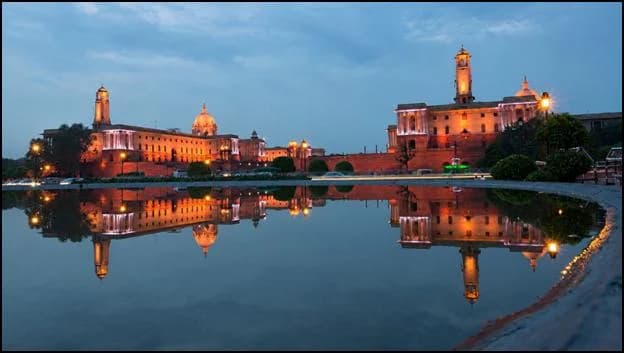
The North and South Blocks housed central government offices until 13 February 2026, nearly 95 years after South Block was inaugurated, the backgrounder said. South Block was home to the Prime Minister's Office from Independence, and Cabinet meetings under 16 Prime Ministers were held in the two buildings.
With offices now moved to Seva Teerth, the new Prime Minister's Office, and the Kartavya Bhavans, the Ministry of Culture is converting the buildings through what it calls adaptive reuse. The plan is to keep the façades and historic character with minimal intervention, while turning courtyards, corridors and rooms into galleries. The note said the redevelopment will prioritise sustainable resource use and universal accessibility.
The numbers
According to the backgrounder:
- the proposed built-up area is about 1,78,509 square metres across the complex;
- planned display space is more than 1 lakh square metres, compared with 73,000 sq m at the Louvre, 70,000 sq m at the British Museum and 66,800 sq m at the Hermitage;
- the museum is designed for 30,000 visitors a day and 1 crore visitors a year, with timed entry and crowd management;
- about 18 lakh objects have been identified for potential display.
Those objects would come from the National Museum, other museums under the Culture Ministry, 52 Archaeological Survey of India site museums, State museums and private collections, the note said. It added that content and collection analysis is still under way to decide how they will be used, and that the project includes dedicated storage and conservation facilities.
What visitors will see
The government listed gallery themes including Architecture and Cityscapes, Mathematics and Astronomy, Languages and Scripts, Faith and Spirituality, and Bharat Connects – Trade and Ideas, with more to be added in a modular way. It said augmented reality, virtual reality and artificial intelligence are planned for interactive storytelling, and that the Culture Ministry's tie-up with Google Arts & Culture, announced on 5 November 2026, covers digitisation linked to the buildings and collections.
Planned amenities include children's zones, food courts, souvenir shops and performance spaces, the backgrounder said.
Why it matters
The government said it expects the museum to support cultural tourism, education and research, and to create direct and indirect jobs during construction and operation for artisans, craftspeople, museologists, designers, performers and the hospitality sector. It said the project will encourage domestic manufacture of museum materials and products through vendor development under Make in India.
The note also said the museum is expected to earn recurring revenue from tickets, food and beverage outlets, events and venue rentals, digital experiences, guided tours and retail.
What comes next
Implementation is scheduled from FY 2026-27 to FY 2030-31, with galleries opening in phases, the backgrounder said. The first, the Adornment gallery, is expected to open to the public in North Block in the later part of 2027. The government said the work will involve coordinated project management, design and technical oversight, quality assurance and periodic monitoring.