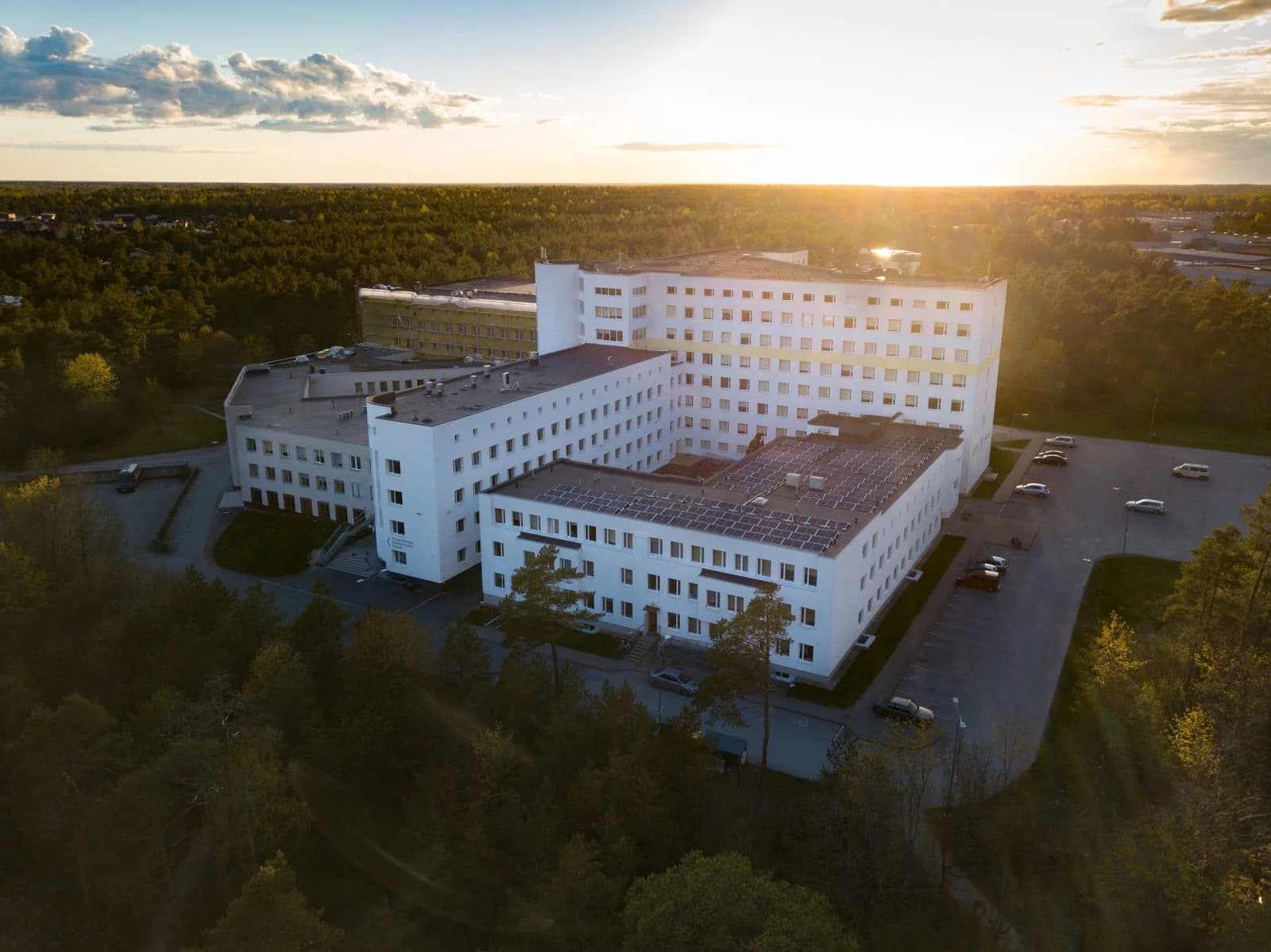
Vice-President C. P. Radhakrishnan on 27 November 2026 inaugurated the new Super Specialty Block of Holy Family Hospital at Okhla in New Delhi, and used the occasion to call for a common national platform where cancer treatment institutions can pool research and clinical experience. According to the official release from the Vice-President's Secretariat, he also released the hospital's Souvenir 2026 and honoured people involved in building the new block.
What did the Vice-President propose for cancer care?
He proposed a shared forum that brings cancer treatment institutions from across India together to exchange research, knowledge and best practices. Radhakrishnan said the gains of medical research and innovation should reach all of humanity rather than staying limited to a handful of countries or to the well-off, and he said he was willing to take the initiative to help build such collaboration.
The release did not say which institutions would be part of such a forum, how it would be organised or when it might be set up. At this stage it is a proposal made in a speech, not an announced programme.
A hospital with roots in 1953
Radhakrishnan pointed out that the hospital's foundation stone was laid in 1953 by Dr Sarvepalli Radhakrishnan, who was Vice-President of India at the time. He said the continuity of that legacy showed how institutions set up with noble aims go on serving society for generations.
He praised the hospital for treating patients regardless of caste, creed, religion or economic status, and said India's civilisational ethos rests on mutual respect and on every person's freedom to practise their faith. Good initiatives and selfless service, he added, should always be encouraged and celebrated.
Why does the new block matter?
The Vice-President said the Super Specialty Block would widen access to specialised treatment for patients. He cautioned, however, that the success of such facilities would ultimately depend on how well they combine advanced medicine with affordability, compassion and a human touch.
He also argued that buildings and modern equipment alone do not define a hospital's strength. In his view, its real strength lies in the dedication, skill and empathy of the doctors, nurses and other professionals who work there.
The release did not give figures for the new block, such as the number of beds, the specialities it will house or its cost.
The wider health picture
Referring to the government's work under Prime Minister Narendra Modi, Radhakrishnan said schemes such as Ayushman Bharat and the PM Jan Arogya Yojana had eased the cost of hospital admission for economically weaker families. He also cited the growth over the past decade in the number of AIIMS institutions, medical colleges, and MBBS and postgraduate medical seats, which he said had brought specialised care and medical education closer to people.
The Centre's push to expand public health infrastructure has been in focus this week, with the Health Secretary urging states to speed up work under PM-ABHIM.
Radhakrishnan said the goal of a developed India by 2047 must ensure that the benefits of growth reach every citizen, including people in villages and small towns. He described charitable hospitals and voluntary organisations as important partners in strengthening the country's healthcare system, and said a healthy society is essential for building a developed nation.
Who attended?
Those present included Reverend Andrea Francia, Chargé d'Affaires of the Apostolic Nunciature in India; Reverend Archbishop Anil J. T. Couto, President of the New Delhi Holy Family Hospital Society; Reverend Deepak Valerian Tauro, Auxiliary Bishop of the Archdiocese of Delhi; and Father George P. A., Director of Holy Family Hospital.
What next?
No timeline or follow-up mechanism was announced for the proposed cancer-care forum. Whether the idea moves forward will depend on any further steps from the Vice-President's office, the health ministry or cancer institutions themselves.