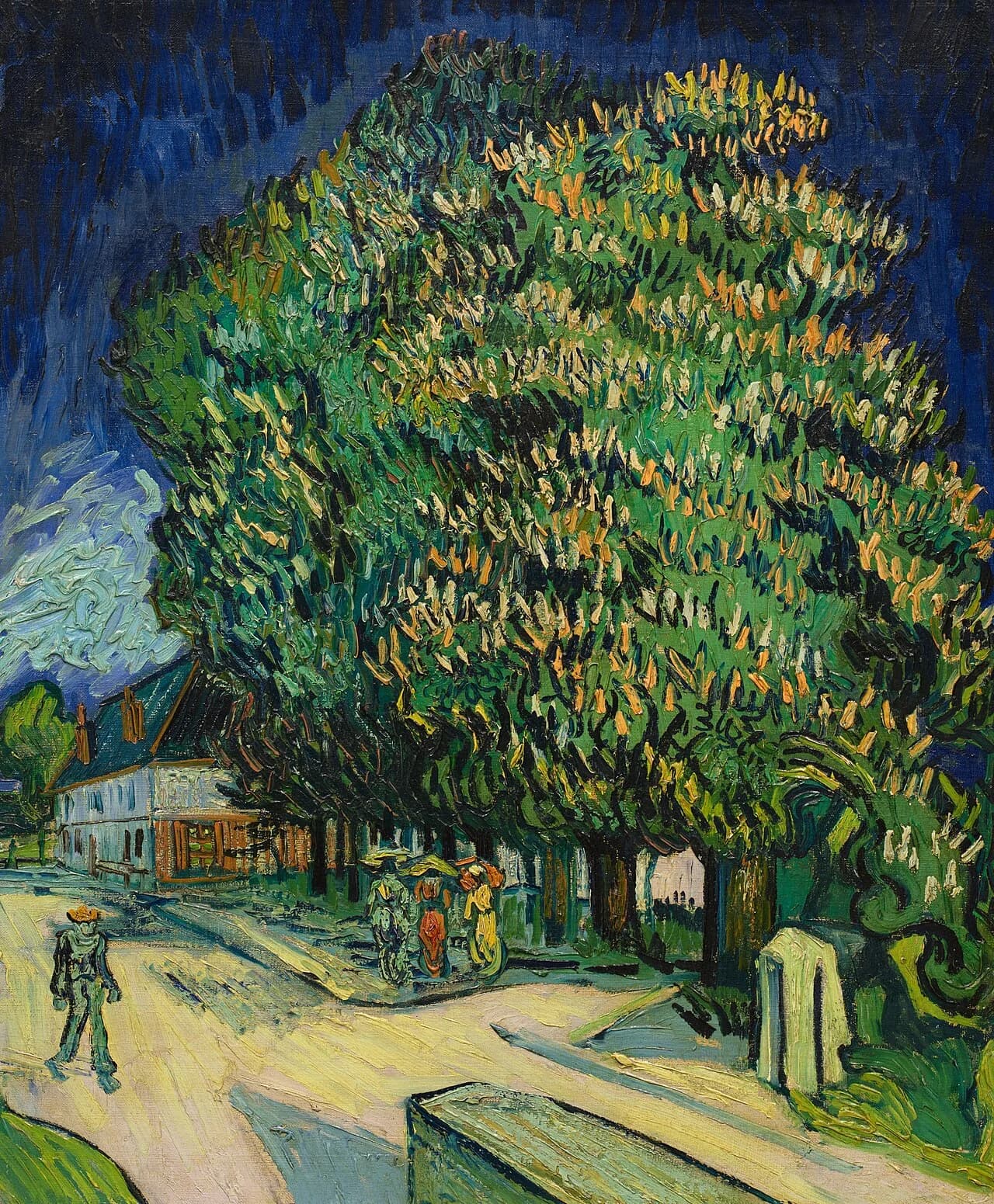
Heirs of a German-Jewish publishing family have asked Sotheby's to halt next week's auction of Vincent van Gogh's Châtaigniers en fleurs (Blossoming Chestnut Trees), a painting the auction house has estimated at about $180 million. They argue that their family parted with the canvas in 1936 under pressure from Nazi persecution. Sotheby's says its research has not shown that, and the sale was still listed for Wednesday, 18 November, in New York, according to reports published on 13 and 14 November.
What the heirs allege
The New York Times first reported the challenge on 13 November. The claimants are descendants of the Fischer family, who owned the German publishing house S. Fischer Verlag. Sotheby's own provenance notes, as cited by the BBC, say publisher Samuel Fischer bought the painting in 1909 and that it stayed with his family after he died in 1934.
According to The Times of Israel's summary of the New York Times report, the family had placed the work with a dealer in Amsterdam in 1932 or 1933. It was sold there in 1936. Gottfried Bermann Fischer, Samuel Fischer's son-in-law, had inherited both the painting and the publishing house. He had left Berlin for Vienna three months before the sale. The family's lawyer, Gunnar Schnabel, says his research shows they had to pay the "Reich flight tax" that Nazi Germany imposed on Jews who emigrated. He has also said the sale followed financial losses the publishing company suffered under the Nazis.
In an email to Sotheby's dated 12 November and seen by the New York Times, Schnabel asked the auction house to prove that the painting was sold at market value and regardless of Nazi pressure. He wrote that otherwise "no auction may take place". He also said his client is willing to look for a fair solution under the 1998 Washington Principles, a non-binding set of guidelines on art taken from Jewish owners during the Nazi era.
These are claims made by one side. No court has ruled on them. After the war, Fischer recovered the publishing house but did not seek restitution of the paintings that had been sold. According to the same reports, he had no legal basis to do so because the 1936 sale took place in the Netherlands, which was not under Nazi control at the time.
Sotheby's response
Sotheby's has not agreed to withdraw the work. In a statement quoted by the New York Times, it said that "while our research to date has not established that the painting was sold under duress", it recognised the importance of engaging constructively with the family. It said it was committed to working towards "a mutually satisfactory resolution". The BBC reported that the auction house had been in dialogue with the family. The BBC also said it had contacted the family's lawyer but had not received a reply when it published.
A record-chasing painting
Van Gogh painted the picture in Auvers-sur-Oise in May 1890. It is the top lot from the collection of Argentine couple Carlos and Nelly Blaquier, which Sotheby's is offering in New York. According to The Art Newspaper, the couple bought it in 1975.
The Art Newspaper has reported that the work is guaranteed by Sotheby's. With fees, it could reach about $207 million, which would comfortably beat the current Van Gogh auction record of about $117 million, set by Orchard with Cypresses at Christie's New York in 2022.
Why it matters
The dispute touches a sensitive question in the art market: when should a sale by a Jewish family in the 1930s count as a forced sale, even if it took place outside Nazi-controlled territory? Because the Washington Principles are not legally binding, much depends on negotiation between the auction house, the sellers and the heirs.
What happens next
It was not clear on 14 November whether the sale would go ahead as planned, be delayed, or be accompanied by a settlement with the heirs. Sotheby's evening auction is scheduled for 18 November in New York.