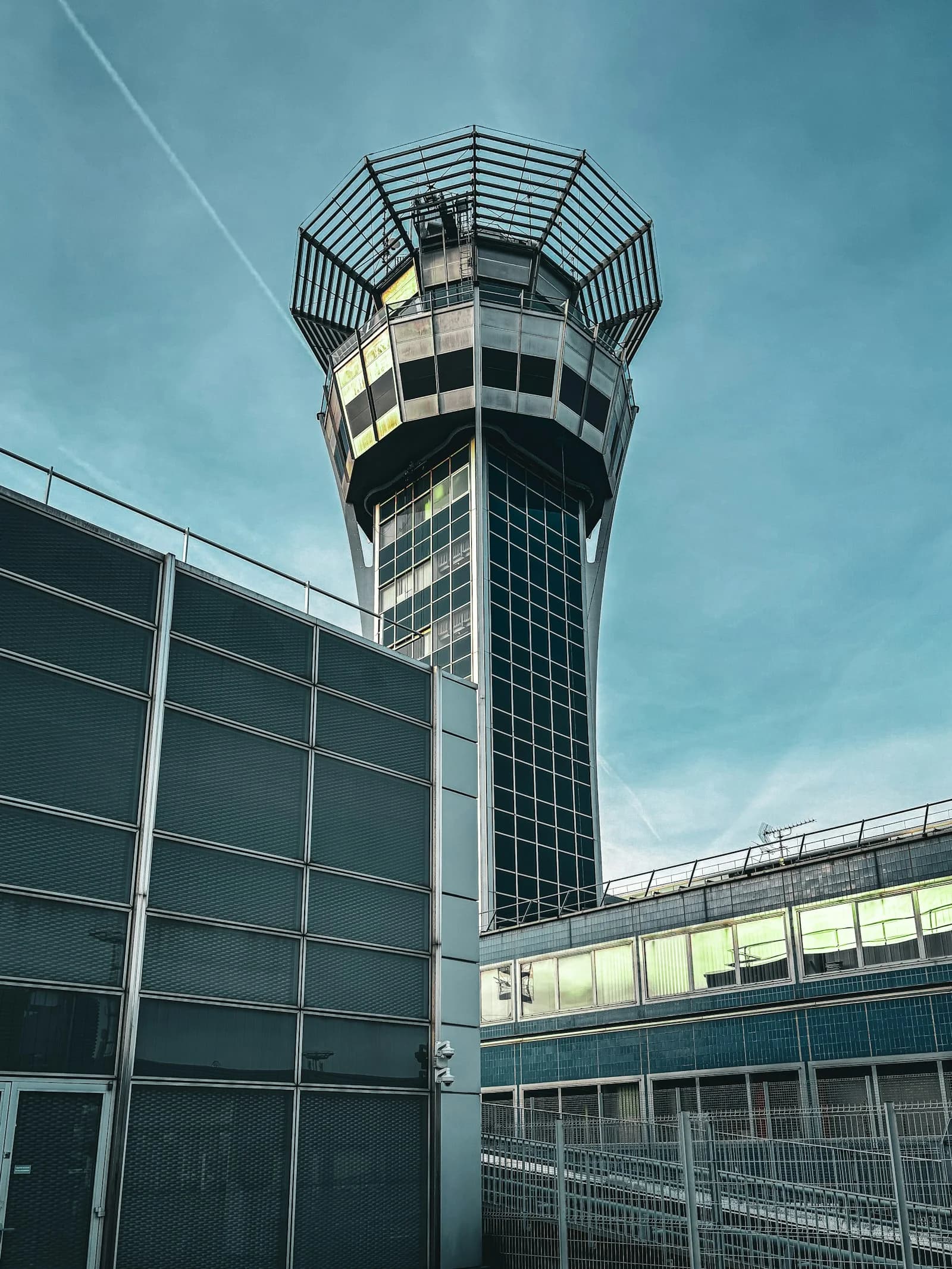
The United States reopened its skies early on Saturday (IST) after the Federal Aviation Administration (FAA) halted every departing flight in the country for more than four hours on Friday, 13 November, in what the BBC described as the longest nationwide ground stop since the 11 September 2001 attacks. US officials have blamed an ageing air traffic control communications network that became overloaded, not a cyber-attack, and have warned that the knock-on effects will take days to clear. For Indian travellers, Air India has issued an advisory warning of possible disruption to its US services.
What happened on Friday
The FAA announced the ground stop at 3:54 pm Eastern Time on Friday (2:24 am IST on Saturday), saying all flights departing within the US would stay on the ground until further notice, the BBC and Al Jazeera reported. The agency cited "extraordinary circumstances" arising from a communication issue affecting all of its air traffic control centres. Transportation Secretary Sean Duffy said in a post on X that the problem was "a communication issue impacting all Air Route Traffic Control Centers", according to a Reuters report carried by Deccan Herald.
Aircraft that were already airborne were allowed to continue. The BBC reported that more than 3,500 planes were in the air when the order came; some were diverted and others flew on to their destinations. Duffy said the airspace was reopened at 8:15 pm Eastern Time (6:45 am IST on Saturday), Al Jazeera reported, but he cautioned that restarting operations "is going to be slow" and depended on whether pilots and cabin crew were available.
How big was the disruption
Exact numbers vary depending on the tracking service:
- FlightAware, cited by the BBC, counted more than 8,500 delayed and nearly 8,000 cancelled flights on Friday.
- Flightradar24, cited by Al Jazeera, put Friday's cancellations at more than 4,700 and delays at 10,000, with about 700 Saturday flights already cancelled.
- Cirium, an aviation analytics firm, said about 11,000 flights carrying more than 1.5 million passengers had been due to leave US airports after 4 pm Eastern Time. By 7:05 pm, at least 827 flights had been diverted, 670 of them returning to the airports they had left, Al Jazeera reported.
The effects spread well beyond the US. According to Eurocontrol's website, as reported by the BBC, all US-bound traffic from its 42 member states was suspended "on request of the FAA due to technical issues". Sydney Airport grounded all flights bound for the US, and Air Canada cancelled flights between the two countries.
Duffy said tens of thousands of people were stranded at airports, many "without any knowledge of where they're going to sleep tonight", the BBC reported. Delta Air Lines and United Airlines said they were resuming operations, American Airlines said it was trying to run as many of its remaining evening flights as possible, and JetBlue said it would restart on Saturday morning.
What officials say caused it
At a news conference on Friday night, Duffy blamed a legacy communications system. "So this is analogue telecom. Our switches, our routers actually got overloaded with data and they went down," he said, as quoted by the BBC. He said communications and radar were affected, though Al Jazeera reported him saying there was no total loss of either. "We have old switches, old routers. We use 1980s little copper lines. It's an old system that went down and went down everywhere," he added.
Homeland Security Secretary Markwayne Mullin said officials had seen "zero evidence" of a cyber-attack. He also ruled out any connection to the global Microsoft outage that began on Thursday, the BBC reported. Microsoft said separately: "We have no indication that the FAA's nationwide ground stop is related to any Microsoft services," according to Deccan Herald. According to the BBC, Mullin said that new technology introduced into the old air traffic control system had overwhelmed it.
Background: a system with known weak spots
Friday's halt was only the second nationwide stoppage since the period immediately after the 9/11 attacks, the BBC reported. The previous one, in January 2023, followed the failure of the system that sends safety notices to pilots. Dr Guy Gratton, an associate professor of aviation at Cranfield University, told BBC Verify that episode lasted 1 hour and 52 minutes, delaying about 9,500 flights and cancelling about 1,300. "This looks like the worst since 9/11, but clearly not on that scale," he said.
The network's weaknesses have been documented for years. The Reuters report carried by Deccan Herald gave this timeline:
- 2024: The US Government Accountability Office (GAO) reported that the FAA itself rated 51 of its 138 air traffic control systems as unsustainable and another 54 as potentially unsustainable.
- July 2025: Congress approved $12.5 billion to modernise air traffic control infrastructure, including telecommunications and radar.
- September 2026: A telecommunications circuit serving a Philadelphia facility failed. A construction crew in New Jersey then cut the backup fibre-optic line, and about 9,500 US flights were delayed or cancelled. "When it fails, we just don't have the redundancy that we would get if we had a modern architecture," FAA Administrator Bryan Bedford said at the time.
- September 2026: The GAO warned that the FAA had no reliable cost estimate and no integrated master schedule for modernisation. As of May it was running 11,389 separate, uncoordinated project schedules.
- 13 November 2026: On the day of the ground stop, the White House and the Transportation Department asked Congress for another $30.1 billion for airports and air traffic control, including $10.1 billion for modernisation. The administration said 68% of the FAA's old copper telecom network had already been replaced with fibre.
Duffy put the cost of a full overhaul at about $50 billion and warned: "It's going to continue to fail," the BBC reported.
What experts are saying
Tony Stanton, a former senior executive at Australia's Civil Aviation Safety Authority, told Al Jazeera he was surprised officials had not anticipated an outage, since a GAO report in September had flagged the risk. "These are things that can be foreseen, can be anticipated, and we should have plans in place so that the system has a minor impact rather than the major impact we're seeing today," he said.
Ron Bartsch, a professor of international aviation law at the University of the South Pacific, questioned why backup systems did not take over. "The whole aviation community is based on redundancy," he told Al Jazeera, adding that the failure of a backup to kick in "raises more questions" than it answers. Todd Curtis, chief executive of AirSafe.com, said that even after a full fix it would "take more than a day to get back to normal", because airline networks route passengers through connecting hubs.
What it means for Indian travellers
Air India has issued a travel advisory warning of possible "consequential disruptions" to its flights to and from the US, All India Radio's news service reported on Saturday morning. The airline asked passengers to check the latest status of their flight on its official website and to plan their journey to the airport with that in mind. It said its teams were monitoring the situation closely and would share updates. Although departures have resumed, airlines warned that delays and cancellations could continue, Telangana Today reported.
Students, families and business travellers heading to the US in the next few days, including those flying on foreign carriers or changing planes at US hubs, should check their bookings directly with their airline before setting out.
What is established and what is still uncertain
Established: the ground stop applied nationwide and lasted more than four hours. Aircraft already in the air were allowed to land. US officials attribute it to overloaded legacy telecom equipment, and they say there is no evidence of a cyber-attack or of a link to Microsoft.
Uncertain: Reuters reported that it was not immediately clear what caused the equipment overload. Officials have not publicly named the new technology that Mullin said overwhelmed the system. Reports also differ on the stop's length: Al Jazeera described it as lasting five hours, while Duffy and the BBC said more than four. The final count of cancelled and delayed flights is not settled either, and estimates from tracking firms differ by thousands.
What happens next
Duffy said the outage would cause a ripple effect lasting a few days. "It's going to take us some time to unwind what's happened this afternoon," he said, as quoted by the BBC. He said he expected the system to be "back up and operational" in time for the Thanksgiving travel rush, which starts in less than two weeks and is one of the busiest periods for US air travel, Al Jazeera reported. Washington's new funding request now goes to Congress. The GAO has warned that weak planning could push the FAA's goal of finishing the first phase of modernisation by December 2028 further back, leaving the agency dependent on failure-prone systems for longer.