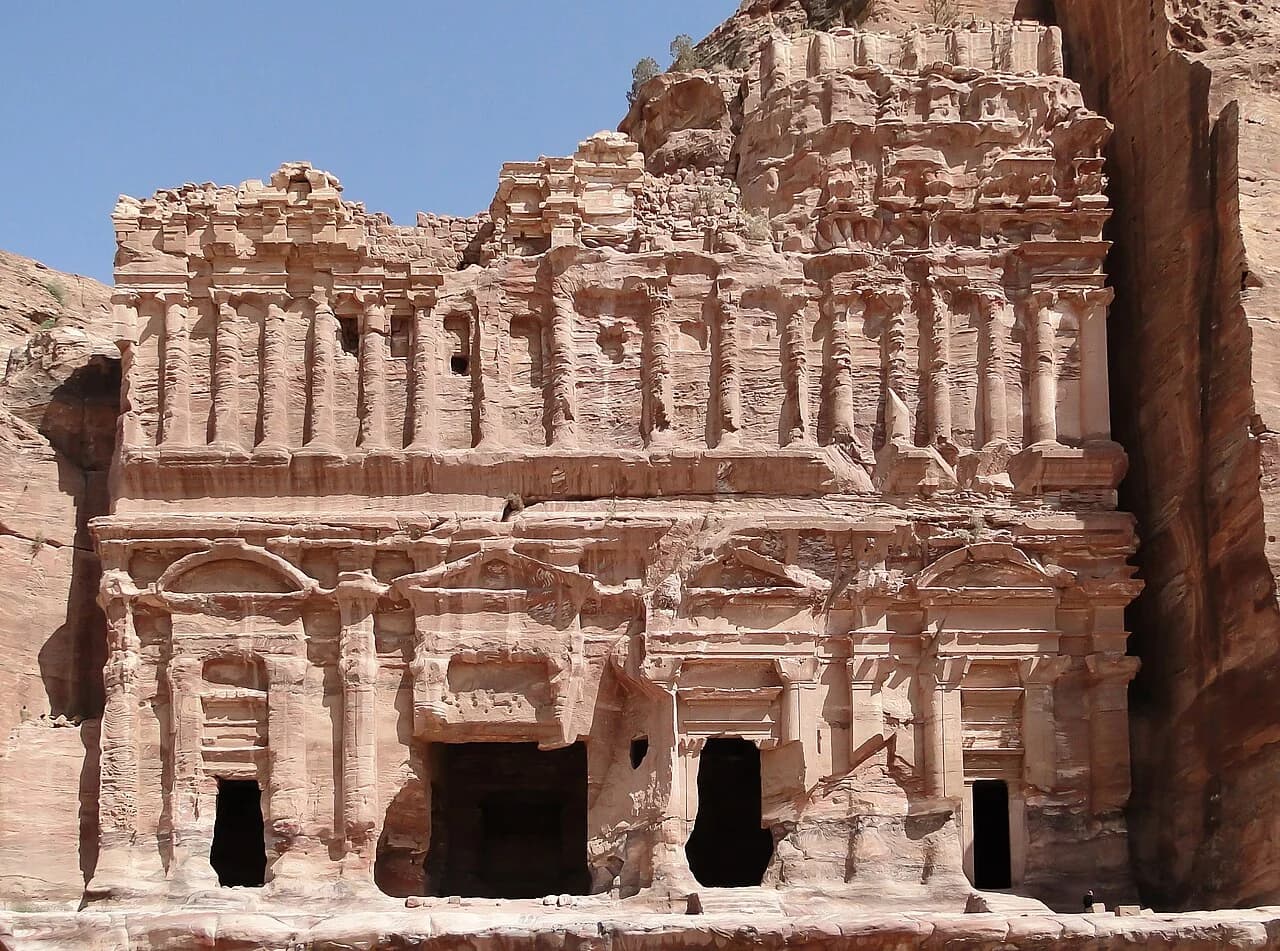
UNESCO and the Government of Italy on Saturday, 28 November 2026, launched a €2 million project to conserve the Palace Tomb, part of the group of monuments known as the Royal Tombs at Petra in southern Jordan. Italy's Ambassador to Jordan, Pier Luigi Zamporlini, and UNESCO Representative to Jordan Noha Bawazir signed the arrangement at a ceremony in Petra, according to a UNESCO announcement.
What will the €2 million project do?
The project will stabilise and restore the Palace Tomb over 24 months, beginning with the most fragile, high-risk sections of the monument. UNESCO said the work will update the conservation plan prepared during an earlier Italian-funded phase and then carry out targeted restoration, consolidation and structural reinforcement. Urgent stabilisation is intended both to protect the monument and to make the area safer for visitors.
The programme will be implemented by UNESCO with the Petra Development and Tourism Region Authority (PDTRA) and Jordan's Department of Antiquities. It also has a training element: Jordanian professionals and staff of national authorities will receive on-the-job training, and members of Petra's local communities are to be employed on the conservation works under specialist supervision.
Why does the Palace Tomb need urgent work?
The monument faces structural instability, water infiltration and weathering, UNESCO said. The Palace Tomb is unusual because it combines façades carved directly into the rock with sections of freestanding masonry, which makes it more complicated to stabilise than a purely rock-cut tomb.
Water has long been a concern at the Royal Tombs. In an earlier phase, UNESCO's Amman office worked with Italian funding on a study of the Royal Tombs' water-management system alongside conservation of the Palace Tomb, noting that the ancient Nabataean drainage channels no longer protect the façades from erosion. Information on that earlier phase is available on UNESCO's Petra conservation page.
Who attended and what did they say?
Jordan's Minister of Tourism and Antiquities, Imad Hijazin, and PDTRA Chief Commissioner Adnan Al Sawair attended the signing, along with representatives of the Jordan National Commission for Education, Culture and Science.
"Petra belongs to Jordan, but its beauty, history and universal value speak to the whole of humanity," Ambassador Zamporlini said, according to UNESCO.
Bawazir said the project was about building long-term local capacity, telling the gathering that "we are strengthening the Jordanian expertise needed to care for the monument over the long term."
UNESCO noted that the project comes at a difficult time for tourism in the region and for the communities whose livelihoods depend on Petra's visitor economy, which is why local hiring has been built into the plan.
What happens next?
With the arrangement signed, the partners will first revise the conservation plan and then move to emergency stabilisation of the high-risk areas before wider restoration. A detailed work schedule had not been published at the time of writing.
The launch adds to a busy week for heritage conservation worldwide. In India, MapMyTimes reported that the Archaeological Survey of India unveiled a digital reconstruction of Hampi's Stone Chariot to raise awareness among visitors about preservation.
Photo source · Bernard Gagnon, CC BY-SA 3.0