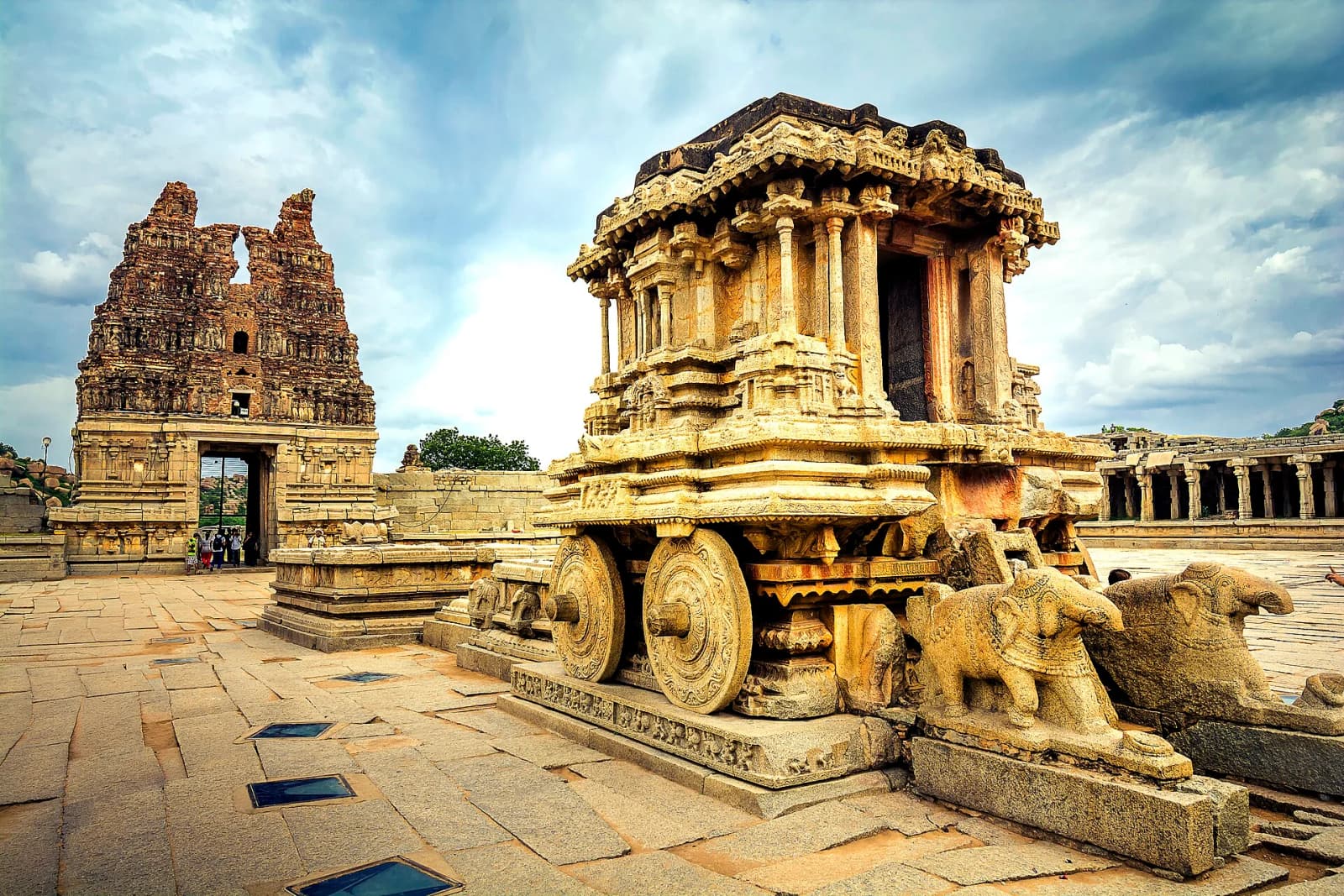
The Archaeological Survey of India's (ASI) Hampi Circle has put up a digital illustration of the famous Stone Chariot at the Vijaya Vittala temple complex in Hampi, Karnataka, showing visitors how the monument is believed to have looked before parts of it were lost, The Hindu reported on 28 November 2026. The ASI described it as a first-of-its-kind initiative, timed to World Heritage Week.
What does the illustration show?
The illustration depicts the features the stone structure no longer has: the vimana, or tower, that once crowned the chariot and the horses that originally pulled it. Today, two elephant statues stand in front of the chariot, giving the impression that they are the ones drawing it.
How was it made?
K. Rama Krishna Reddy, Superintending Archaeologist of the ASI, told The Hindu that the image was built from archival photographs, historical documents and other evidence held in the archives. One key reference was a photograph taken in 1867–68 by the British photographer Edmund David Lyon.
The drawing was sketched by architect Parnavi Bangar along with others from the Reminiscing History team, Mr. Reddy said.
Why is the ASI doing this?
"It was presented in the temple complex to create awareness among people on the occasion of World Heritage Week across the country," Mr. Reddy said. "Our aim is to interpret monuments that have suffered damage over time due to weather and other reasons and cannot be physically restored to their original form."
He said the project is meant not only to show visitors the chariot in its prime but also to help them understand why the surviving structure needs to be protected. The approach lets the agency tell a fuller story of a monument without touching the original stone.
Can the public help?
Yes. Mr. Reddy appealed to people who hold old photographs of monuments and heritage sites to share them, saying the ASI can create and present similar digital illustrations when such material is available.
Why it matters for visitors
Showing its lost elements digitally gives visitors context that a weathered monument alone cannot, while leaving the original untouched. The effort is part of a wider push by the ASI on heritage interpretation and protection, which has also included the recent handover of three repatriated Chola and Vijayanagara bronzes to Tamil Nadu.
What happens next?
The ASI has indicated that more such illustrations are possible for other damaged monuments if archival images can be found, and has invited the public to contribute old photographs to help.
Photo source · Ram Nagesh Thota, CC BY-SA 4.0