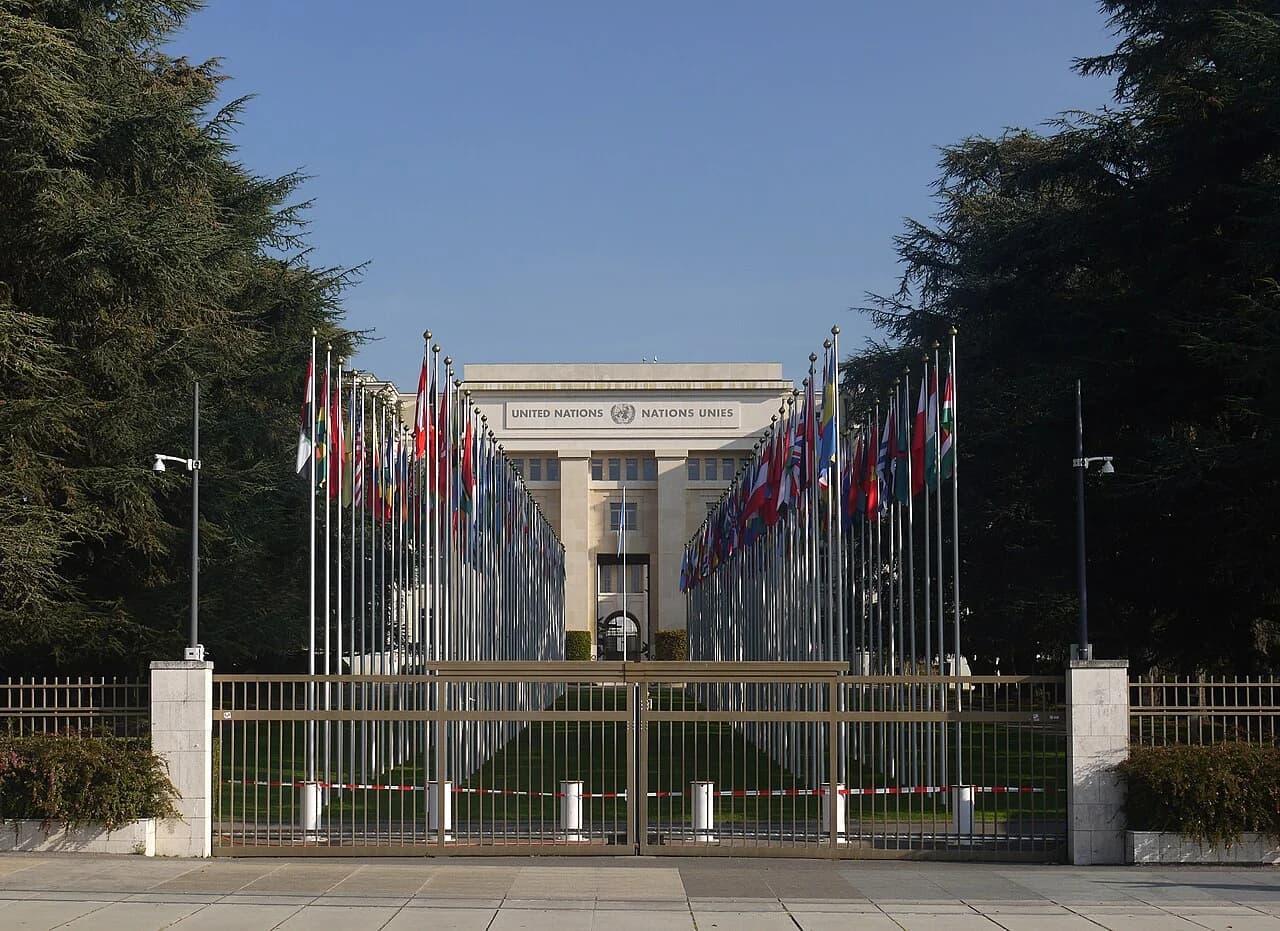
The UN's top human rights official has urged governments to move quickly towards a treaty on autonomous weapons, warning that the chance to regulate such systems effectively is slipping away as the technology advances. The appeal from Volker Türk, the UN High Commissioner for Human Rights, was delivered at a UN press briefing in Geneva on Friday, 13 November, three days before states meet to review a key arms convention.
'A machine must never decide'
Speaking on Türk's behalf, his office's spokesperson Shabia Mantoo said the High Commissioner wanted states to agree urgently on a treaty regulating autonomous weapons ahead of the Seventh Review Conference of the Convention on Certain Conventional Weapons (CCW). Türk warned that these systems could soon become widely available, and that the window for an effective treaty was narrowing as the technology develops.
"A machine must never have the power to decide whether a human being survives or dies," Türk said, according to the briefing.
He called for two kinds of prohibition: a ban on autonomous weapons that target people, whether by design or in the way they are used, and a ban on weapons whose functioning humans cannot fully understand, predict, explain or control. Human judgement, he stressed, must stay at the centre of any decision to use force.
What the Geneva conference will decide
The review conference runs from 16 to 20 November at the Palais des Nations in Geneva under the presidency of Swiss Ambassador Julien Thöni, according to the UN Office at Geneva. Such reviews take place every five years.
Michael Spiess of the UN Office for Disarmament Affairs (UNODA) told reporters that the convention now has 128 High Contracting Parties. The meeting will open on Monday with a video message from the UN Secretary-General, and the High Representative for Disarmament Affairs will attend.
Spiess said the main item on the agenda is the mandate for continuing talks on lethal autonomous weapons systems. Parties agreed in September on a list of elements to consider, and the conference is expected to settle the next steps. He added that states have still not agreed whether any new instrument should be legally binding, nor on a timeframe for it.
Decisions will be taken by consensus, Spiess said, and the conference will concentrate on the framework for further negotiations rather than on drafting the weapons instrument itself. Delegates will also take up the humanitarian impact of mines and newer methods of warfare not covered by other agreements.
Background: a decade of talks
The CCW is an international humanitarian law treaty that bans or restricts weapons seen as causing unnecessary or unjustifiable suffering, or as striking civilians indiscriminately. Its five protocols deal with non-detectable fragments, mines and improvised explosive devices, incendiary weapons, blinding laser weapons and explosive remnants of war, the UN Office at Geneva said.
A Group of Governmental Experts on lethal autonomous weapons systems was set up under the convention in 2016. The review conference will consider that group's outcome and decide how the work continues.
Why it matters
Because the conference works by consensus, any single state can hold up agreement on a negotiating mandate. Türk's intervention signals that the UN human rights system wants clear limits written down before such weapons spread further, rather than continued open-ended discussion.
What next
The conference opens on 16 November. Izumi Nakamitsu, the UN High Representative for Disarmament Affairs, is scheduled to brief the media in Geneva on 18 November, and open sessions will be streamed on UN Web TV.