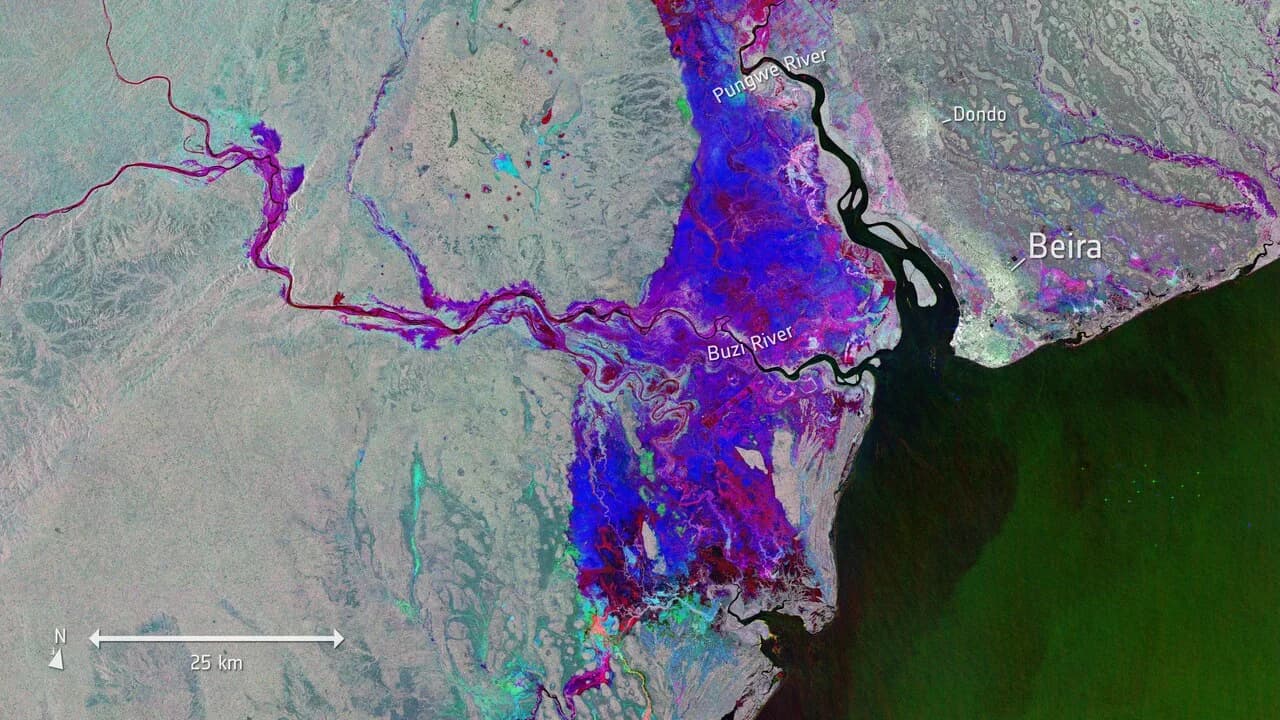
Six United Nations agencies on Thursday, 12 November, launched a joint platform at the COP31 climate conference in Antalya, Türkiye, aiming to unlock more than $3 billion in risk financing by 2030 so that 75 million people and their livelihoods are protected before climate shocks and natural hazards strike, UN News reported.
The UN Disaster Risk Financing (DRF) Platform brings together the Food and Agriculture Organization (FAO), the International Organization for Migration (IOM), the UN Office for the Coordination of Humanitarian Affairs (OCHA), UNICEF, the UN refugee agency UNHCR and the World Food Programme (WFP).
Turning forecasts into early action
"Disasters are increasingly predictable, yet the financing needed to act ahead of them remains slow and fragmented," said Lisa Doughten, OCHA's Director of Financing and Outreach.
Under the platform, the agencies will share expertise, pool data and design joint solutions, linking predictive analysis to ready money so that early warnings translate into anticipatory action. UN News said working with insurers and financial markets will be central to keeping costs down as the financing grows.
The initiative has already produced early results. With help from WFP's specialist insurance teams, OCHA and UNICEF have taken out insurance policies that act as a financial safety net for their anticipatory action programmes.
"A robust forecast can give us days, sometimes even weeks, to act before a flood, storm or heatwave puts children at risk," said Gernot Laganda, UNICEF's Global Practice Director for Climate and Environment. "Insurance ensures we have the money available to act on that warning, even in a year when several disasters come at once."
A small slice of humanitarian money
Despite its promise, pre-arranged financing still makes up less than two per cent of global humanitarian funding, well below what is needed, according to UN News.
WFP is the largest user of such financing within the UN system. This year it has helped secure nearly $211 million in pre-arranged finance to protect up to 9.6 million people in more than 50 countries.
The approach matters for displaced people too. "For millions of refugees already on the frontlines of the climate crisis, acting early can save lives, protect livelihoods and prevent further displacement," said Antón Leis García, UNHCR's Assistant High Commissioner for Operations.
Why it matters
Humanitarian aid has traditionally arrived after a disaster has done its damage. The new platform is designed to reverse that sequence by agreeing on the money and the triggers in advance, so that agencies can move as soon as a reliable forecast comes in. The launch came a day after UN Secretary-General António Guterres said early warning systems are saving lives worldwide but that, for millions of people, the warning never arrives, urging the world to protect everyone on Earth by the end of 2027.
The coming years will show whether the agencies can grow pre-arranged funding — still under two per cent of humanitarian money — fast enough to reach the $3 billion goal set for 2030.
PS · European Space Agency, CC BY-SA 3.0 IGO