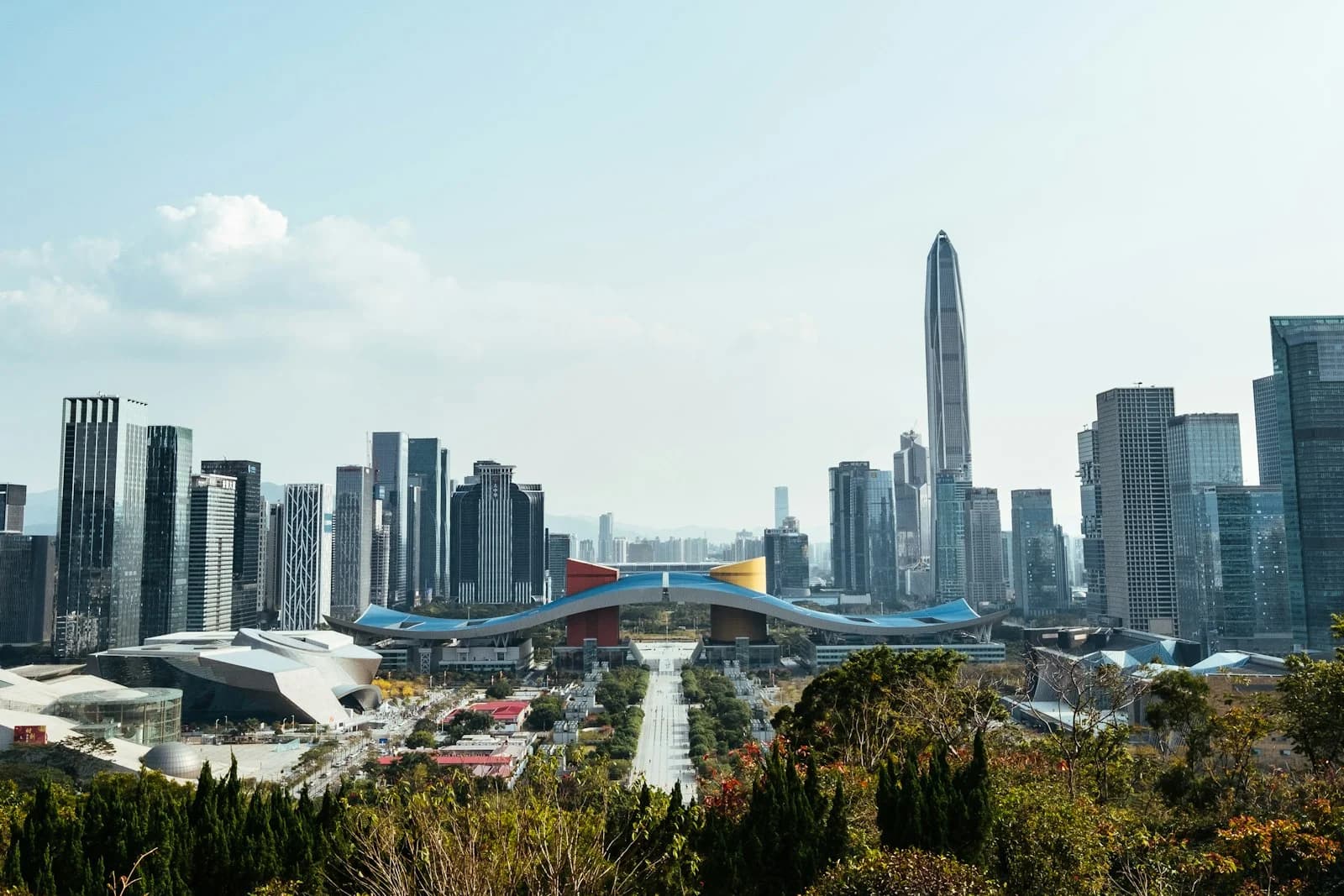
US President Donald Trump will sit down with Chinese President Xi Jinping and Russian President Vladimir Putin in the southern Chinese city of Shenzhen next week, the White House said on Friday. It will be the first time the three leaders hold a joint meeting. The talks are planned on the sidelines of the Asia-Pacific Economic Cooperation (APEC) leaders' summit, which runs on 18 and 19 November.
Washington is keeping expectations low. A senior Trump administration official said the US does not expect any agreement to come out of the meeting, describing it as the "entry point" and a first leader-level conversation rather than a negotiation set to produce a deal.
Nuclear arms at the top of the agenda
White House Assistant Press Secretary Olivia Wales told reporters that the president "has made it clear that, among other topics, he will discuss the reduction of nuclear weapons in the world", calling proliferation "very dangerous". A senior US official said Trump also intends to raise the war involving Iran.
The meeting comes about nine months after the New START treaty between the US and Russia expired in February, leaving the world's two largest nuclear arsenals without treaty limits for the first time in more than 50 years, Al Jazeera reported. Trump turned down a Russian proposal to extend the treaty and has said he wants a new arrangement that also covers China. Citing figures from the Stockholm International Peace Research Institute (SIPRI), Al Jazeera noted that Russia holds the most nuclear warheads, followed by the US and then China.
According to Anadolu Agency, the senior official argued that China's nuclear arsenal is "growing by far the fastest in the world" and that Beijing should "step up to the adult table".
Ukraine kept off the table
US officials said the war in Ukraine will not be discussed in Shenzhen. One senior official, speaking on condition of anonymity, said Washington is running a "whole other track" of talks with Kyiv and Moscow, and that because China is not part of that process, "it doesn't seem appropriate to have the Ukraine discussion there".
That has not fully settled nerves in Kyiv. Ukrainian President Volodymyr Zelenskyy has voiced concern that the meeting could be used to discuss a Ukraine settlement without Ukraine at the table, Al Jazeera reported. The gathering has also drawn comparisons with the 1945 Yalta Conference; Kremlin spokesman Dmitry Peskov rejected the parallel, saying agreements reached in Shenzhen cannot be imposed on others, while calling the meeting "extremely significant".
Euronews reported that neither Moscow nor Beijing had commented specifically on the trilateral meeting at the time of the White House announcement. Chinese Foreign Ministry spokesperson Mao Ning, speaking about APEC more broadly, said Beijing hoped to achieve "more practical results" with partners on artificial intelligence, trade, connectivity and the digital economy.
Trump's Asia itinerary includes a Quad meeting
The China stop is part of a wider Asia trip. According to the schedule outlined by Wales and reported by Anadolu Agency, Trump leaves Washington on Monday for Manila, where he is due to attend a Quad leaders' meeting and a US-ASEAN Special Summit, sign a trade agreement with Thailand and attend a welcome ceremony with Philippine President Ferdinand Marcos Jr. The Quad grouping brings together the US, India, Japan and Australia, which makes the Manila leg of the trip closely watched in New Delhi.
Trump is then scheduled to travel to Shenzhen on Wednesday. On Thursday he is due to hold a bilateral meeting and working lunch with Xi before the three-way meeting.
Trade and rare earths with Xi
A second senior US official described the Trump-Xi bilateral as "an implementation check-in, a stocktaking" of the two countries' trade agreement, and said no tariff changes are expected to be announced. The official said the US is not receiving rare earths at the pace and level it wants, which is why the Busan agreement was extended by two months rather than six, and that Trump is expected to raise the matter with Xi.
Officials also said Tesla and SpaceX chief Elon Musk will travel with Trump to China but will not take part in the official meetings.
Why it matters
A first-ever joint meeting of the US, Chinese and Russian leaders marks a notable moment in great-power diplomacy, especially with no treaty currently capping US and Russian nuclear arsenals. With Washington itself predicting no agreement, the key questions for next week are whether the three leaders agree to keep talking on arms control, and whether Beijing and Moscow publicly confirm the format the White House has announced.