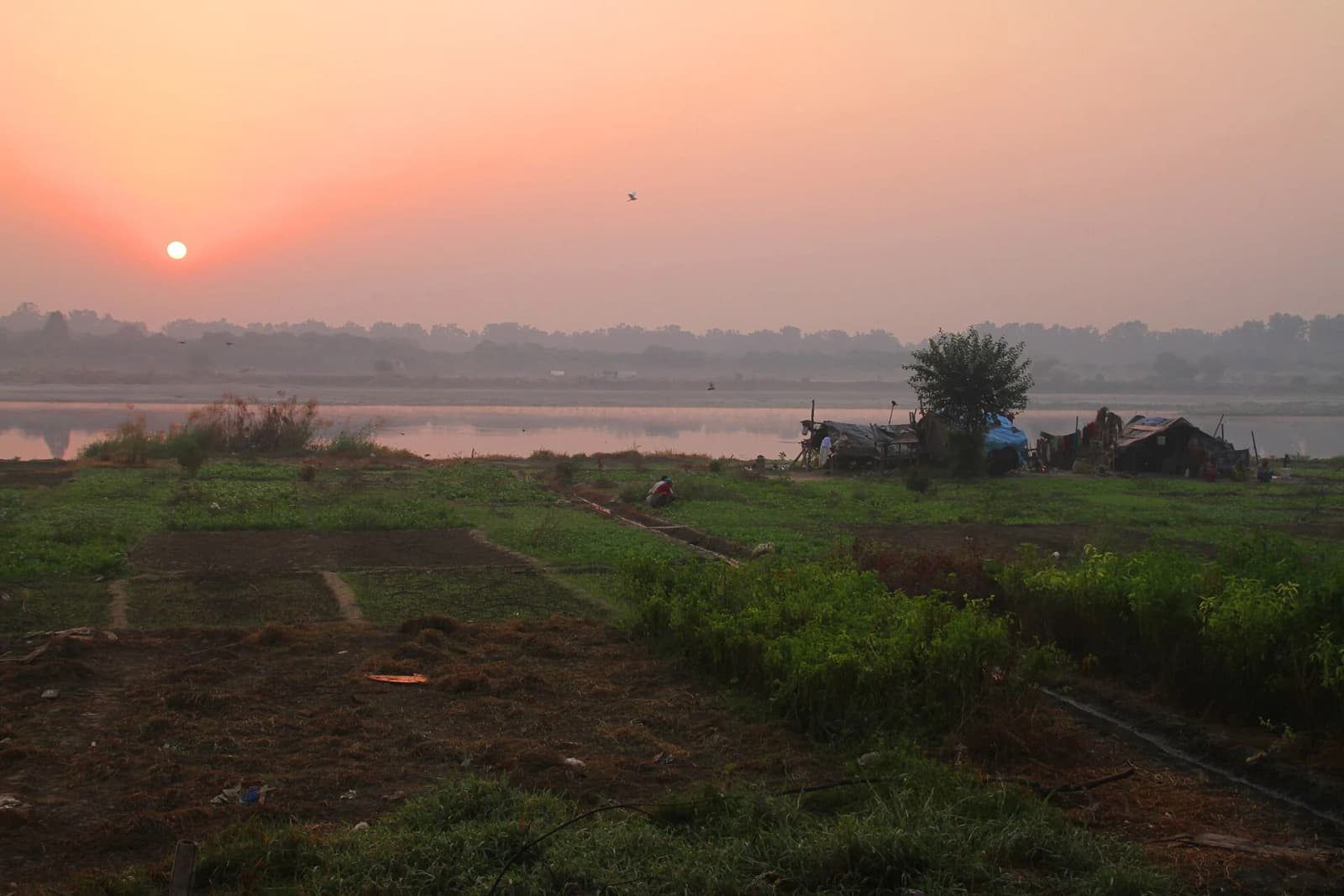
Pollution in the Yamuna has only gone up despite the huge sums spent on cleaning it, the Supreme Court has said, ordering the Central Pollution Control Board (CPCB) to measure water quality at every point where the river and its major drains enter and leave a state, Union Territory or district. Any of them that sends the river out dirtier than it came in will be held accountable and penalised. The order, dated 4 November, was reported on Monday, 16 November, by Hindustan Times and LiveLaw.
'Everything wrong with civic administration'
A bench of Justices Manoj Misra and Manmohan, hearing a plea on cleaning the river, linked the Yamuna's condition directly to how towns along its banks are run.
"Everything that is wrong with the civic administration in towns, cities and villages situated along the banks of the river is reflected in the poor health of the river and in the 520 drains that discharge wastewater into the Yamuna," the bench said.
The court said industrial pollution and untreated sewage must be curtailed, if not stopped altogether, at the source, and that simply building more sewage treatment plants (STPs) would not be enough. Where stopping it at source is not possible, sewage must first be tapped and then treated — something the bench said would stay difficult without a robust sewer network and because stormwater and sewage drains are joined.
According to Hindustan Times, the bench also observed that civic bodies would find it difficult, if not impossible, to tap sewage in most illegal and unauthorised colonies built on encroached land. Unless such colonies and slum clusters on the drains and the river bed are removed, with rehabilitation of their occupants, their sewage will keep flowing into the river, it said.
Entry-exit monitoring and penalties
The core of the order is a new accountability test. If water quality worsens on any parameter while flowing through or leaving a state, Union Territory or district, that unit "shall be held accountable and penalised", the court said. The compensation or fine is to be deposited with the Supreme Court registry, and the CPCB has been asked to propose a formula for calculating it. LiveLaw reported that states may recover the amount from polluters and negligent officials after an inquiry.
The court also told the CPCB to investigate and report on any pollution incident in the river — fish deaths, white foam, algal bloom, or a rise in Biochemical Oxygen Demand, Chemical Oxygen Demand or Total Suspended Solids — stating the cause and the remedy.
Delhi's plan questioned
According to LiveLaw, the bench flagged discrepancies in the Yamuna Action Plan. The plan claimed there were no encroachments on 35 water bodies and wetlands in Delhi's Zone 'O', while the Delhi government's own annexure marked all 35 as encroached. The court also noted that none of Delhi's 37 existing STPs met all prescribed standards, and called for Zone 'O' to be protected as a green zone, with existing structures removed in accordance with law and occupants rehabilitated wherever legally entitled.
The court invoked the principle of common but differentiated responsibilities, saying states that share the Yamuna must treat it as one continuous ecosystem and act according to their contribution to the pollution and their capacity to address it, LiveLaw reported.
Smart meters, surprise checks
- All STPs, common effluent treatment plants and government-commissioned biogas plants must install tamper-proof smart energy meters within one month.
- Treatment plants must upload live data on their operations and discharge quality.
- The CPCB is to carry out surprise inspections every quarter, with environmental compensation recoverable for each day of non-compliance.
- Central and state bodies, and public and private plant operators, must give the CPCB and its designated agencies unhindered access to premises, records and data.
What happens next
The matter is listed for hearing on 13 January, Hindustan Times reported.