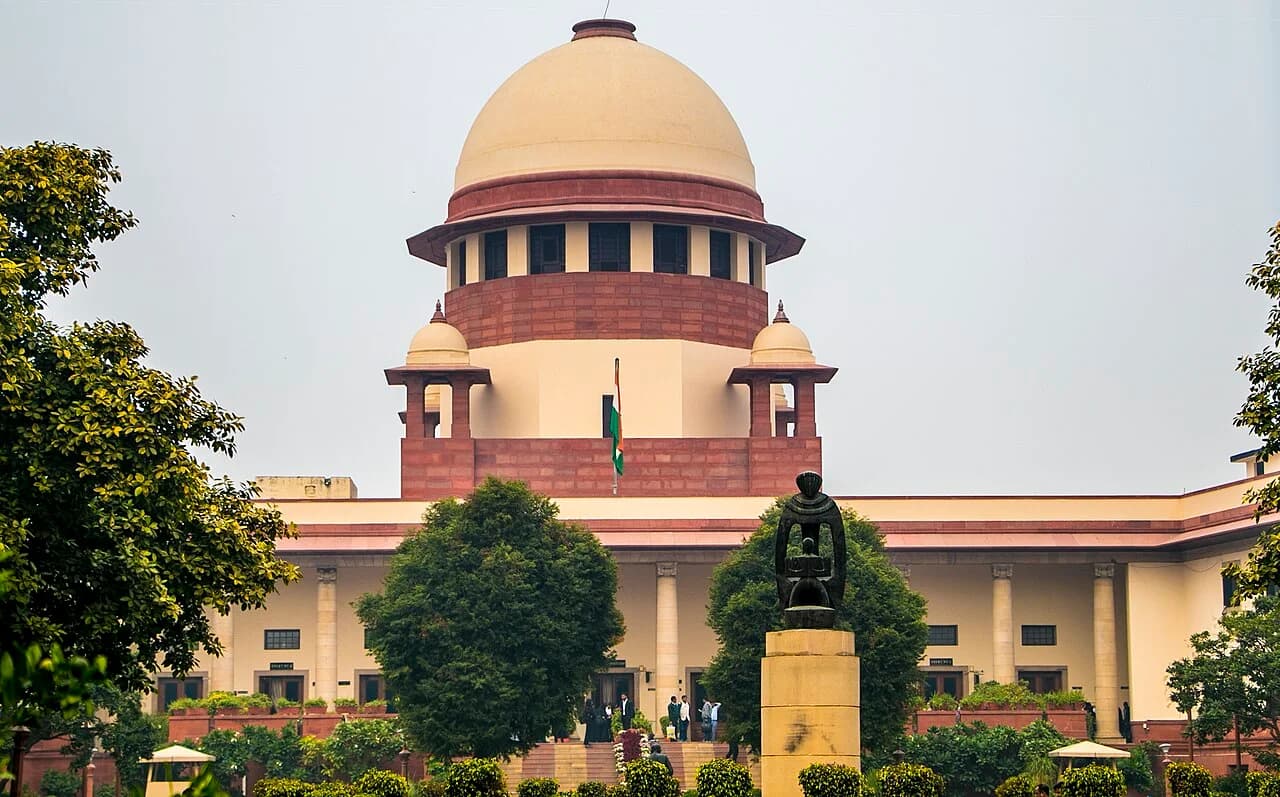
The Supreme Court of India has struck down two Uttar Pradesh laws that kept the years retired state employees spent as work-charged, daily-wage, temporary or muster-roll workers from counting towards their pension, ruling in New Delhi on 18 November 2026 that the state could not use legislation to undo a final court verdict.
A Bench of Justices Dipankar Datta and Satish Chandra Sharma declared the Uttar Pradesh Qualifying Service for Pension and Validation Act, 2021, and the Uttar Pradesh Entitlement to Pension and Validation Act, 2025, unconstitutional. Justice Datta wrote the judgment, which was reported by LiveLaw, ThePrint and ETV Bharat between 20 and 21 November.
Who stands to benefit?
Retired employees who were later regularised in Uttar Pradesh government departments, and whose earlier service was left out of their pension calculation, stand to benefit. Reports name the Ground Water, Public Works and Irrigation departments. According to ThePrint, many of these workers joined between the late 1970s and the mid-1980s. No official count of affected pensioners has been published.
How the dispute began
Rule 3(8) of the Uttar Pradesh Retirement Benefits Rules, 1961, excluded service in a work-charged establishment from qualifying service for pension. In 2019, in Prem Singh v. State of Uttar Pradesh, a three-judge Bench of the Supreme Court read down that rule and held that such service must count once an employee is regularised. The state's review petition was dismissed in February 2020, ThePrint reported.
Uttar Pradesh then issued an ordinance in 2020 and passed the 2021 Act, with retrospective effect from 1 April 1961. A second law in 2025 introduced the category of "substantive appointee" and sought to validate earlier pension denials.
What the court held
The Bench held that a validating law is valid only if it actually removes the defect a court has identified. It found that both Acts kept the same exclusion under new wording. "Usage of the expression 'substantive appointee' may be novel; but the consequence sought to be achieved is not," the court said, as quoted by ThePrint.
On regularisation, the judgment said the act "obliterates the source or birthmark of the appointment simpliciter", according to LiveLaw. ThePrint reported that the court held the laws violated Articles 14, 16 and 21 of the Constitution, and rejected the state's argument about the financial burden, saying "the bogey of financial constraints of the state should never be raised, even in the passing, to defeat a legal obligation."
What happens next for pensioners?
According to LiveLaw and ThePrint, the court directed that:
- Retired employees may submit their claims, with service details, to the competent authority, which must decide them within six months.
- A claimant must be heard before any rejection, and a rejection must give reasons.
- Arrears remain limited to three years before the Prem Singh petition was filed, with an exception for certain heirs of employees who died before that verdict.
- Amounts not released on time will carry simple interest of 9% a year.
In pending contempt cases, the court gave the state a "further and final opportunity" of six months to pay outstanding amounts, warning that continued failure could amount to aggravated contempt. The Uttar Pradesh government had not publicly responded to the verdict in the reports reviewed.
Photo source · Pinakpani, CC BY-SA 4.0