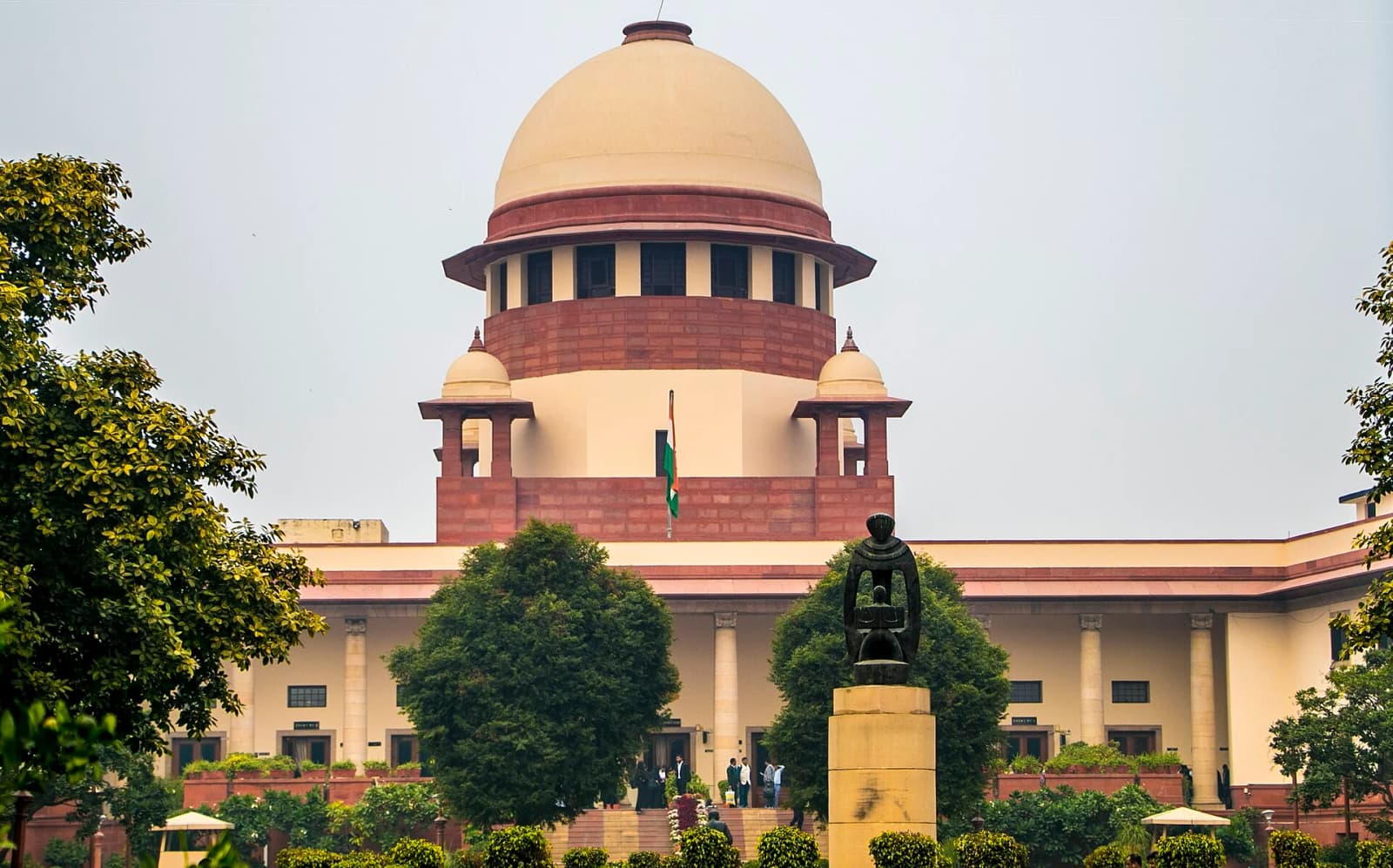
The Supreme Court of India has barred a Delhi commercial court from taking coercive action against homebuyers of a stalled Gurugram housing project in recovery suits filed by the State Bank of India (SBI). The trial court must first decide whether the bank released loan money to the builder in line with the agreement it signed with buyers. The order, passed on 19 November 2026 by a bench of Chief Justice of India Surya Kant, Justice Joymalya Bagchi and Justice V Mohana, was reported by LiveLaw on 22 November.
"Unless a categorical finding is returned that the home buyers are in default, no interim direction regarding payment of installments can be issued against them," the bench said in its order in Ravi Kumar Jangra and another vs Union of India and others.
What was the case about?
The petitioners bought homes in the 'Krishna Housing Scheme' in Sector 14, Sohna, Gurugram, launched by Raheja Developers Limited, according to the order. The buyers, SBI and the developer signed a tripartite agreement for the buyers' home loans. Under it, the bank was to release money as construction progressed.
The order records the allegation that the builder did not keep its commitments under that agreement. It also notes that the bank "appears to have made payment to the builder without any corresponding progress in the construction". The National Company Law Tribunal (NCLT) admitted the developer into the corporate insolvency resolution process (CIRP) on 21 August 2025. During those proceedings, the developer proposed refunding the buyers' deposits in six monthly instalments.
While those proceedings were pending, SBI filed recovery suits against the buyers in the Commercial Court at Saket Courts, New Delhi. That court passed interim directions requiring the buyers to pay instalments to the bank.
What did the Supreme Court direct?
The bench said it is "the bounden duty of the competent Court" to first examine the nexus between the builder and the bank, and whether the bank disbursed the loan "strictly in terms of the Tripartite Agreement". It told the civil court not to take any coercive action against the petitioners "or similarly placed home buyers" until it decides that question.
The court made clear that it had expressed no opinion on the merits and had granted only ad-interim protection. Matters before the NCLT, the National Company Law Appellate Tribunal (NCLAT) and the commercial court will be decided according to law. The commercial court is free to modify its earlier interim directions after hearing the parties. The writ petition was disposed of.
Why does it matter for homebuyers?
Many buyers in stalled projects took loans under tripartite or subsidised-interest arrangements, in which the bank pays the builder directly. When the builder stops construction, they can be left paying for homes that may never be finished. The order requires the trial court to check first whether the bank followed the agreed payment schedule, rather than treating the buyers as defaulters from the start. The protection extends to buyers placed similarly to the petitioners.
According to LiveLaw, the top court has in earlier proceedings raised concerns about a builder-bank nexus in the National Capital Region and directed the Central Bureau of Investigation to look into it. In a separate ruling this week, the Supreme Court held that a builder's lapses under real estate law cannot by themselves make lenders criminally liable (read our report).
What happens next?
The Saket commercial court will have to decide the nexus and disbursement question before any coercive step against the buyers. SBI's and Raheja Developers' responses to the order were not available.
Photo source · Shashwat Nagpal, CC BY 2.0