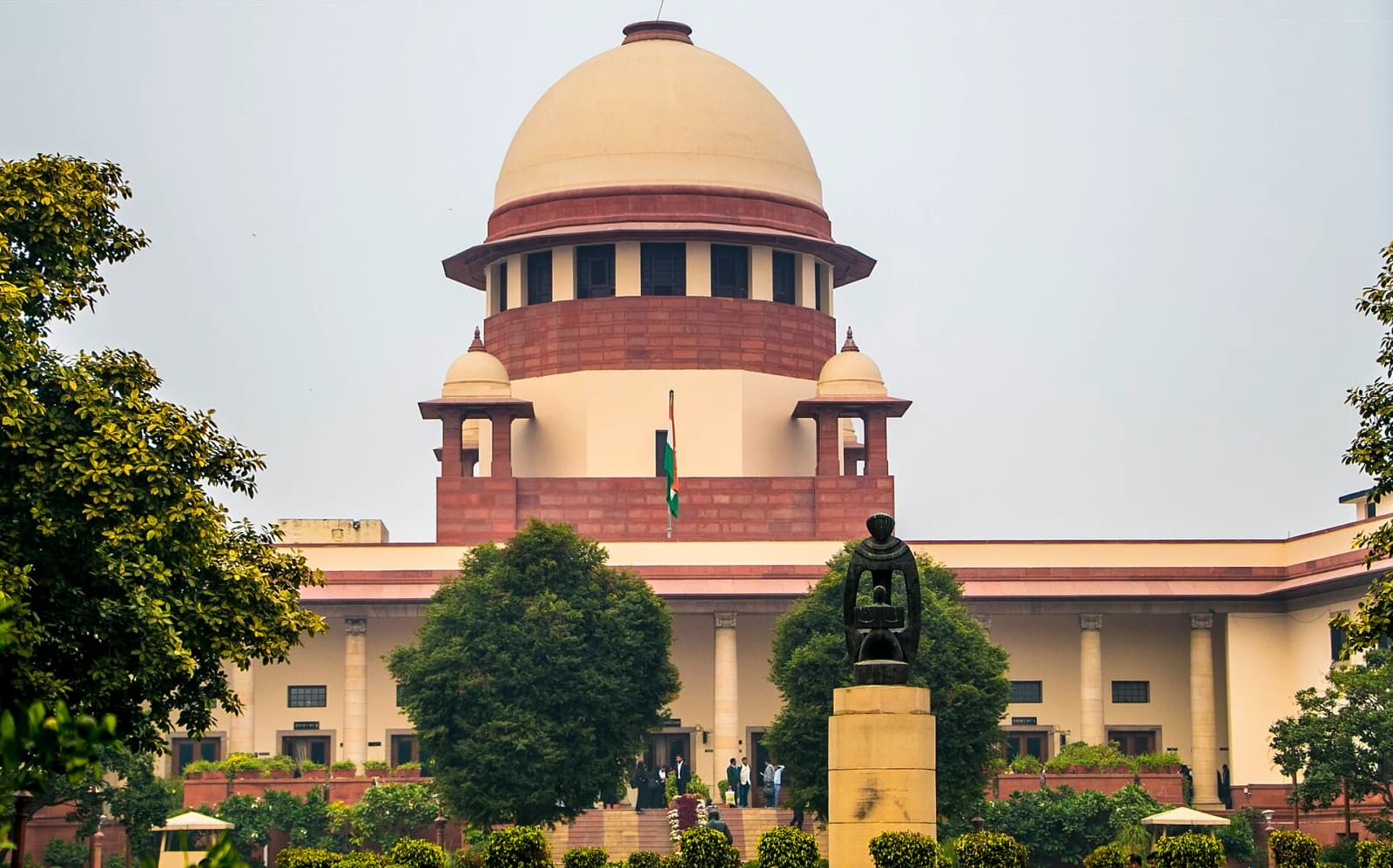
The Supreme Court on Monday, 16 November, dismissed a challenge to a Maharashtra rule that resets the starting point for rotating reserved seats in rural local bodies, holding that no voter or candidate has a vested right to have any particular constituency reserved. The order was reported by legal news outlets LiveLaw and Bar and Bench.
The petition, Rupali Indrabhushan Sonde v. State of Maharashtra, questioned Rule 12 of the Maharashtra Zilla Parishads and Panchayat Samitis (Manner and Rotation of Reservation of Seats) Rules, 2025. Under that rule, the first general election held after the 2025 change is treated as the first election for the purpose of rotation.
What the petitioner argued
According to LiveLaw, Senior Advocate Vipin Sanghi, appearing for the petitioner, said the rule shifted the cut-off for rotation and made the idea of rotation "illusory". He told the court that her constituency had never been reserved and that, when its turn was due, the authorities said the cycle would begin afresh.
Bar and Bench reported that the petition called the rule arbitrary and contrary to Article 14 of the Constitution, and warned that resetting the cycle could mean constituencies with smaller Scheduled Caste and Scheduled Tribe populations never get reserved.
What the court held
The bench said the argument was "attractive at the first blush" but overlooked the fact that nobody holds a vested right to the reservation of a specific seat, LiveLaw reported. The law requires seats to be reserved in proportion to the SC/ST share of a local body's population and provides for rotation, but the manner and timing of that rotation lie within the State government's discretion, the court said.
"We find no reason to hold that the said rule runs counter to either the concept of reservation or rotation of seats," the order said, as quoted by Bar and Bench.
During the hearing, Justice Joymalya Bagchi remarked of the cut-off date that "it can always be shifted by the government", according to LiveLaw.
The special leave petition was dismissed. LiveLaw reported that the court clarified the dismissal would not stop the petitioner from making a representation asking for the rotation scheme to be reconsidered in accordance with law.
Background
The petitioner had first gone to the Bombay High Court. Bar and Bench reported that its Nagpur Bench rejected the challenge in September 2025. LiveLaw quoted the High Court as saying that no person can claim reservation of a particular seat, and that population shares had changed and constituency boundaries had been redrawn.
The two outlets differed on the composition of the Supreme Court bench: LiveLaw named Justices Joymalya Bagchi and V Mohana, while Bar and Bench said Chief Justice of India Surya Kant sat with them.
PS · Subhashish Panigrahi, CC BY-SA 4.0