The Supreme Court of India on 17 November 2026 set aside the dismissal of a Nagpur school teacher, ruling that a disciplinary inquiry is tainted when the complainant's close relative sits on the committee judging the case, even if no actual bias is proved. A bench of Justice Manoj Misra and Justice Manmohan restored a School Tribunal order that had directed her reinstatement with back wages.
What did the Supreme Court decide?
The court held that an employee need not prove a specific act of bias; it is enough that a fair-minded person would see a "reasonable likelihood" or "real possibility" of bias. In the judgment, written by Justice Manmohan, the bench said that "where the roles of complainant, prosecutor, witness and adjudicator overlap or intersect", the inquiry "suffers from a fundamental vice, as the separation of functions essential to a fair disciplinary proceeding collapses entirely". It said the same test applies to administrative bodies as to courts.
What was the case about?
Kiran Bhujade was appointed an Assistant Teacher in 2009 at a school run by Sudhir Shikshan Sanstha in Nagpur district, Maharashtra. After the school got 20% grant-in-aid in 2016, she alleged that the Sanstha's Secretary, Rajesh Masurkar, kept her name off the salary grant lists. She complained to the Education Minister in March 2021, and a committee set up by the Education Officer found in June 2021 that her name had been left out and directed that it be included.
In the meantime, the management issued her a show cause notice alleging misconduct, including tampering with documents, and set up its own inquiry under the Maharashtra Employees of Private Schools (Conditions of Service) Rules, 1981. Its convenor was Prakash Masurkar, an Executive Committee member. A two-to-one majority found her guilty in February 2022, and she was dismissed from 24 February 2022.
Why did the inquiry fail?
The bench found that the inquiry had been "subjected to a total familial capture". Prakash Masurkar is the real brother of Rajesh Masurkar, who was the complainant, the prosecutor and a principal witness, the court said. He is also the brother-in-law of the Sanstha's President, the uncle of its Vice-President and the husband of a committee member. Rajesh Masurkar was the only witness on 11 of the 20 charges and had become headmaster ahead of the teacher despite her seniority, the judgment noted.
The court rejected the management's other arguments. The "doctrine of necessity" did not apply because two unrelated Executive Committee members were available. Nor had the teacher waived her objection, since she protested against the convenor's appointment at every stage.
How did the case reach the Supreme Court?
The School Tribunal in Nagpur quashed the dismissal twice, in April 2023 and again in March 2024 after a remand. In April 2025, the Bombay High Court's Nagpur bench overturned the Tribunal and upheld the dismissal. The Supreme Court found that the High Court had mistaken the convenor for Rajesh Masurkar, adding that "given the number of Masurkars on the Executive Committee", some confusion "was perhaps inevitable!"
What happens next?
The Tribunal's March 2024 order, which directed reinstatement with continuity of service and full back wages, now stands. The court also told the Education Officer to consider placing the teacher in another fully government-aided school within its jurisdiction under the MEPS Rules.
The ruling adds to a string of recent Supreme Court decisions on fairness in disciplinary action, including the reinstatement of a CRPF constable dismissed for overstaying leave.
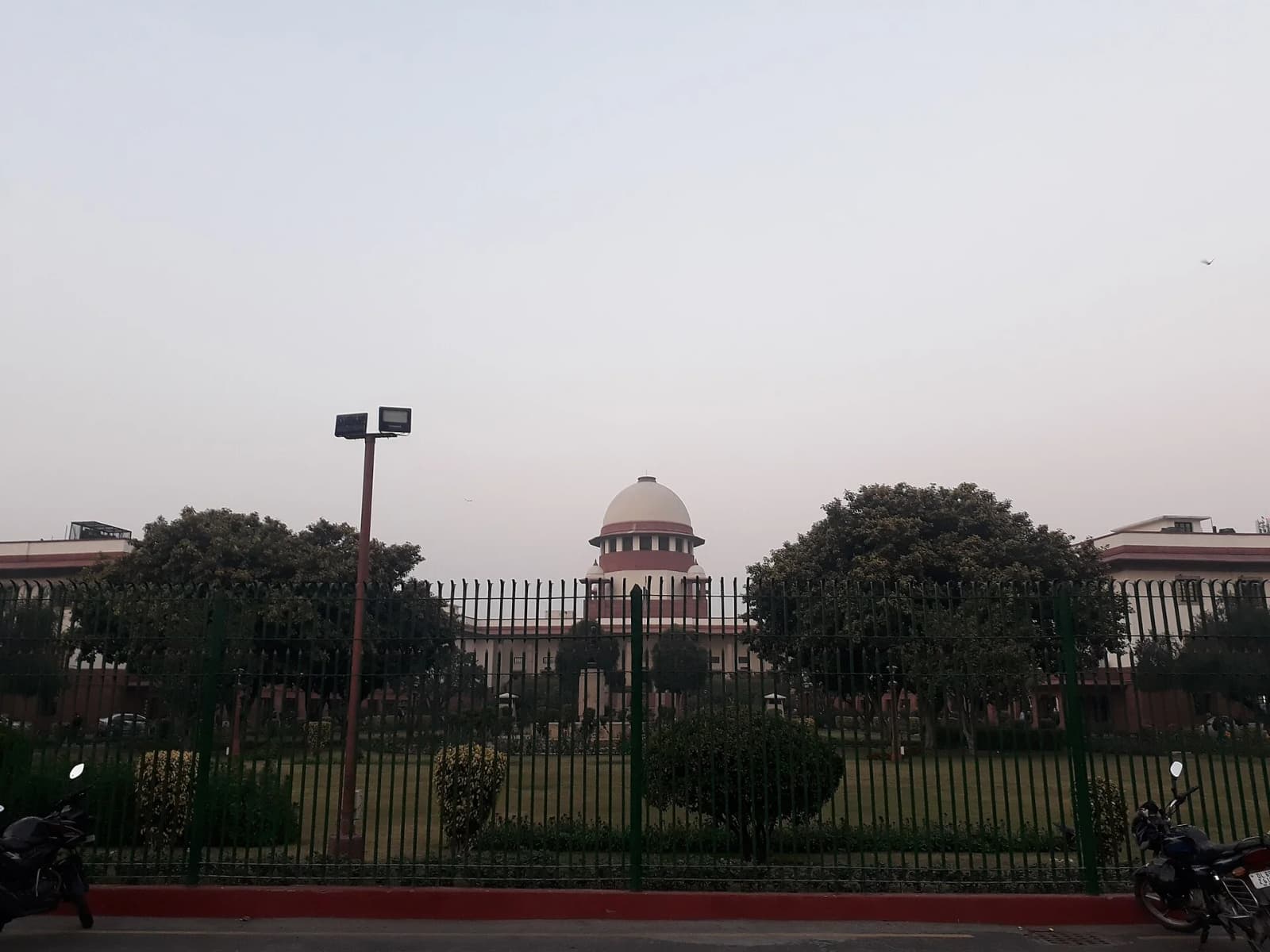
Photo source · Pinakpani, CC BY-SA 4.0