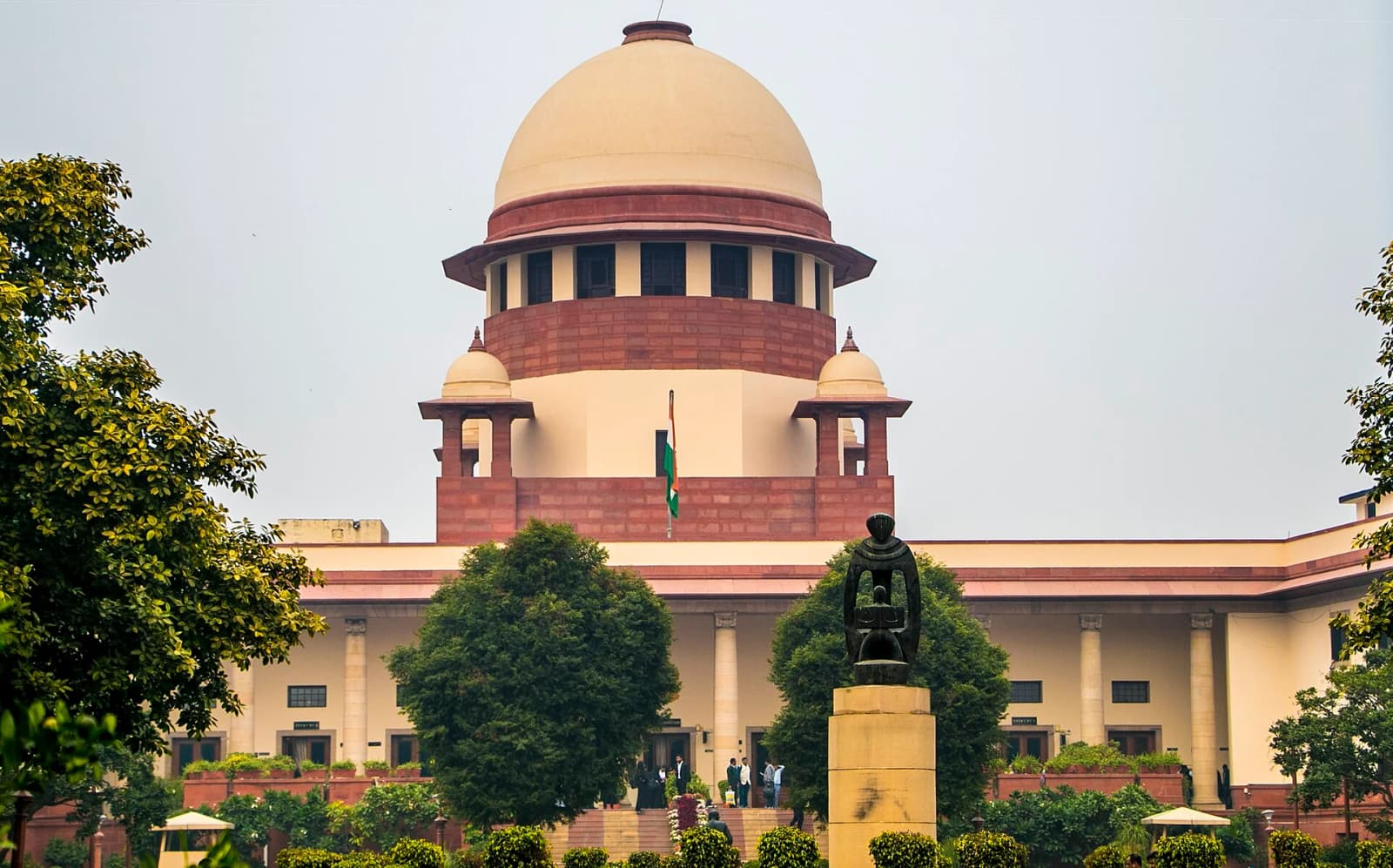
The Supreme Court on Monday, 16 November 2026, ordered the reinstatement of a Central Reserve Police Force (CRPF) constable who was removed from service in 2001 for overstaying his leave by 99 days. The court held that the punishment was "grossly disproportionate" and that his medical papers had been rejected on guesswork, legal news website LiveLaw reported.
A bench of Justices Satish Chandra Sharma and Nongmeikapam Kotiswar Singh allowed the appeal in Mithilesh Kumar Pathak v Union of India, set aside a 2010 Division Bench judgment of the Patna High Court and restored a 2007 order of a Single Judge in the constable's favour. He is to be taken back immediately with 50% of back wages and all consequential benefits, according to the report.
What happened in 2000-01
As recounted in the judgment reported by LiveLaw, the constable was granted casual leave from 21 September to 12 October 2000 because of his wife's illness. He did not rejoin on 13 October, did not reply to two registered letters asking him to report, and returned only on 19 January 2001.
He explained that he had fallen ill in his village on 9 October 2000 and was treated for infective hepatitis, and produced prescriptions, pathology reports, medicine receipts and a fitness certificate dated 13 January 2001. He also cited the lack of postal facilities in his village and said his wife could not read or write.
The Enquiry Officer treated the papers as fabricated because they carried no indoor or outdoor patient number, the treatment appeared to be private, and the prescriptions and bills seemed to be written with the same pen. The Commandant removed him from service in March 2001; a departmental appeal and revision failed in 2002 and 2004.
Why the Supreme Court interfered
The Union government argued that he belonged to a disciplined force posted in a sensitive area, and pointed to earlier overstays of 71 days in 1994 and 175 days in 1999. The High Court's Division Bench had noted his posting was in Anantnag, Jammu and Kashmir.
The bench drew a distinction between two kinds of absence. LiveLaw quoted it as saying:
"Absence from duty without prior permission may constitute unauthorised absence; however, unauthorised absence and wilful absence are not necessarily synonymous."
It added that illness or other circumstances beyond an employee's control are relevant, though they do not automatically excuse the whole period of absence.
On the medical records, the court said no verification had been sought from the treating doctor, the medical establishment or the pharmacy. "Similarity in the writing or ink, without material connecting it to fabrication, could not reasonably sustain the conclusion drawn in the present case," the bench observed, according to LiveLaw.
Discipline acknowledged, penalty found excessive
The judges accepted that timely reporting for duty is an essential obligation in such a force. But they held that punishment must be proportionate, and that even after counting the earlier overstays and his failure to stay in touch, removal for a 99-day overstay was "unduly harsh".
What happens next
The CRPF authorities have been directed to reinstate him with immediate effect and to pay half the back wages for the period from his removal until reinstatement. The dispute has run for more than 25 years since the leave in question.
PS · Subhashish Panigrahi, CC BY-SA 4.0