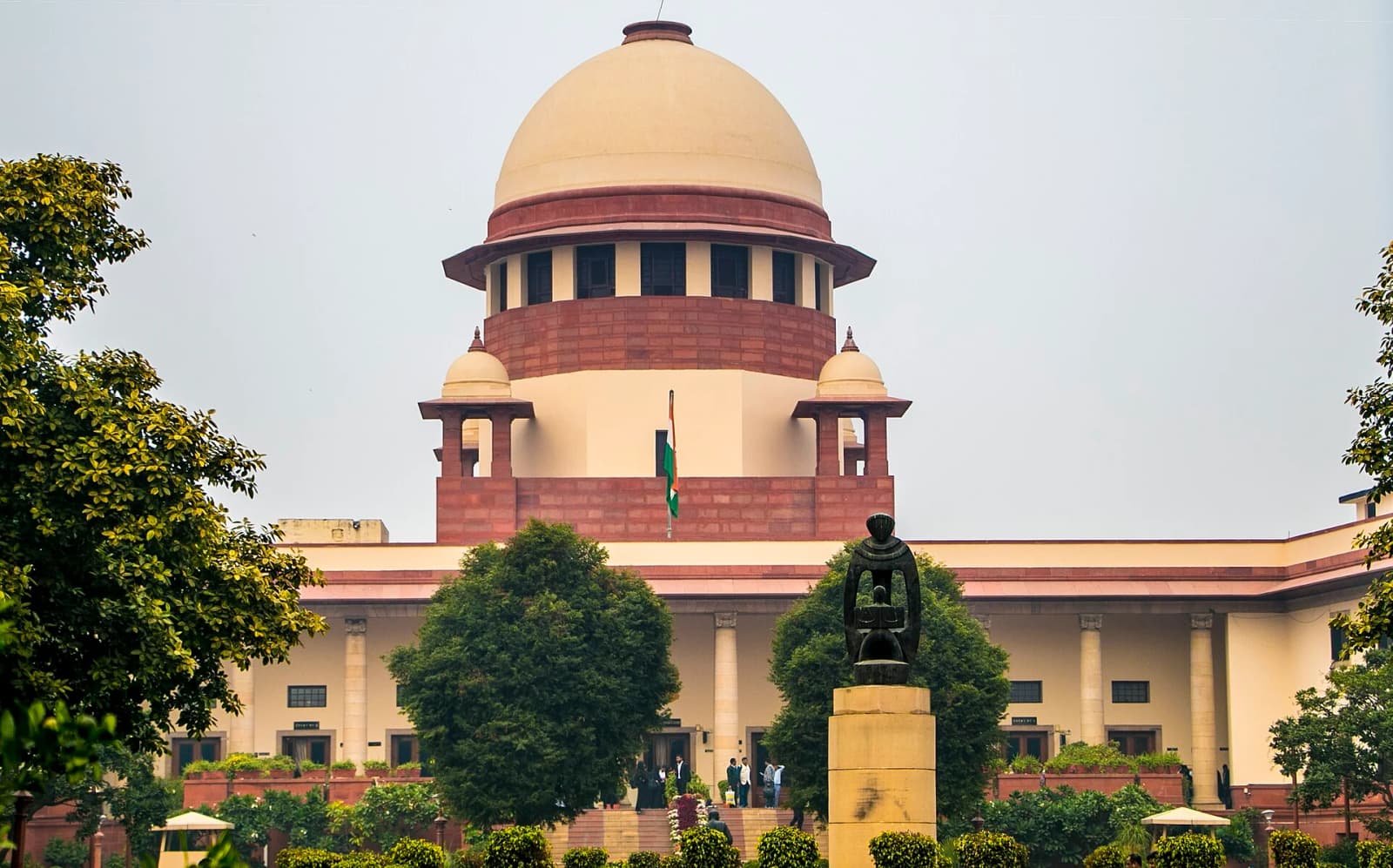
A public servant accused of conspiring to forge documents and tamper with land records cannot shelter behind the rule that requires prior government sanction for prosecution, the Supreme Court has held. A bench of Justices K.V. Viswanathan and Alok Aradhe set aside a Bombay High Court order that had quashed two criminal cases against a City Survey Officer, and sent both cases back to the trial court, legal news website LiveLaw reported on Tuesday, 17 November.
What the case was about
The case, Ashok v. Mahesh and another, concerns property belonging to the Priyadarshini Charitable Trust and the Shri Swami Samarth Cooperative Housing Society. According to the report, the officer was accused of conspiring with other accused to forge documents and fraudulently alter land records so that the property could be transferred to other people.
The complainant alleged that the mutation application had been tampered with through erasures and overwriting, and that a photograph, a signature and a handwritten endorsement had been added to it. The officer was also accused of approving the mutation without verifying the supporting documents. The District Superintendent of Land Records later cancelled the mutation entry, the report said.
Two FIRs were registered on a Magistrate's directions under Section 156(3) of the Code of Criminal Procedure (CrPC), and charge sheets were filed for forgery, cheating and criminal conspiracy under the Indian Penal Code.
Why the High Court had quashed the cases
The Bombay High Court quashed the proceedings. As reported by LiveLaw, it held that prior sanction under Section 197 CrPC was needed in view of the Maharashtra amendment to Section 156(3). It also found that the complainant had approached an authority that was not competent to grant sanction, so the provision treating sanction as granted after 90 days could not come into play.
What the Supreme Court held
The Supreme Court disagreed. Relying on its earlier ruling in Om Prakash Yadav v. Niranjan Kumar Upadhyay, the bench reiterated that the protection of Section 197 is available only where the act complained of has a reasonable connection with the public servant's official duties.
Conspiring to prepare forged documents, presenting them as genuine and manipulating property records to enable an illegal transfer could not be regarded as part of official duty, the court said, according to the report.
"We are inclined to hold that the acts complained of were not in discharge of or in purported discharge of official duty," the bench said, as quoted by LiveLaw.
Since Section 197 did not apply at all, the court said it was not necessary to examine whether the complainant had gone to the right sanctioning authority or whether deemed sanction had arisen.
What happens next
The appeal was allowed and the High Court's order set aside. Both criminal cases stand restored to the trial court, where the trial will proceed independently on its own merits, the report said. The allegations against the officer are yet to be tested at trial.
PS · Subhashish Panigrahi, CC BY-SA 4.0