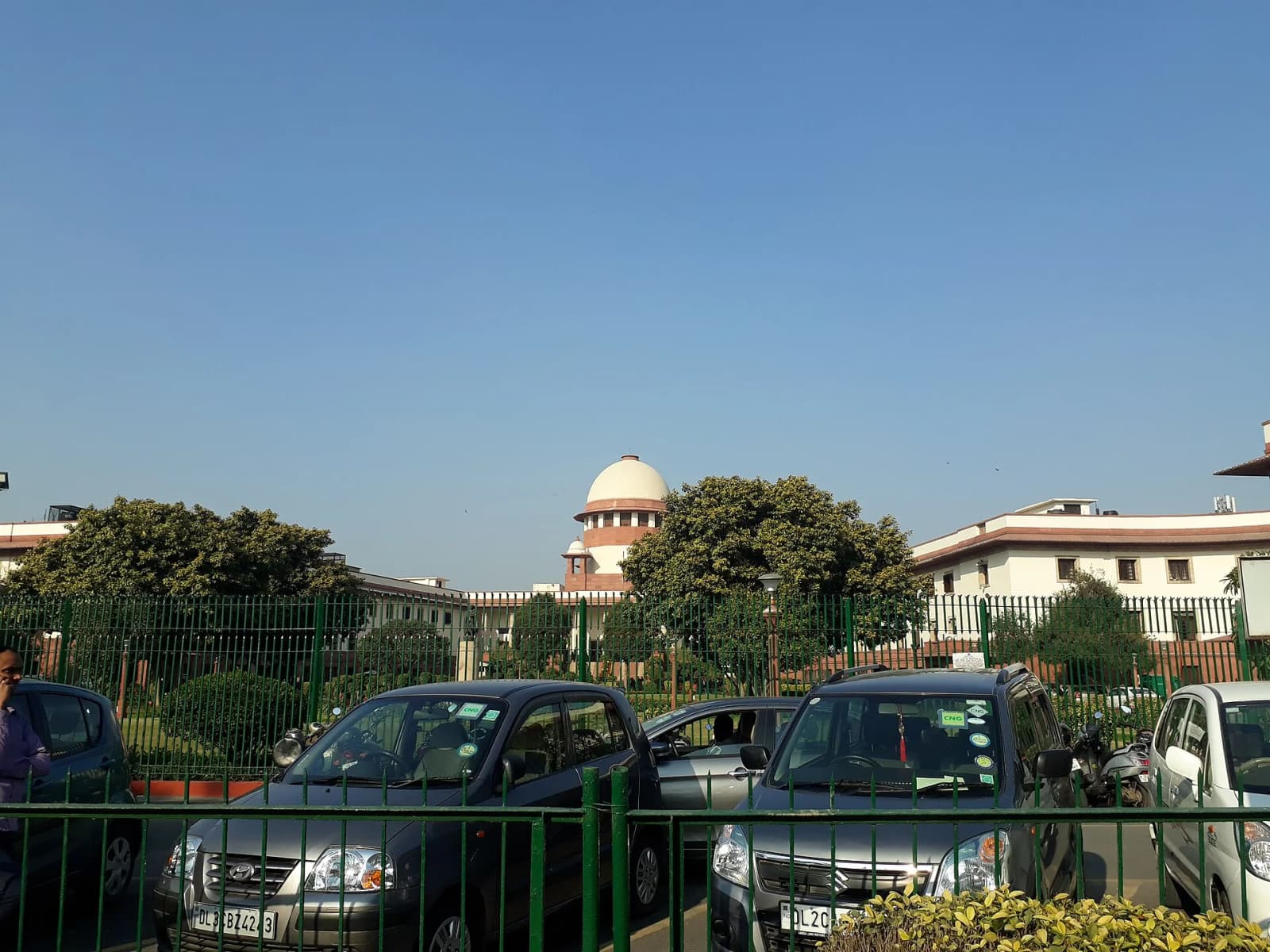
The Supreme Court of India on 20 November 2026 asked the Union government in New Delhi to consider whether a law, or a wide public awareness drive, is needed on marriages between close blood relatives, while making clear that it would not order Parliament to legislate. A bench of Chief Justice of India Surya Kant and Justices Joymalya Bagchi and V Mohana issued a limited notice on a public interest litigation (PIL) that flags the health risks such marriages can pose to children.
What did the Supreme Court actually order?
The court issued notice only to press the Centre to examine the issue, not to compel any action. "We are issuing notice for the limited purpose of impressing upon the Union of India to consider the desirability of bringing a suitable legislation, or to ensure wide publicity through different channels, including a proper curriculum," the bench said, as reported by Deccan Herald. The judges added: "We will not direct them. We will only sensitise them."
The bench observed that the court cannot itself regulate consanguineous marriages and that the subject falls exclusively within the legislature's domain. It also noted that marriage remains a matter of personal choice and that most of the reliefs sought lie in the legislative field. According to reports, the court suggested the Centre look at school and college curricula as one route to promote scientific understanding of the possible effects of such unions.
Who filed the petition, and what does it challenge?
The PIL was filed by Charvi S, a 20-year-old law student at the National Law School of India University in Bengaluru, Karnataka. According to the petition as reported, she was born of a first-cousin marriage performed under community custom, has 40 per cent visual impairment and has been diagnosed with cone dystrophy, an inherited eye disorder.
The plea challenges customary exceptions under Sections 5(iv) and 5(v) of the Hindu Marriage Act, 1955, and Section 4(d) of the Special Marriage Act, 1954, which allow marriages within otherwise prohibited degrees of relationship where custom permits. It argues these provisions violate Articles 14 and 21 of the Constitution and the State's public health duty under Article 47 by exposing children to higher genetic risk without safeguards.
What safeguards does the petitioner want?
The petition sought a declaration that the statutory exceptions are unconstitutional or, as an alternative, measures such as premarital genetic counselling in high-prevalence areas, voluntary screening and a nationwide awareness campaign. It specifically said existing marriages should not be criminalised or unsettled retrospectively.
Citing National Family Health Survey (NFHS-5) data, the plea stated that consanguineous marriages make up about 11 per cent of unions nationally and 23 to 28 per cent in parts of southern India. It also cited medical studies saying children of first cousins face roughly double the risk of congenital defects.
What was said in court?
Senior advocate Kaadambari Singh, appearing for the petitioner, told the bench that the practice remains common in rural areas where awareness is low. "At least people should be apprised of the adverse consequences through wide publicity," she argued. Counsel also said the issue raises questions of inter-generational equity.
Justice Bagchi recalled that courts have recognised the right to marry an HIV-positive person with full knowledge of the condition, but agreed that people must be enabled to make an informed decision about marrying a close relative.
Why it matters and what happens next
The order does not ban or restrict any marriage, and no existing marriage is affected. The Centre now has to respond on whether it sees a need for legislation or awareness measures. The same bench was dealing with several other matters on 20 November, including the Thiruparankundram Karthigai Deepam dispute. The date for the next hearing on the PIL was not available in the reports reviewed.
Photo source · Pinakpani, CC BY-SA 4.0