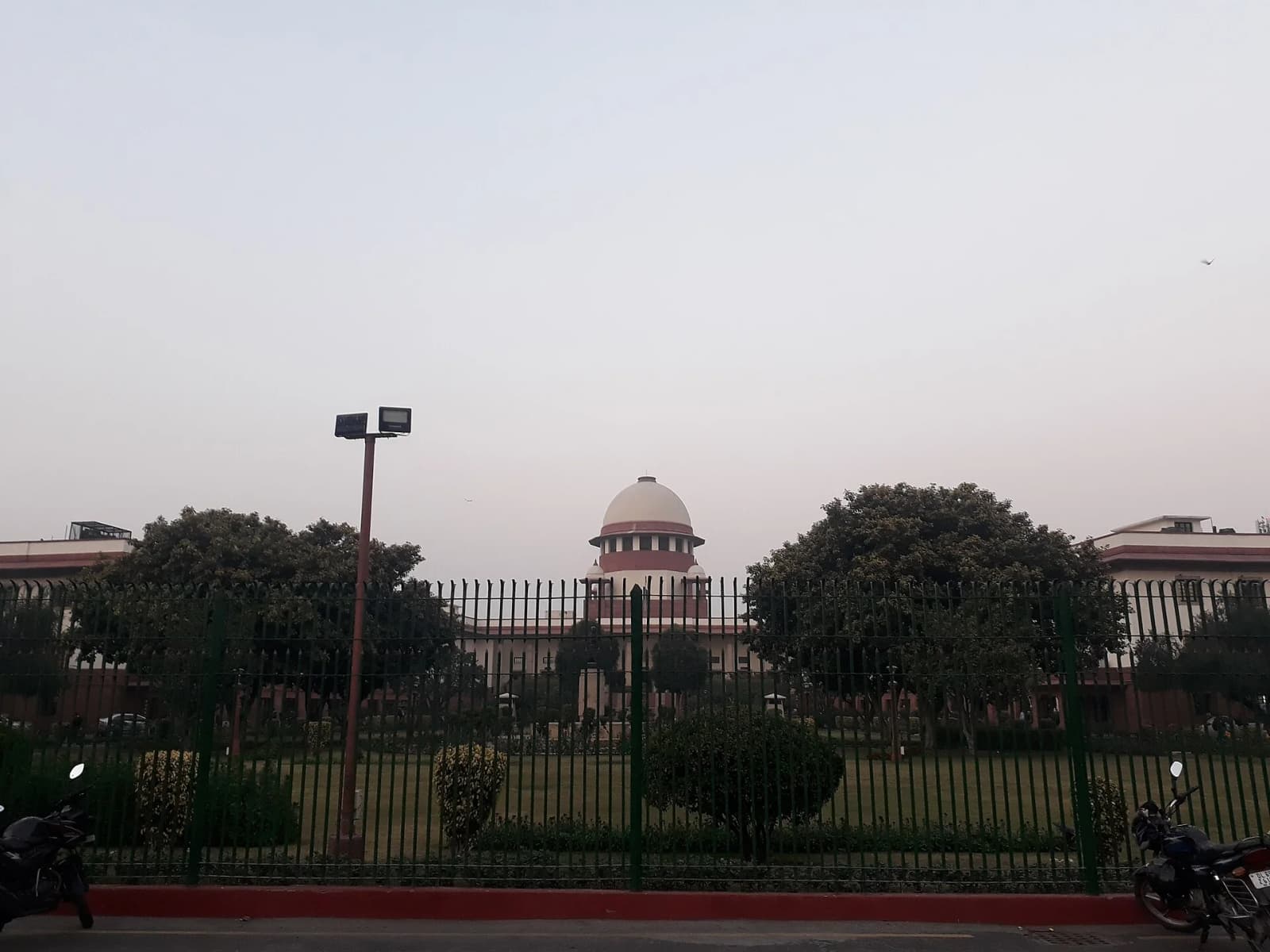
The Supreme Court of India on 23 November 2026 said it was "disturbed to note the flagrant violation" of building rules across the country, and asked all State governments and Union Territories to file affidavits suggesting how illegal construction and weak municipal enforcement can be tackled. A bench of Justice B.V. Nagarathna and Justice Sanjeev Sachdeva passed the order in New Delhi while hearing a nationwide case on unauthorised construction, according to reports by LiveLaw and the Press Trust of India, carried by ThePrint.
What did the Supreme Court say about municipal bodies?
The bench said municipal authorities were allowing builders to breach sanctioned plans, ignoring deviations and then failing to enforce demolition orders. In its order, the court said municipal inspection in Indian cities was "in shambles", often carried out only after a building had already gone up and the violation had become a fait accompli. It added that it was "an open secret" that unauthorised construction often thrives with the active connivance of municipal officials, who expect State governments to regularise such buildings, particularly before elections.
During the hearing, Justice Nagarathna asked what price was paid to get a plan sanctioned, to clear each inspection and to stop a demolition. She questioned why some citizens could break building bye-laws and get away with it while others had to follow the law, and said municipal corporations were "hand in gloves" with violators, LiveLaw reported. Referring to Karnataka, she asked why hotels, gaming parlours, software firms and eateries were being permitted in residential areas.
Why does this matter for city residents?
The court said cities are shared civic spaces, not just a collection of private plots, and that breaking building bye-laws badly damages roads, drainage and traffic capacity. It linked compliance to the fundamental duties of citizens under Article 51A of the Constitution, calling it an elementary expression of civic responsibility for both residents and municipal authorities.
Why did the bench narrow the case?
The proceedings began with a challenge to sealing and demolition notices for an unauthorised ground-plus-one building in Chennai, Tamil Nadu, in the case of Loganathan v. State of Tamil Nadu. After dismissing those petitions on 16 February 2026, an earlier bench widened the matter on 25 March to examine building and land-use violations nationwide, with Senior Advocate Ajit Kumar Sinha as amicus curiae, LiveLaw reported.
The new bench was told there are about 600 municipal corporations in India. Justice Nagarathna said building laws differ from State to State, so a common order for the whole country was neither practical nor feasible, and warned that broad orders could be misused by municipal authorities to get around stay orders issued by tribunals and High Courts. The court said a disposed-of private case could not be turned into a pan-India public interest litigation where people sought relief in individual disputes.
It therefore disposed of the pending individual applications, leaving those parties free to approach municipal bodies, tribunals or High Courts in their own States.
What happens next?
State governments and Union Territories must file suggestions through affidavits by a responsible officer, with municipal corporations coordinating with the relevant State official in charge of municipal bodies. The court will consider these before issuing further directions. The matter is listed for its next hearing on 6 January 2027, according to the PTI report.
Photo source · Pinakpani, CC BY-SA 4.0