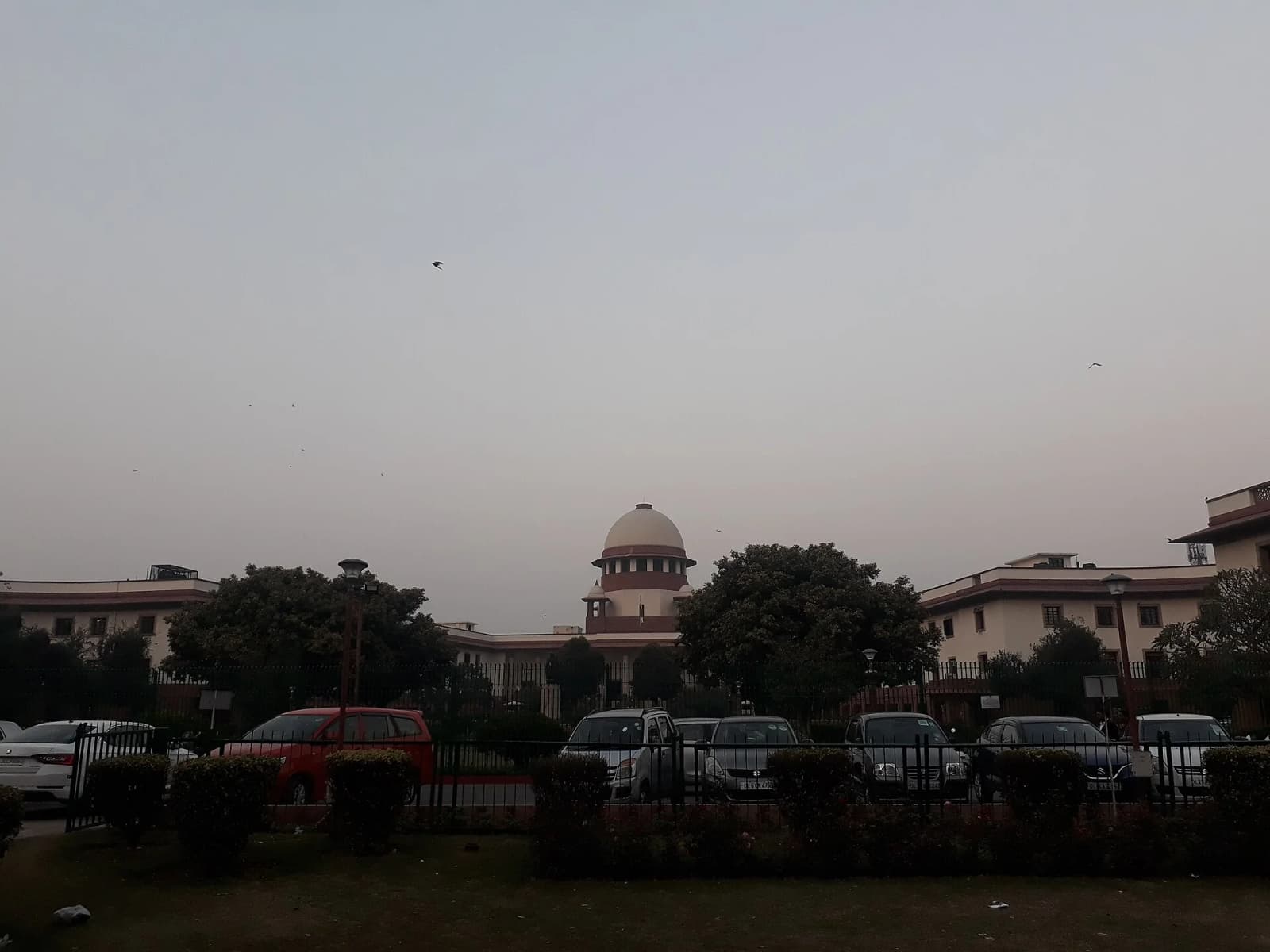
The Supreme Court of India on 27 November 2026 granted bail to former Aam Aadmi Party (AAP) legislator Naresh Balyan in an organised crime case registered by the Delhi Police Crime Branch under the Maharashtra Control of Organised Crime Act (MCOCA), nearly two years after his arrest in New Delhi.
A bench of Justice Vikram Nath and Justice Aparesh Kumar Singh passed the order on Balyan's petition challenging the Delhi High Court's refusal to release him, and directed him to cooperate in the trial, warning that the bail could be withdrawn if he failed to do so, The Tribune reported.
What is Naresh Balyan accused of?
Police allege that Balyan acted as a "facilitator" for an organised crime syndicate led by absconding gangster Kapil Sangwan, also known as Nandu. According to the prosecution, he identified targets for extortion, executed sham property agreements and arranged forced property sales at throwaway rates. The FIR invokes Sections 3 and 4 of MCOCA.
Balyan has denied any involvement and says the case is politically motivated.
How the case unfolded
Police first arrested Balyan on 30 November 2024 after audio clips reportedly captured him speaking with Sangwan about threatening and extorting money from builders and others in Delhi, National Herald reported. On 4 December 2024, a trial court granted him bail in that extortion case, and the Crime Branch re-arrested him the same day under MCOCA.
On 3 August, the Delhi High Court's Justice Manoj Jain declined to grant him bail. The High Court found a "discernible nexus" between Balyan and members of the syndicate and said a conversation between him and Sangwan pointed to an "active criminal nexus", ETV Bharat reported. It described his political vendetta claim as "merely in the air and completely unsubstantiated", said his earlier complaints against Sangwan could not cancel out the other material police had collected, and held that the length of detention alone did not justify bail. The court noted that 17 FIRs had been registered against the syndicate. The Supreme Court agreed in August to hear his appeal.
What did each side argue?
Senior Advocate Vikas Singh, appearing for Balyan, told the bench that his client was a victim of "political vendetta" and had spent almost two years in jail. He argued that two key witnesses had retracted their statements, that Balyan had earlier complained to police about the gangster and been given protection because of threats, that he was not originally named as an accused, and that the evidence relied on by police was inadmissible.
Balyan also argued that his long detention without charges being framed violated his right to a speedy trial under Article 21 of the Constitution, according to National Herald.
Additional Solicitor General Raja Thakare, representing the state, opposed bail, saying the case concerned an organised crime syndicate engaged in extortion and property grabbing. Counsel for Delhi Police told the court the syndicate faces more than 15 cases.
Why it matters
The case had become a test of how long an undertrial can be held under a special law: the High Court had held that prolonged custody alone was not enough for release in serious offences under special statutes, while Balyan's lawyers stressed his nearly two years in jail. The Supreme Court's order brings Balyan out of custody while the trial is pending, though the reports available so far do not set out the bench's detailed reasoning.
What happens next
The trial in the MCOCA case will continue before the trial court in Delhi. The allegations against Balyan remain to be proved, and the bail is conditional on his cooperation with the proceedings. The full text of the Supreme Court's order was not available at the time of writing.
Photo source · Pinakpani, CC BY-SA 4.0