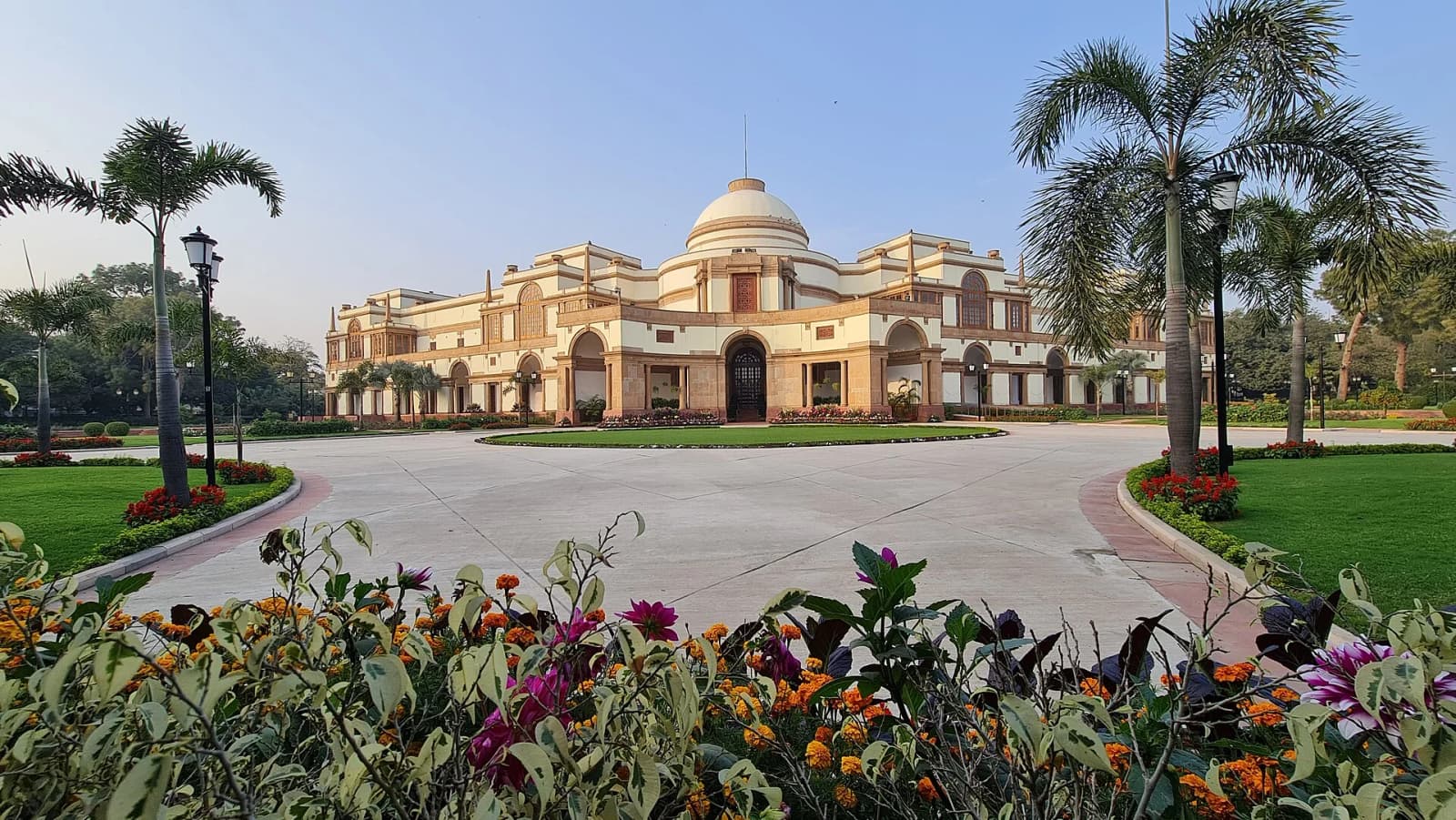
External Affairs Minister S. Jaishankar and Danish Foreign Minister Lars Løkke Rasmussen co-chaired the fifth India-Denmark Joint Commission Meeting at Hyderabad House in New Delhi on 28 November 2026, with both sides saying they want a new Joint Action Plan for 2026-31 to take the Green Strategic Partnership (GSP) further.
Opening the talks, Jaishankar said the Green Strategic Partnership gives the relationship a "distinctive character" because it pairs Danish capabilities with India's scale and development priorities, according to All India Radio News. He described Denmark as an important partner in India's ambition of becoming a developed nation by 2047.
What did the two ministers discuss?
The two ministers reviewed cooperation built up under the Green Strategic Partnership and discussed where it should go next. Jaishankar listed water, renewable energy, power and green shipping as areas where progress has been made, and said ties are also growing in health, food processing, agriculture, and science and technology.
He suggested that the next phase could extend to defence and security, emerging technologies, space, education, skills and mobility, and said he hoped the existing joint working groups would be used more actively. He also welcomed a larger presence of Danish companies in India and more Indian business activity in Denmark, adding that governments should work to remove obstacles that companies face.
Jaishankar thanked Copenhagen for supporting a deeper India-European Union partnership, in particular the conclusion of the India-EU Free Trade Agreement. He also said the two sides would discuss geopolitics at a time when the global environment is complicated and uncertain.
What did Denmark say?
Rasmussen called the Green Strategic Partnership a central pillar of the relationship and said the meeting would take stock of six years of the partnership and aim for a new joint action plan to lift it to a higher level, ANI reported in a dispatch carried by The Tribune. He described India as a key international partner, "not least in global green transition."
"Both our countries want a multilateral system rooted in international law that meets the challenges of today," Rasmussen said. Turning to skills, he told Indian counterparts: "You have an enormous talent pool with exactly the skills that Danish companies are looking for," and said Denmark wants to attract skilled Indian professionals. He called his trip "a short visit, but a very fruitful one so far."
Bengaluru leg focused on technology and defence
Rasmussen's visit ran from 27 to 28 November. On 27 November he was in Bengaluru, where he met representatives of the Centre for Cellular and Molecular Platforms (C-CAMP), quantum technology company QpiAI, the Indian Space Research Organisation (ISRO) and Hindustan Aeronautics Limited (HAL), according to the ANI report.
At HAL he was briefed on components from Danish company HBK used in research and development testing for the Advanced Light Helicopter Dhruv, the Light Combat Helicopter and the Tejas fighter. He also met Karnataka IT Minister Priyank Kharge and Danish firms in the state to discuss Global Capability Centres and access to technology talent. Innovation Centre Denmark released a report titled "Access to Tech Talent in India: An ICDK Outlook" during the visit.
Why it matters
The meeting is part of a busy week of diplomacy in New Delhi. India hosted the 25th Indian Ocean Rim Association Council of Ministers and held foreign policy and security consultations with the European Union in the same days. For India, Denmark is one route into European green technology, shipping know-how and investment; for Denmark, India's workforce and market are the draw, as both ministers' remarks showed.
The prime ministers of the two countries last met in May 2026 on the margins of the third India-Nordic Summit, according to the ANI report.
What happens next
At the time of writing, no joint statement or list of agreements from the Joint Commission had been published. Both ministers said work is under way on the Joint Action Plan for 2026-31, which would set the agenda for the partnership over the next five years.
Photo source · Aloofmanish, CC BY-SA 4.0