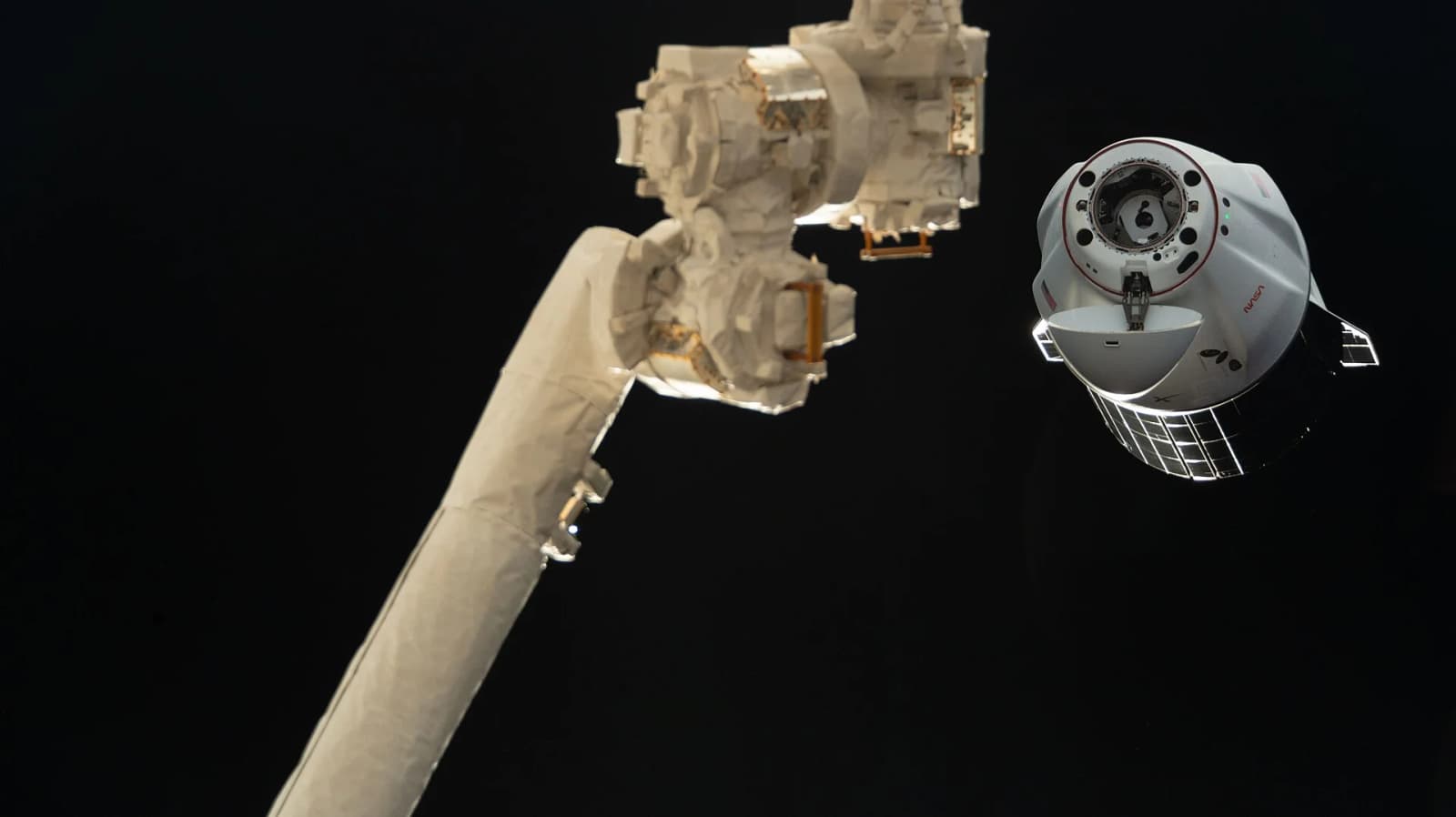
An uncrewed SpaceX Dragon cargo spacecraft splashed down in the Pacific Ocean near Los Angeles, California, at 2:03 p.m. Pacific time on 21 November 2026 (3:33 a.m. IST on 22 November), ending NASA's 35th SpaceX commercial resupply mission to the International Space Station, NASA said on its space station blog. The capsule brought back experiments on blood vessel ageing, cancer and drug-resistant bacteria for analysis on Earth.
What did Dragon bring back from the space station?
Dragon returned a set of biological samples and hardware that scientists will now study in laboratories, according to NASA. These include:
- a 3D-bioprinted blood vessel construct used to study vascular ageing and cardiovascular disease;
- frozen tumour organoids that were treated aboard the station, as part of research aimed at improving cancer treatment and personalised medicine;
- frozen microbial samples that will help researchers understand how antibiotic-resistant bacteria survive, adapt and evolve in space;
- a lighting system that spent more than three years on the station, tested for its potential to support astronauts' sleep and well-being on long missions.
NASA did not say how much cargo, in total, came back on the return flight.
How did the departure unfold?
The spacecraft undocked from the space-facing port of the station's Harmony module at 12:05 p.m. EST on 20 November after a command from SpaceX ground controllers, NASA reported. NASA had planned the splashdown for about 1:55 p.m. Pacific time on Saturday, 21 November, off the California coast, and said it would not broadcast the landing live but would post updates on its blog instead. Splashdown came at 2:03 p.m.
After undocking, NASA said three other vehicles remained attached to the orbiting laboratory: the Soyuz MS-29 crew spacecraft and the Progress 95 and 96 resupply ships.
When did this mission begin?
The mission lifted off on a Falcon 9 rocket from Space Launch Complex 40 at Cape Canaveral Space Force Station, Florida, at 6:33 a.m. EDT on 13 October 2026, Spaceflight Now reported at the time. Dragon reached the station on 15 October, two days after launch, carrying more than 6,300 pounds (about 2,860 kg) of science and supplies, according to NASA.
Spaceflight Now reported that the outbound cargo included two Roll-Out Solar Array wings, the fourth and final pair for the station, each able to provide more than 20 kilowatts of power for more than 10 years, along with equipment for more than 40 scientific studies. The capsule was expected to stay docked for about a month.
Why do cargo returns matter?
According to NASA's blog, the returned samples and hardware will now be studied in laboratories on the ground. Frozen material such as the tumour organoids and microbial samples cannot be fully analysed in orbit, so bringing it home safely is an essential step in the research, and the results could feed into work on cancer care, heart disease and drug-resistant infections on Earth.
What happens next at the station?
The next delivery is due within days. NASA has set coverage for Northrop Grumman's 25th resupply mission, targeting launch no earlier than 10:47 a.m. EST on Sunday, 29 November, from the same Cape Canaveral pad. The Cygnus XL spacecraft, named the S.S. James "Jim" A. Lovell, will carry about 11,000 pounds of cargo and is scheduled to be captured by the station's Canadarm2 robotic arm on 1 December.
For more on NASA's other missions this week, read MapMyTimes' report on the pause in Perseverance rover science on Mars.