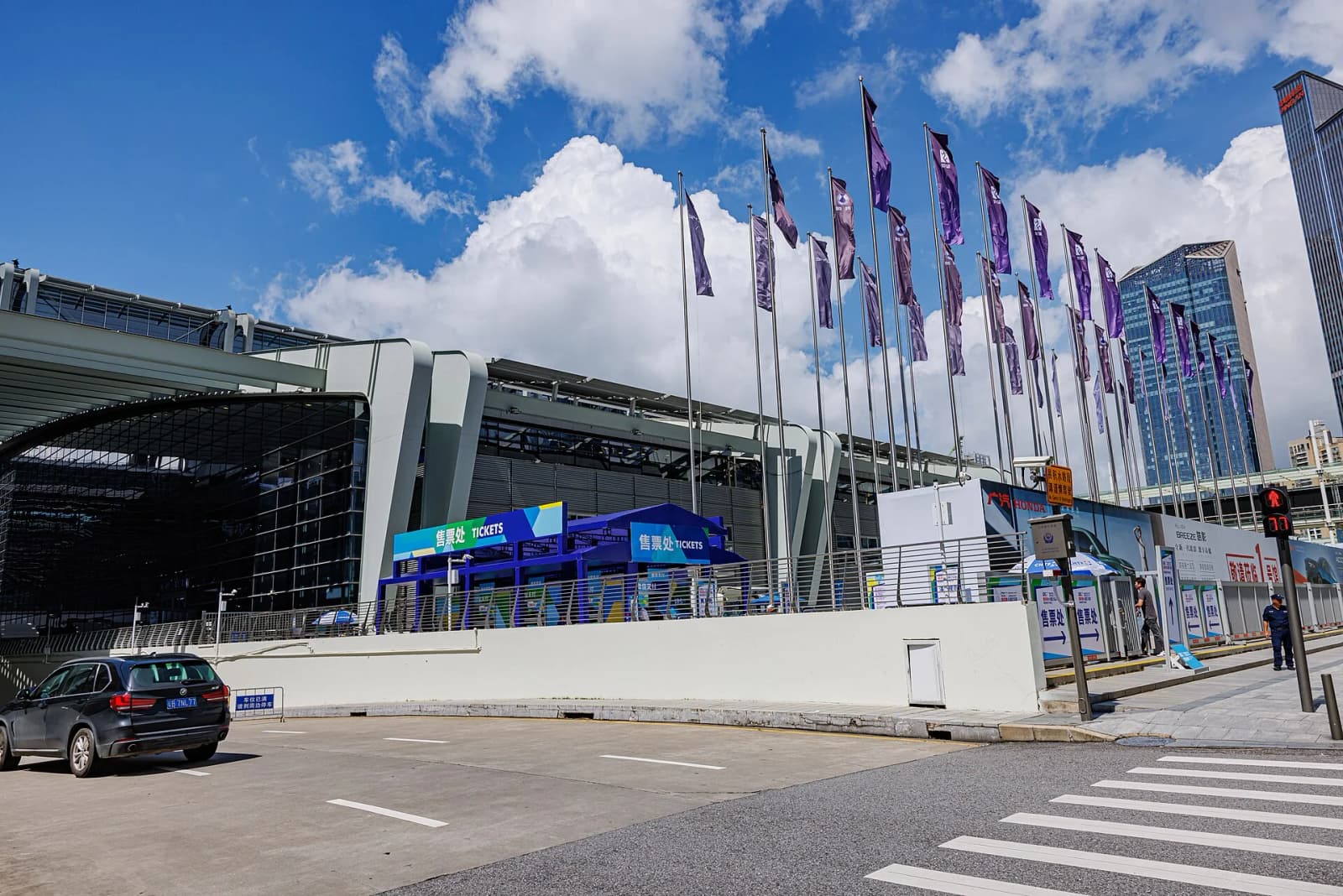
South Korea and China on Wednesday declared that their long-running follow-up negotiations on services and investment under the two countries' free trade agreement had effectively concluded, after a meeting between President Lee Jae Myung and Chinese President Xi Jinping in Shenzhen on 18 November.
The two leaders met for about 35 minutes on the sidelines of the APEC summit, according to a written briefing by South Korea's National Security Adviser Wi Sung-lac, as reported by The Korea Herald. It was their third summit, Korea JoongAng Daily said.
Eight years in the making
The original Korea-China FTA came into force in December 2015, and the follow-up talks on services and investment began in March 2018. The Korea Herald reported that the negotiations then stalled for more than four years over market access, and that Lee and Xi had agreed in January to aim for meaningful progress by the end of this year.
Some technical provisions still have to be finalised at working level before the agreement can be formally signed and take effect, the newspaper said. No dates for entry into force were given.
What Korean companies get
According to JoongAng Daily's account of the deal, Korean travel agencies in 23 Chinese regions, including Beijing, Shanghai, Chongqing and Hainan, will be able to directly recruit Chinese group tourists and run outbound travel business.
On content, China pledged most-favoured-nation treatment for Korean films, games and other cultural products, along with non-discrimination in pre-screening. South Korea's Ministry of Trade, Industry and Energy said this was the first time China had included such provisions in a trade agreement, and that it would create a more stable environment for Korean content entering the Chinese market, the newspaper reported.
Other openings reported by JoongAng Daily include:
- Korean retailers being able to operate more than 30 stores in China without a Chinese joint-venture partner;
- removal of limits on the kinds of construction projects Korean firms can take part in;
- wider room for Korean law firms to set up offices and work jointly with Chinese firms; and
- a guarantee that Korean financial firms will get the same treatment if China opens its financial markets further to third countries.
The Korea Herald said the deal would also strengthen protection for investors and their technology.
Why it matters
Both newspapers said the agreement could open a path towards easing China's unofficial restrictions on Korean cultural imports, known in South Korea as the "Hallyu ban", which followed Seoul's 2016 decision to deploy the THAAD missile-defence system. JoongAng Daily noted, however, that the leaders did not specifically address that ban in their talks.
According to the Korea Herald, Xi said the two sides should treat the conclusion of the services and investment talks as an opportunity and pair economic cooperation with political trust. Lee, in remarks conveyed by Wi, said peace and stability on the Korean Peninsula were in the common interest of both countries, and asked Beijing to play a constructive role.
Tourism, film and the Yellow Sea
Lee noted that people-to-people exchanges between the two countries are expected to exceed 10 million this year and called for a return to the 2016 level of 13 million. The leaders agreed to cooperate on joint film production, and Xi pledged support for cooperation projects ahead of the 35th anniversary of diplomatic ties in 2027.
Lee also raised Chinese structures in the Yellow Sea, in a zone where both countries' exclusive economic zone claims overlap, and asked for a fundamental resolution of the dispute, the Korea Herald reported.
What next
Negotiators now have to finish the remaining technical text before a signing. The summit came a day before a planned meeting between Xi, US President Donald Trump and Russian President Vladimir Putin in Shenzhen.
PS · Dinkun Chen, CC BY-SA 4.0