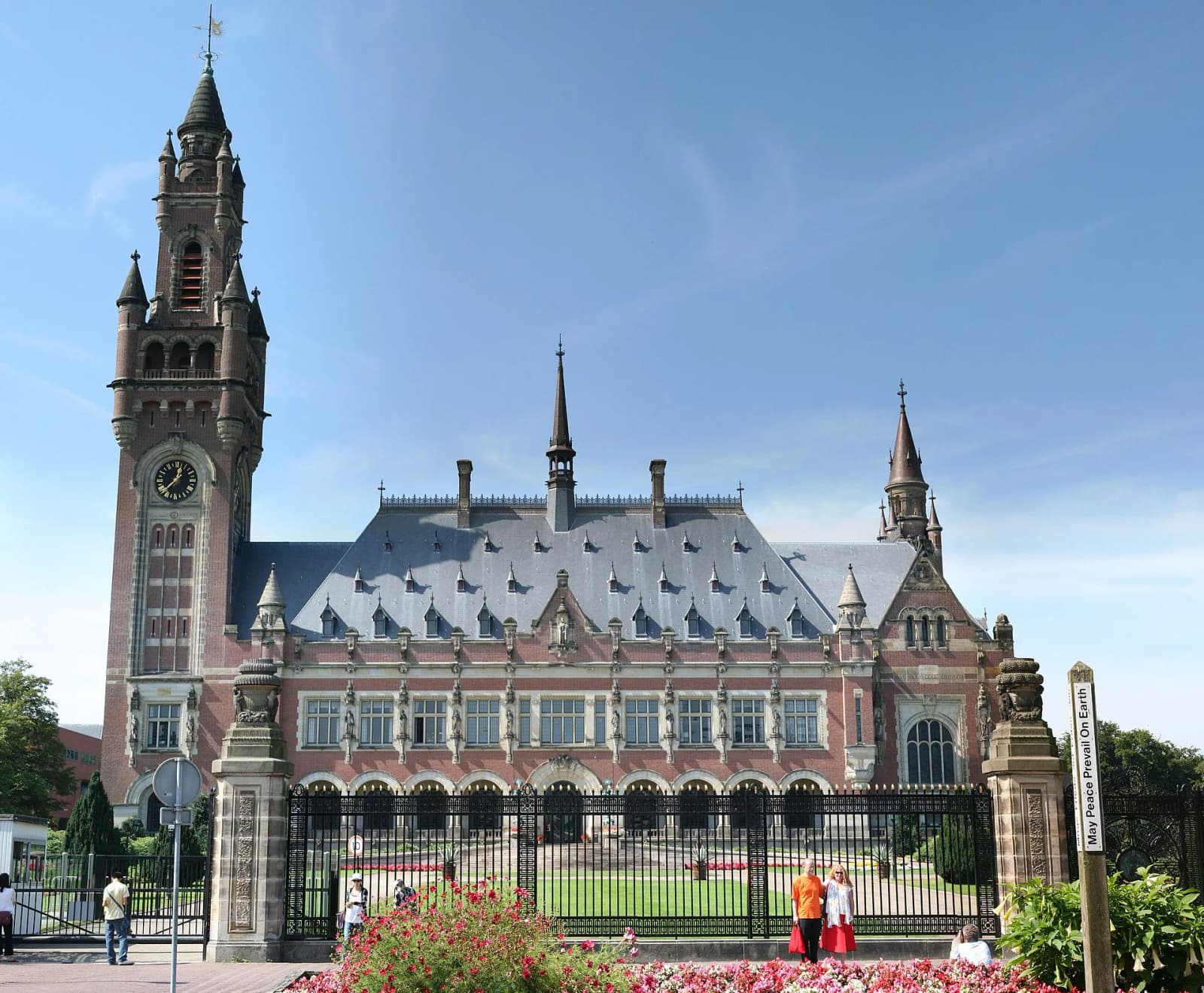
The International Court of Justice (ICJ) will deliver its judgment in the genocide case brought by The Gambia against Myanmar over the treatment of the Rohingya on Thursday, 19 November, at 10 am in The Hague, the court announced in a press release dated 3 November.
The ruling, which comes seven years after the case was filed, will be final and cannot be appealed, Al Jazeera reported. It is the court's decision on the merits: whether Myanmar breached its obligations under the 1948 Genocide Convention.
How the case reached this point
The Gambia, a Muslim-majority West African country acting with the backing of the 57-member Organisation of Islamic Cooperation, filed its application on 11 November 2019, together with a request for provisional measures, according to the ICJ's case record.
The court issued an order on provisional measures on 23 January 2020. In a judgment of 22 July 2022, it rejected Myanmar's preliminary objections, finding that it had jurisdiction and that the application was admissible. Hearings on the merits were held from 12 to 29 January 2026.
Several states have joined the proceedings through declarations of intervention. The court's records show that the Maldives, and jointly Canada, Denmark, France, Germany, the Netherlands and the United Kingdom, filed declarations in November 2023 that were admitted in July 2024, while Slovenia, the Democratic Republic of the Congo, Belgium and Ireland were admitted by an order of 25 July 2025.
What each side argues
The case concerns the military's "clearance operations" in northern Rakhine State after fighters of the Arakan Rohingya Salvation Army attacked police posts in August 2017. More than 740,000 Rohingya fled to Bangladesh within months, Al Jazeera reported.
The Gambia accuses Myanmar's military of killing Rohingya, causing them serious physical and mental harm, imposing conditions meant to destroy the group and preventing births, and alleges widespread sexual violence. To show intent, it points to the brutality of the attacks, official tolerance of hate speech and the failure to investigate abuses. It wants the court to order prosecutions, a safe return for refugees, restoration of property, recognition of the right to identify as Rohingya, and compensation.
Myanmar denies genocide, saying its forces were responding to armed attacks. It argues there is no direct evidence of genocidal intent and disputes The Gambia's right to seek reparations on behalf of victims.
Why it matters
Proving intent to destroy a group is the central legal hurdle in any genocide case. Al Jazeera noted that the court could also find Myanmar responsible for a lesser breach without a genocide finding, as it did in 2007 when it ruled that Serbia had not committed genocide in Bosnia but had failed to prevent the 1995 Srebrenica massacre.
The ruling is being watched closely in Bangladesh, which hosts about 1.2 million Rohingya refugees, mostly in camps in Cox's Bazar, according to Al Jazeera. About 520,000 Rohingya remain in Myanmar. Earlier this year, Dhaka objected to Myanmar's submissions to the court describing the Rohingya as "Bengalis", news reports said.
Other genocide cases are pending before the ICJ, including Ukraine v Russia and South Africa v Israel.
What happens after the verdict
Myanmar will be legally bound by the judgment, but the ICJ has no means of enforcing it. If Myanmar does not comply, The Gambia can take the matter to the UN Security Council, where any permanent member can use a veto. Al Jazeera noted that China and Russia have shielded Myanmar at the council in the past.
PS · Iamthestig, CC BY-SA 3.0