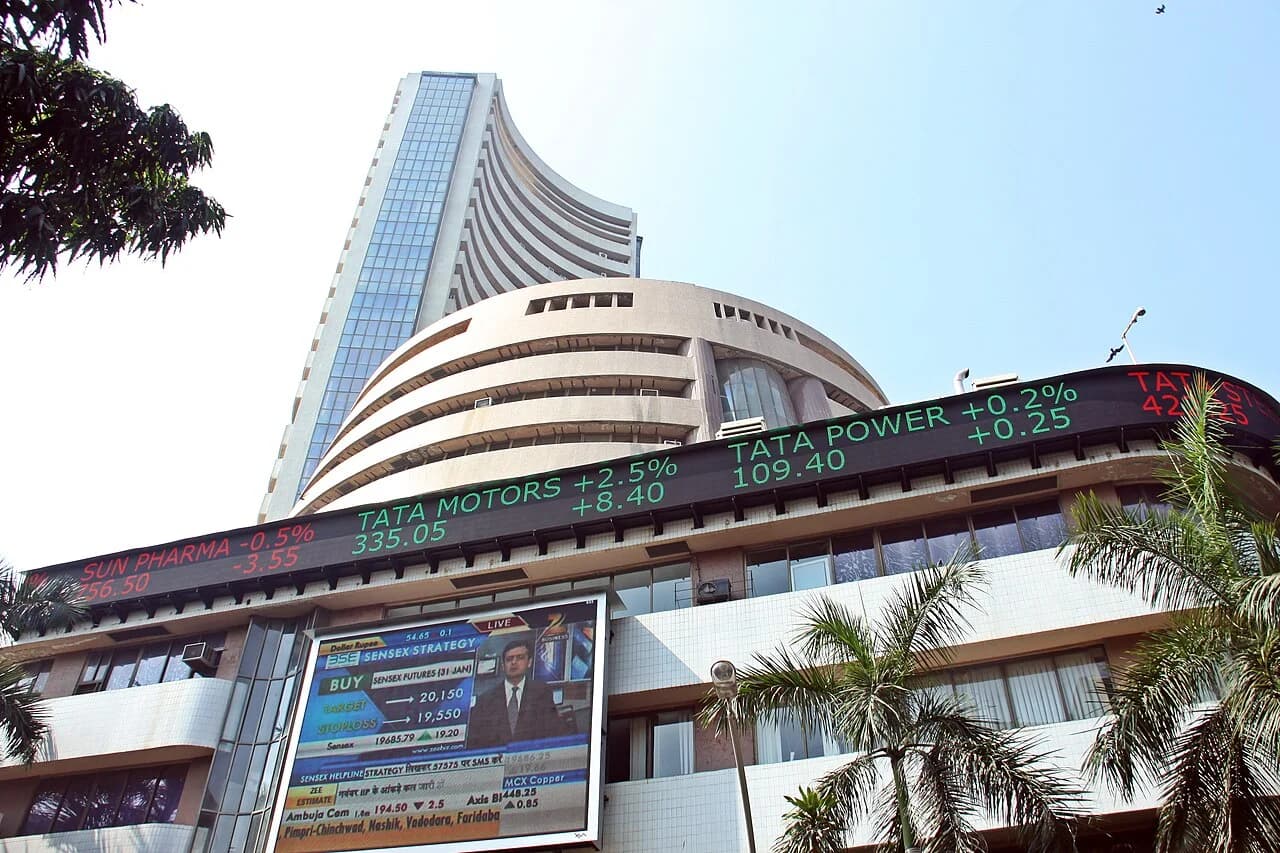
India's benchmark stock indices rose more than 1% on Friday, 20 November 2026, as banking and financial shares led a broad rally in Mumbai, while the rupee strengthened past 93 to the US dollar for the first time since April on the back of heavy foreign buying of Indian equities.
The 30-share BSE Sensex gained 897.96 points, or 1.08%, to close at 83,919.71, and the National Stock Exchange's Nifty 50 rose 286.30 points, or 1.12%, to settle at 25,800.60, news agency IANS reported. It was the second straight session of gains for both indices, after the Sensex closed at 83,021.75 and the Nifty at 25,514.30 on Thursday.
Which sectors drove the rally?
Banks and financial companies did most of the lifting. The Nifty Private Bank, Nifty Bank, Nifty PSU Bank and Nifty Financial Services indices were among the best performers of the day, while Nifty Media ended at the bottom of the sectoral table under selling pressure.
Among Nifty constituents, Apollo Hospitals Enterprise, Axis Bank and Max Healthcare Institute were the top gainers. Gains were narrower in smaller stocks: the Nifty Midcap 100 rose 0.66%, while the Nifty Smallcap 100 slipped 0.13%.
Why is the rupee rising?
The rupee is gaining because foreign investors are pouring money into Indian shares and overseas funds are unwinding bets against the currency. Reuters reported that the rupee closed the week at 92.67 per dollar, its best single-day gain since 12 October, after crossing 93 for the first time since April.
According to Reuters, foreign investors have put about $12 billion into Indian shares so far in November, the largest monthly inflow on record, as money moved out of global markets hit by an artificial intelligence-driven sell-off. Lower oil prices and reduced speculative dollar demand from companies also helped. Overseas hedge funds rushed to close bearish rupee positions, mainly in offshore markets, Reuters said.
The turnaround is sharp. The rupee had come close to a record low of 97 per dollar last month, and its losses for the year have now narrowed to about 3%, from nearly 8% at its weakest point in May, the agency reported. Dhiraj Nim, an economist at ANZ, told Reuters that the Reserve Bank of India (RBI) was allowing the currency to appreciate rather than setting a floor through reserve purchases.
Chief Economic Adviser V. Anantha Nageswaran had flagged the scale of foreign inflows a day earlier; MapMyTimes reported his remarks here.
Weekly picture
The Nifty 50 posted its fourth straight weekly gain, Reuters reported, even as Asian shares logged their worst week since 2020. The contrast reflects how India has attracted investors looking for shelter from the AI-led turbulence in other markets.
What are analysts watching next?
Analysts quoted by IANS described 25,800 as a key resistance level for the Nifty and said a sustained move above it could open the way towards 26,000. They placed immediate support in the 25,600-25,700 range, with 25,500 in focus if the market pulls back further.
Analysts also cautioned that the rebound from October's lows has reduced the cushion on valuations, and that markets may already be pricing in a December interest rate increase. Reuters noted that RBI Governor Sanjay Malhotra had earlier hinted that monetary tightening could also support the rupee. Currency analysts cited by IANS expect the rupee to trade between 92.25 and 93.00 in the near term, depending on whether foreign buying continues.
Uncertainty over global inflation and the US Federal Reserve's policy path in 2027 could keep foreign investors selective, the analysts said.
Photo source · Niyantha Shekhar, CC BY 2.0