The first Shanghai Cooperation Organisation (SCO) Civilisational Dialogue Forum ended in New Delhi on 22 November 2026 with the adoption of an "Indraprastha Communiqué" in which participants backed joint UNESCO heritage nominations, a proposed digital repository for manuscripts and India's proposal to hold the dialogue every two years, according to the Ministry of Culture release and the communiqué text.
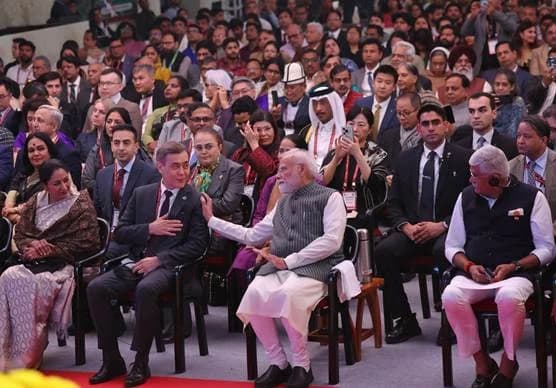
The three-day forum, held from 20 to 22 November, was organised jointly by the Ministry of Culture and the Ministry of External Affairs, with the Indira Gandhi National Centre for the Arts (IGNCA) as knowledge partner. Prime Minister Narendra Modi inaugurated it on 20 November at Purana Qila. The ministry said 116 delegates from 22 countries attended, including four ministers and SCO Secretary General Nurlan Yermekbayev.
What did the participants agree to?
They agreed to a set of non-binding affirmations on cultural cooperation rather than a treaty. The Indraprastha Communiqué, issued in the name of SCO member states and dialogue partners, lists twelve points. Among them:
- Joint UNESCO nominations: identify shared tangible, intangible and documentary heritage and submit joint nominations under UNESCO conventions and programmes.
- Manuscripts and languages: cooperate on digitising, cataloguing, preserving, studying and translating manuscripts, scripts and oral traditions; a digital repository was proposed.
- Technology: use technology, including artificial intelligence, to make heritage more accessible while respecting accuracy, context and the interests of communities and institutions.
- Institutions: link museums, libraries, archives, universities and heritage bodies through joint research, training in conservation and a collaboration platform for cultural institutions of SCO countries.
- Heritage protection: work together against illicit trafficking of cultural property, environmental pressures and natural calamities, and explore a platform for resilience against climate-related disasters.
The document also records India's proposal that the dialogue meet once every two years at a venue to be decided by SCO member states at their summits. The communiqué presents this as India's proposal; it does not state that members have formally adopted it.
What happened over the three days
On the opening day, two exhibitions were shown at Purana Qila: "ASTITVA - The Essence of Our Existence", on the archaeological layers of Delhi, and a "Mahabharat Scroll Pavilion" displaying an illustrated 18th-century Mahabharata scroll. In his address, the Prime Minister said civilisational dialogue could help build peace, understanding and trust, and recalled India's historical links with Central Asia, China, Southeast Asia and the wider Eurasian region, the release said. He suggested digitising manuscripts, joint research and exhibitions, academic exchanges, cultural tourism and greater youth involvement.
On 21 November, the culture minister chaired a session on "Civilisational and Cultural Expressions". The Archaeological Survey of India held a session on artistic and architectural exchanges among SCO nations, covering Bronze Age links, Buddhist art, Silk Route exchanges and Indo-Persian influences. Delegates also visited "The Light and the Lotus: Relics of the Awakened One" exhibition at the Qila Rai Pithora Cultural Complex.
The final day's sessions covered language, literature, script and manuscript traditions, and "Monastic Trails", on religious and philosophical traditions. The ministry said delegates were to visit the Red Fort and watch its light-and-sound show afterwards.
Why it matters
The SCO is better known for security and economic cooperation. This forum, an initiative of the Indian government according to the communiqué, adds a separate track on culture and heritage. Its practical weight will depend on whether members take up the joint UNESCO nominations, the proposed digital repository and the biennial format. No timelines or funding were announced.
Photo source · Press Information Bureau (PIB)