Sarvam co-founder Pratyush Kumar said on 23 November 2026 that the Indian AI start-up's new Token Factory platform, which serves open-weight models from Chinese developers such as DeepSeek alongside Sarvam's own, runs on GPUs the company bought privately and receives no government support. He was responding to questions over whether subsidised computing from India's Rs 10,370-crore IndiaAI Mission was being used to sell foreign models, news agency ANI reported from New Delhi.
What is Sarvam's Token Factory?
Token Factory is a commercial inference service, meaning it runs ready-made AI models for paying customers on Sarvam's computers in India. Sarvam announced it earlier in November in a company blog post. According to MediaNama, its catalogue lists 12 models, six of which the publication counted as coming from Chinese developers including DeepSeek, Moonshot AI and Z.ai, alongside Sarvam's own models and two from Google's Gemma family.
Sarvam says the platform processes more than 450 billion tokens a day, mostly through DeepSeek V4.1 Flash, with 95.7% of prompt tokens served from cache, ANI reported. Introductory prices for that model are Rs 14 per million input tokens and Rs 55 per million output tokens, while an updated in-house model, Sarvam 105B-1711, is priced at Rs 25 per million output tokens.
Why are Sarvam's Chinese models being questioned?
Critics have asked why a company that received IndiaAI Mission support to build Indian models is mainly serving Chinese ones. Sanchit Monga, CEO of US-based RunAnywhere, said Sarvam was "mostly serving Chinese models from India GPUs" and called it "a hosting business", MediaNama reported. Srikanth Lakshmanan, founder of CashlessConsumer, argued that access to GPUs should be spread out to districts rather than centralised, the publication said.
Others defended the move. MediaNama founder Nikhil Pahwa said Sarvam needs to earn revenue and compete in the open market, while Hemant Mohapatra, a partner at Sarvam investor Lightspeed India, described the launch as timely amid a global GPU shortage.
What did Pratyush Kumar say?
In a post on X, Kumar said: "We serve multiple open-weight models on GPUs we have privately procured, without any government support," according to ANI. He said the government did not pay Sarvam directly; under the IndiaAI Mission, about 20 start-ups received subsidised computing with a 40% discount on GPU costs, and that money went to GPU cloud providers. Sarvam used that access to train its Sarvam 105B model from scratch and later released it as an open-weight model, he said.
Kumar also said that building inference capacity does not conflict with training Sarvam's own models, and argued that India "consumes a few trillion tokens a day and imports the majority of them". According to MediaNama, he has said the company's access to the subsidised IndiaAI GPUs ended in March 2026, and Sarvam's FAQ states that requests are processed on Sarvam-run GPUs in India and are not forwarded to the original developers' overseas servers.
What is confirmed and what is not
Sarvam's account of how the subsidy was used comes from the company. Neither ANI nor MediaNama reported any response from the Ministry of Electronics and Information Technology or the IndiaAI Mission, and the terms of Sarvam's agreement with the government have not been made public in the reports reviewed by MapMyTimes.
Why it matters
The row goes to the heart of how India spends public money on "sovereign" AI. Sarvam says it plans further models for vision, speech and edge devices, and more computing capacity in India. Any official clarification from the IndiaAI Mission on how subsidised compute may be used would be the next development to watch. The debate comes as global tech firms court Indian AI start-ups, such as through Google's new Momentum programme.
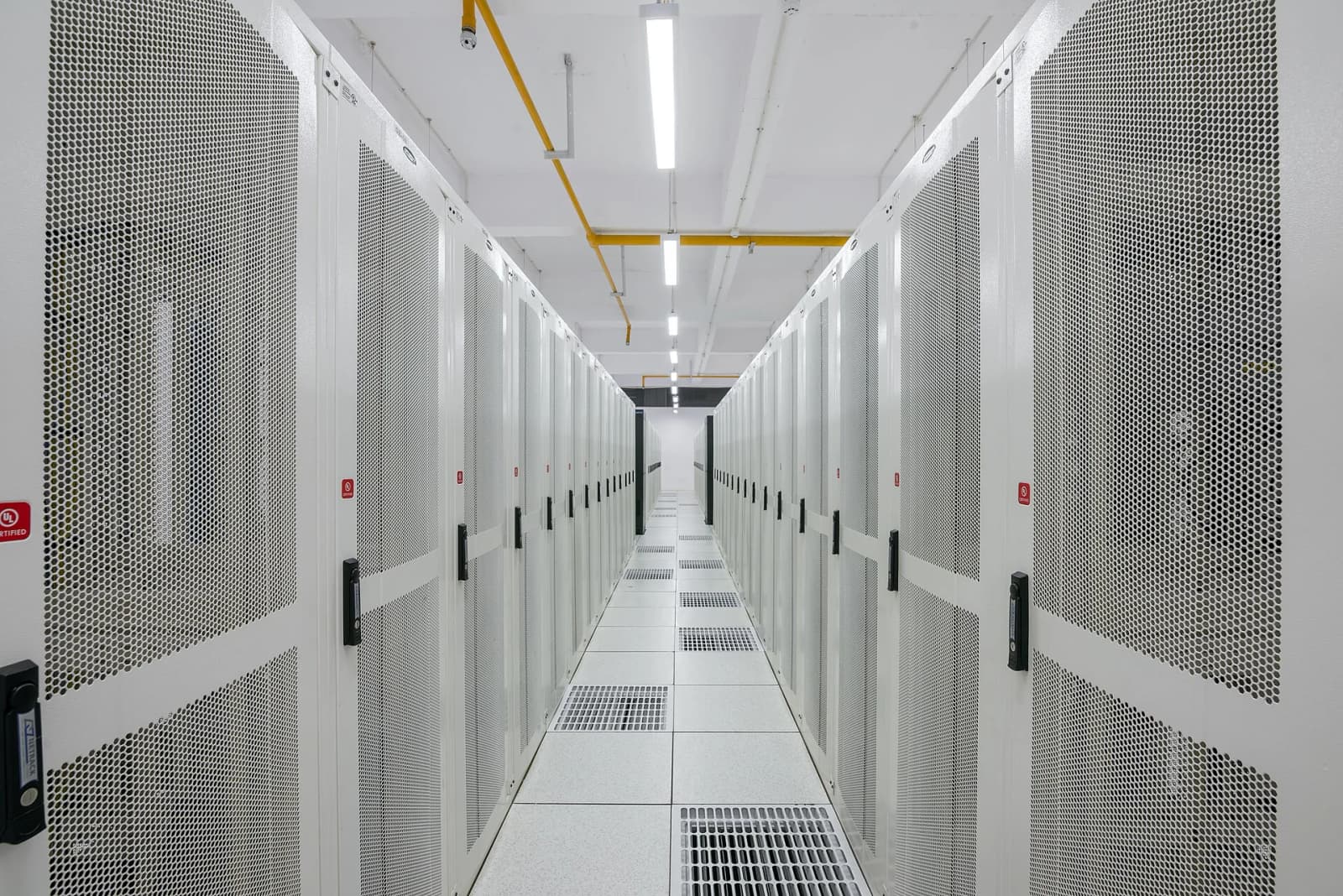
Photo source · PiDatacenters, CC BY-SA 4.0