The ice fields near the summit of Puncak Jaya in Indonesia, among the few places close to the equator that have held ice all year round, have shrunk to scattered patches that no longer behave like glaciers, according to a satellite image comparison published by NASA's Earth Observatory on 16 November 2026.
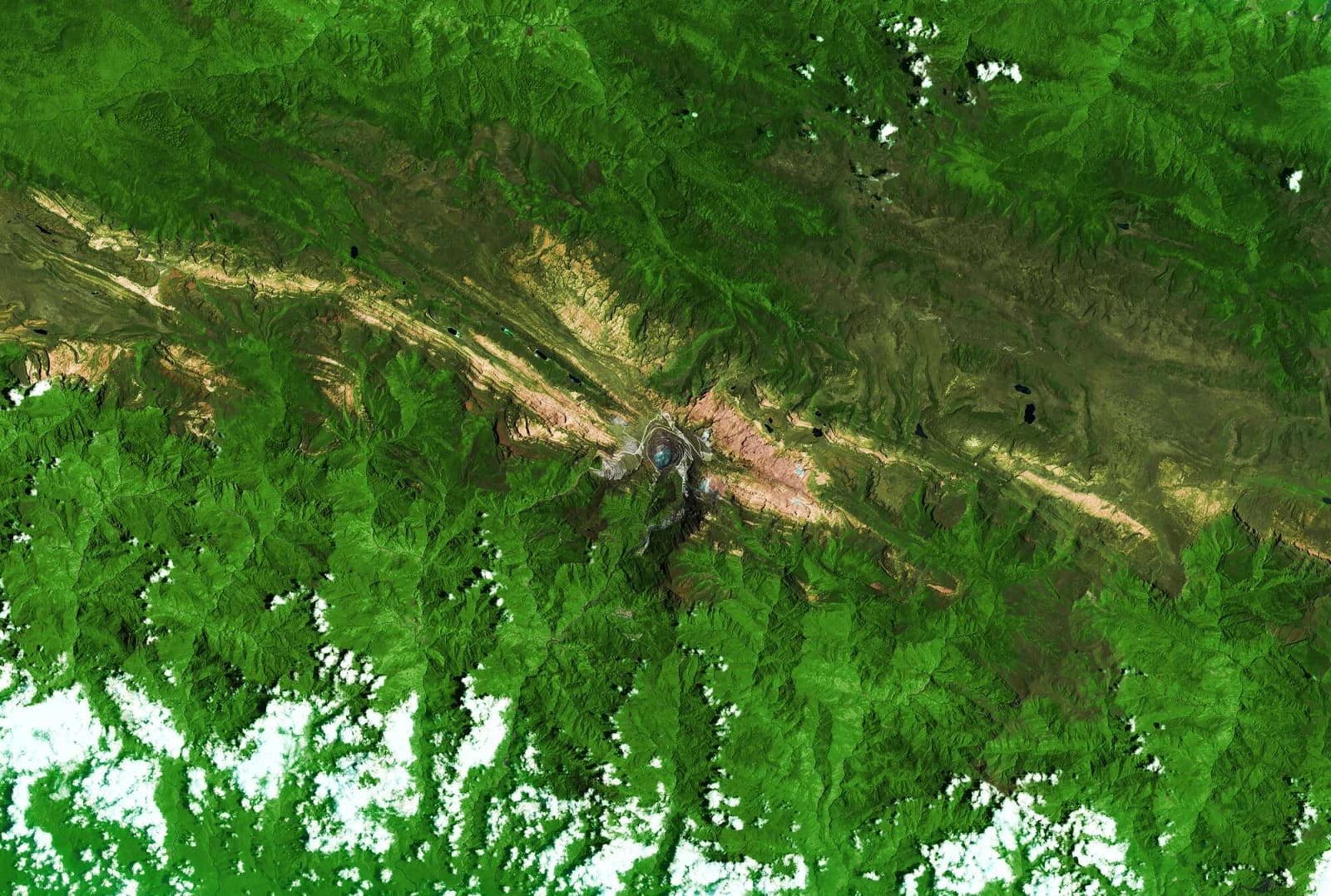
The pair of false-colour images of the Sudirman Range on the island of New Guinea was acquired 38 years apart: the first by the Thematic Mapper on Landsat 5 on 3 November 1988 and the second by the Operational Land Imager on Landsat 9 on 19 October 2026. Ice shows up in light blue and bare rock in brown. In the older image ice caps several of the highest ridges; in the new one only a few small fragments are left.
From 4.31 sq km to about 0.09 sq km
NASA cited Donaldi Permana, a climate scientist at Indonesia's Agency for Meteorology, Climatology and Geophysics (BMKG), for the measurements. In 1988 the glaciers covered about 4.31 square kilometres. By September 2025, satellite and aerial data showed roughly 0.09 square kilometres remaining, which NASA described as about a dozen soccer fields and roughly 2 per cent of the 1988 extent.
The ice has also become much thinner. At the main monitoring site on the East Northwall Firn, thickness fell from 32 metres in 2010 to 4 metres in 2023, Permana told the Earth Observatory. By November 2024 the ice at that site had disappeared.
"While small ice remnants persist in high-altitude crevices around Puncak Jaya, their functional life as active glaciers is effectively over," Permana said in the NASA article.
Why the remaining ice no longer counts as a glacier
The Earth Observatory explained that a body of ice is generally called a glacier only if it is thick enough to flow downhill under its own weight and has a zone where snow builds up faster than it melts. The ice left on Puncak Jaya has thinned and broken into small, stagnant pieces that no longer flow.
Fragmentation makes matters worse, the article said, because each new piece has more exposed edges where melting can occur. Snow still falls in the area but does not survive long enough on the newly bare rock to turn into fresh ice.
"It's a house of cards problem," Chris Shuman, a retired University of Maryland glaciologist who has followed these glaciers in satellite imagery, told the Earth Observatory. "Once this process gets going, there's really no turning back."
The El Niño effect
According to NASA, the range sits in the tropics next to the largest expanse of warm ocean water on Earth, so its glaciers exist close to the warmest conditions in which year-round ice can survive. Scientists have described them, along with tropical ice in Venezuela, Peru and on Tanzania's Kilimanjaro, as high-altitude "canaries in the coal mine".
El Niño years have been especially damaging. As the air warms, the freezing level climbs above the summit and precipitation arrives as rain rather than snow, leaving darker surfaces that absorb more heat. During the 2015-16 El Niño the ice thinned about five times faster than usual, losing roughly 5.3 metres in a single year, the article said; the 2023-24 episode brought thinning of about 2 to 4 metres a year.
What happens next
Recent satellite studies suggest the main ice areas could vanish completely around 2030, NASA said. Permana noted that BMKG's estimates point to a much earlier disappearance, hastened by the current El Niño. An aerial survey planned for December is expected to give an estimate of how much ice is left in 2026, he said.
PS · NASA Earth Observatory