Update (15 November 2026, 20:45 IST): The rally took place on Sunday afternoon. Mikuláš Minář, chair of the organising group Million Moments for Democracy, put the crowd on Letná Plain at 350,000 to 450,000, the Czech News Agency (ČTK) reported. Prague police said they do not publish crowd figures. This article, first published as a preview, has been revised to report what happened.
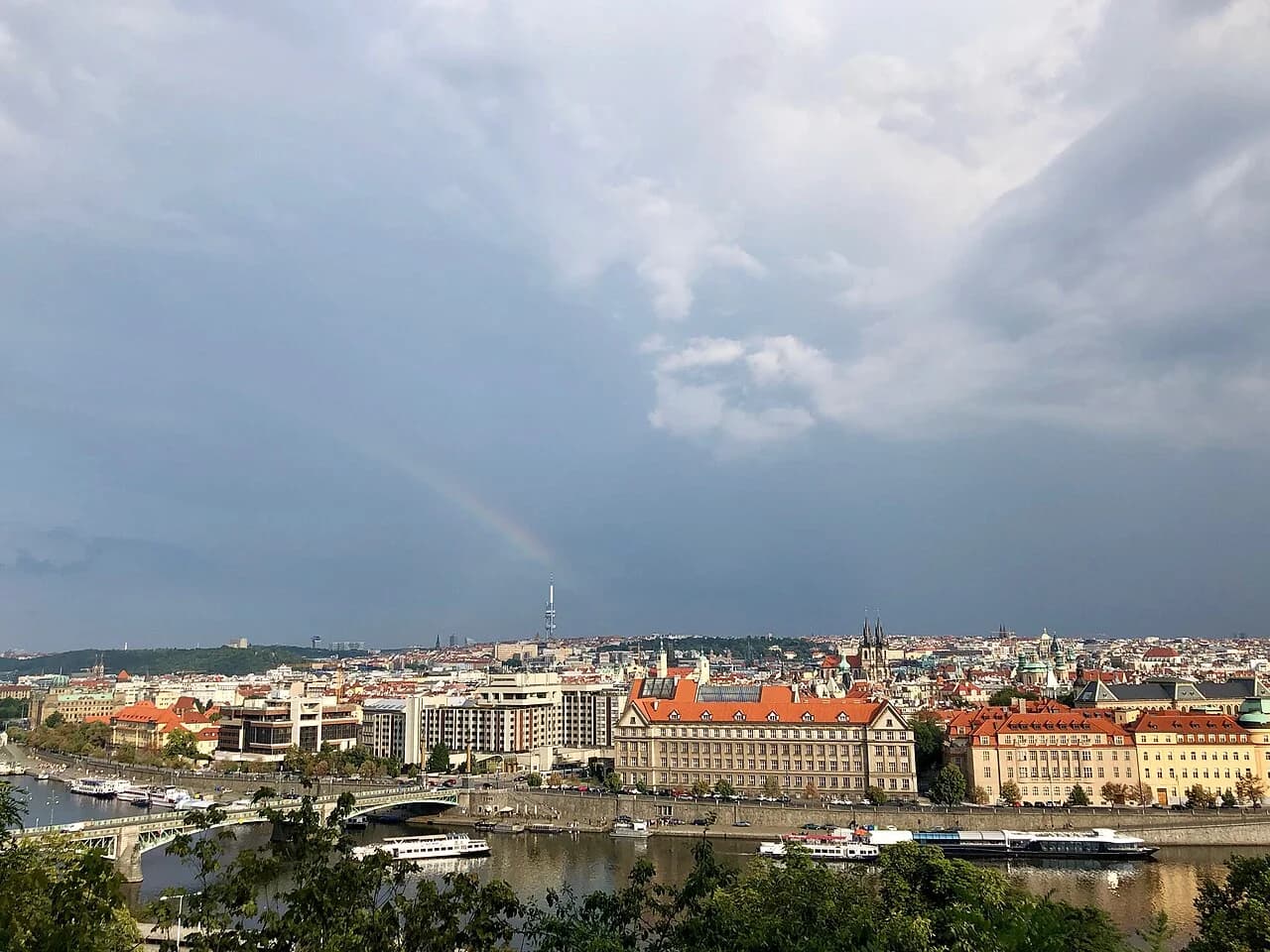
A huge crowd gathered on Prague's Letná Plain on Sunday, 15 November, to oppose a government plan to abolish the licence fees that fund Czech Television and Czech Radio. Organisers estimated attendance at 350,000 to 450,000, which, if confirmed, would make it the largest demonstration in the Czech Republic since the end of 1989, according to ČTK.
The rally, called "Letná against 4:36", began at 2 pm and was organised by the civic group Million Moments for Democracy. The name refers to 4:36 am on 24 October, when the governing coalition pushed the broadcasters' funding bill through its first reading in parliament. Before the event, organisers had told The Guardian they expected 400,000 to 600,000 people.
A packed plain and crowded metro
Shortly after the start, the organisers said every sector of the plain was full, and others stood in the neighbouring Letná park, some of them in trees, Czech Television's news site ČT24 reported. Prague's public transport operator had to regulate metro traffic because some stations were overcrowded. No violent incidents were reported.
Police spokesperson Eva Kropáčová told ČTK that the police do not publish attendance figures and would not do so for this event. Minář said the turnout was bigger than at a March demonstration, which organisers had estimated at 200,000 to 250,000.
What the speakers demanded
"We are here to stand against forceful governing in the style of 4:36," Minář told the crowd, according to ČTK and ČT24. "We won't defeat this reckless government with recklessness; we'll defeat it with determination and calm," he said, urging people not to respond to provocation in the coming weeks.
The organisers called on the government to withdraw the bill ending fee-based funding for the public broadcasters, and to engage in genuine dialogue. They also demanded the removal of Tomio Okamura of the SPD party as Speaker of the Chamber of Deputies and that the SPD be stripped of the defence ministry. Representatives of students, the media, theatres, business, the church and sport also addressed the rally, ČTK reported.
What the government wants to change
Prime Minister Andrej Babiš's coalition, made up of populist, hard-right nationalist and Eurosceptic parties, plans to end the mandatory fees and pay for the two public broadcasters out of the state budget instead. According to The Guardian, the changes would cut the budgets of state television and radio by about 15%. The bill has not yet completed its passage through parliament.
Critics argue that funding the broadcasters directly from the budget would hand ministers more leverage over newsrooms. They point to Slovakia, Hungary, Poland and Serbia, where current or former right-wing populist governments weakened the independence of the media.
Weeks of protest and a broadcaster strike
Sunday's rally followed weeks of demonstrations in towns and cities across the country, as well as a strike by staff at Czech TV and Czech Radio. The European Broadcasting Union, the European Federation of Journalists, Reporters Without Borders and the International Press Institute have all criticised the plan, comparing it with moves by Slovak Prime Minister Robert Fico and Hungary's former premier Viktor Orbán.
Babiš rejects 'nationalisation' charge
Babiš and other coalition politicians reject concerns that the bill threatens the broadcasters' independence and deny any plan to exert political influence over them. In an opinion piece last week he listed what he called the "seven lies" spread by the opposition about the fees, which together amount to 205 koruna a month.
"Anyone who talks about 'nationalisation' [of public media] is deliberately lying," Babiš wrote, calling the criticism "hysterical outbursts". "Under no circumstances will we interfere in editorial work," he added.
Why it matters
The licence-fee fight has become one of the biggest challenges to the Babiš government. Sunday's turnout puts pressure on the coalition as the bill moves through parliament, though the government has so far shown no sign of dropping the plan.