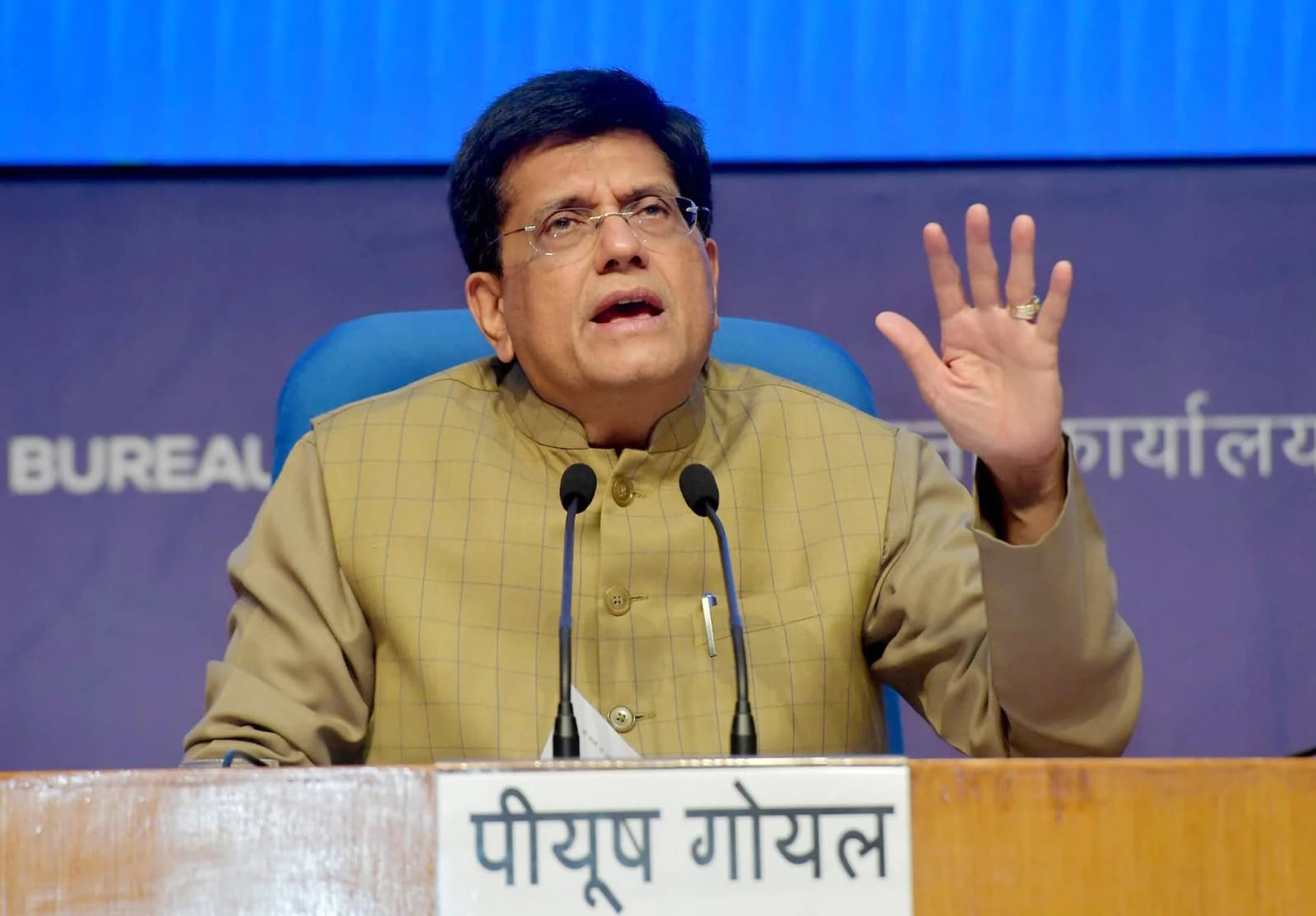
Union Commerce and Industry Minister Piyush Goyal said on 19 November 2026 that India's trade agreements now give its exporters preferential access to markets worth about $70 trillion in GDP, and that this could rise to around $85 trillion, or nearly 76% of global GDP, within the next 12 to 18 months. He was speaking at the valedictory session of the Federation of Indian Chambers of Commerce and Industry (FICCI) Annual General Meeting in New Delhi.
Goyal also told FICCI it could "no longer remain only an Indian chamber" and should turn itself into a global one as it enters its second century, according to a Ministry of Commerce and Industry statement released the same evening.
How much has India's preferential market access grown?
By about $60 trillion in four and a half years, according to the minister. Goyal said India's preferential access to global markets covered economies worth roughly $10 trillion in GDP until a few years ago, and the additional $60 trillion has taken the total to approximately $70 trillion.
With bilateral and multilateral trade talks under way across eight to nine geographies, he said, that figure is expected to reach around $85 trillion over the next year to year and a half. He urged Indian businesses to make use of the openings created by recent free trade agreements (FTAs).
What did Goyal say about Egypt and the EU?
He said discussions have begun to explore a preferential trade agreement or a free trade agreement with Egypt. Referring to his recent visits to Egypt and Italy, Goyal said the forthcoming India–European Union FTA had generated considerable interest among Italian businesses, according to the ministry statement.
Where do exports stand against the $1 trillion target?
India has set a target of $1 trillion in exports for 2026-27, and recorded $480 billion in the first six months of the financial year, Goyal said. That is 48% of the annual goal, with growth of about 17%, according to the statement. He also pointed to record monthly exports of around $90 billion in October.
The minister said the target had been set despite projections of subdued global trade growth, and credited Indian businesses with sustaining export growth amid global conflicts and disruptions. He cited the same April–September export figure at an India–US business event on the same day, which MapMyTimes reported separately.
What does the government want from FICCI?
Goyal asked the chamber to build international partnerships, help transfer technology, promote Indian companies abroad and attract global firms to India for manufacturing, investment and Global Capability Centres (GCCs). He also asked it to support young entrepreneurs in new technologies and to take technology to farms, small businesses and artisan communities, the ministry said.
He recalled that FICCI took shape around 1926–27 on the advice of Mahatma Gandhi to promote Swadeshi and Indian entrepreneurship, and said India must now go further by building capabilities that make the world increasingly dependent on Indian products, services, technologies and talent.
The minister's remarks closed the chamber's centenary AGM, which Prime Minister Narendra Modi also addressed, as MapMyTimes reported.
Why it matters
The $70 trillion and $85 trillion figures are the government's own estimates of the size of partner economies, not of actual trade flows, and the ministry statement did not list which agreements they include. Whether exporters convert wider access into sales will show up in the monthly trade data. With $480 billion recorded in the first half, India needs a faster pace in the second half of the year to reach the $1 trillion target.
Photo source · Ministry of Commerce and Industry (India), GODL-India