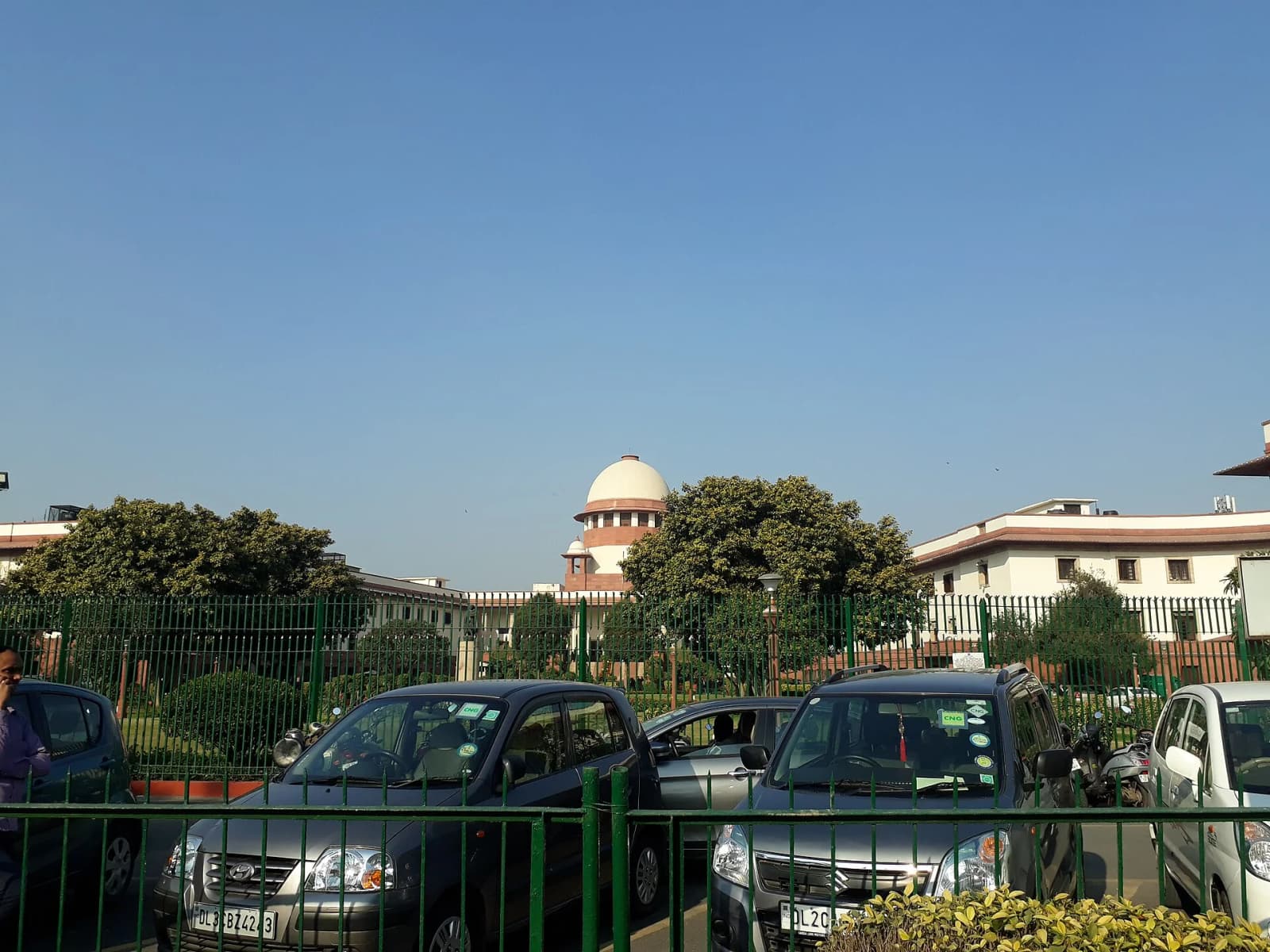
This is a MapMyTimes opinion piece. On 20 November 2026, a Supreme Court Bench of Chief Justice of India Surya Kant, Justice Joymalya Bagchi and Justice V Mohana asked its own Registry to explain why an Enforcement Directorate (ED) appeal had not been effectively heard for nearly three years, as MapMyTimes reported. Our view: the Court was right to treat this as a systemic failure, and the fix should be a transparent tracking system, not only a hunt for whoever dropped the file.
What went wrong in the ED appeal?
A case the Court had ordered to be listed simply did not reach a Bench. According to Bar and Bench, the ED appealed in May 2023 against a Punjab and Haryana High Court order of 30 January 2023 granting anticipatory bail to Raman Singhal in a money laundering case. Notice was issued in September 2023, and later orders directed that the matter be relisted. It still was not effectively heard until this month.
The Chief Justice asked, "Why has this matter not been listed?" When a lawyer suggested Benches may not have been free, he replied, "All Benches are available." Justice Bagchi called the lapse "nothing but institutional lethargy."
By the time the appeal was heard, the Bench was told, the trial had begun and eight witnesses had been examined. The Court disposed of the appeal, leaving the bail undisturbed, and said its order would neither be a precedent nor affect the trial.
Is this a one-off?
No, and that is the point. In September 2025, a Bench of Justices J K Maheshwari and Vijay Bishnoi found that a petition it had directed to be listed once service was complete stayed off the board from May 2022 to September 2025, LiveLaw reported. The Court called it a "disturbing factor" and asked the Registrar (Judicial) to find out who was responsible and report within two weeks. In May 2026, the Court criticised the Registry for not issuing notice to the ED Director in a bail matter despite an order to do so, according to Bar and Bench.
Three episodes in little over a year, each found by a Bench rather than flagged by the system, suggest that judicial orders on listing are not being tracked to completion.
Why it matters beyond one case
A listing delay is not a clerical footnote. In the ED case, the issue before the Court lost much of its practical meaning because the trial moved on while the appeal waited. When a court's own order is not carried out, confidence that filing a case brings a hearing suffers.
The strongest counter-argument
A fair objection is that the Registry is being blamed for pressures it does not control. The Supreme Court handles a very large volume of matters, Benches must prioritise urgent cases, and staff work through lists that change daily. On this view, repeated inquiries risk finding a junior official to blame while the real constraint, too many cases for too few hearing slots, stays untouched. Parties, too, can mention a matter that has gone quiet.
That argument deserves weight, and it is a reason to make sure any inquiry looks at processes rather than only individuals. But it does not explain this case. The Chief Justice himself said Benches were available, and the Court had already directed listing. A system that cannot tell when its own instructions have gone unfulfilled is a process problem, and process problems are fixable.
What should change
We think three steps would help. First, every order directing that a matter be listed should create a dated entry that is automatically flagged to a senior Registry officer if the matter does not appear on a cause list within a set period. Second, the findings of the inquiries ordered in these cases should be summarised publicly, so that the lessons are shared and not just filed. Third, the Court could publish periodic figures on matters where listing orders remain unmet, which would let litigants and the Bar see whether things improve.
The Court deserves credit for calling out its own institution in open court. Turning that candour into a routine safeguard would mean the next such appeal is caught by the system, not by chance.
Photo source · Pinakpani, CC BY-SA 4.0