This is a MapMyTimes opinion piece. It reflects the editorial view of MapMyTimes. On 18 November 2026, the Indian Council of Medical Research's annual antimicrobial resistance report for 2025 made headlines, and MapMyTimes reported that common antibiotics are failing against urinary infections, typhoid and hospital infections across India. The numbers are worrying. What is new in this year's report, though, is where some of them come from: for the first time, smaller hospitals. That should change how India responds.
What does the new report show?
It shows that drug resistance is no longer a problem only of big city intensive care units. The ICMR-AMRSN Annual Report 2025, which the council calls the ninth detailed report of its Antimicrobial Resistance Research and Surveillance Network, covers 1 January to 31 December 2025. Its tertiary-care network grew from 20 to 30 hospitals, which reported 1,13,008 culture-positive isolates. For the first time, 34 secondary-care facilities, including 12 district hospitals, added 20,529 isolates.
In the large hospitals, only 18.4% of E. coli samples were susceptible to cefotaxime and 24.7% to ceftazidime, two widely used cephalosporins. The report notes that susceptibility was low even in outpatient samples, which it reads as a sign that such resistance is widespread in the community. Among Acinetobacter baumannii isolates re-tested by its reference labs, 91.1% resisted carbapenems, a class of antibiotics often kept for the most serious infections. Some 56.8% of Staphylococcus aureus isolates were methicillin-resistant (MRSA), and linezolid resistance was reported in 5.4% of isolates; the report urges care with a drug that also matters for treating drug-resistant tuberculosis.
The secondary-care data are the real warning. E. coli susceptibility to ceftriaxone was 39.8% in the smallest hospitals, 28.0% in mid-sized ones and 11.5% in the largest. Ciprofloxacin susceptibility was 21.0%, 16.5% and 6.2% across the same three groups. Even the smallest hospitals are seeing many infections that common drugs no longer reliably treat.
What should change?
First, the surveillance network should keep expanding into district hospitals, and ICMR should publish findings more often than once a year, broken down by region where the data allow. Doctors in a district hospital need local resistance patterns, not national averages from teaching hospitals. The report itself argues for region-specific guidance.
Second, the weakest link is the laboratory. The report repeatedly ties sound treatment to susceptibility testing, yet many smaller facilities cannot culture a sample and report back quickly. Funding microbiology labs, trained staff and fast reporting in district hospitals would do more for stewardship than any poster campaign.
Third, the report's own blind spots should be fixed. Stool samples made up only 0.9% of isolates, so the picture of bacterial diarrhoea, a major cause of illness in India, is thin. Better data on community infections would make the next report more useful.
What is the case against tighter control?
There is a serious argument the other way, and it deserves a hearing. Many Indians still struggle to get any antibiotic in time, especially in rural areas. Doctors in small clinics often must treat before test results exist, because tests are unavailable or take days. Tougher curbs on prescribing, critics warn, could leave poorer patients without treatment that would have worked. They also point out that hospital data come from sicker patients, and the report's figures may not represent infections in the wider community.
Those concerns are valid, and they are an argument for the order of reform, not against it. Restricting drugs without first building testing capacity would indeed hurt the patients least able to cope. Building laboratories and local data first gives doctors the evidence to prescribe better, and protects access and effectiveness together.
A practical way forward
This week is World AMR Awareness Week, which the World Health Organization marks from 18 to 24 November each year. Awareness matters, but the ICMR report shows what India most needs now: testing and surveillance in the hospitals where most Indians are treated, published often enough to guide doctors. The new district-hospital data are a good start. The Centre and the states should build on them with budgets, staff and timetables that the public can track.
This article is an opinion on public policy and is not medical advice. Decisions about any treatment should be made with a qualified doctor.
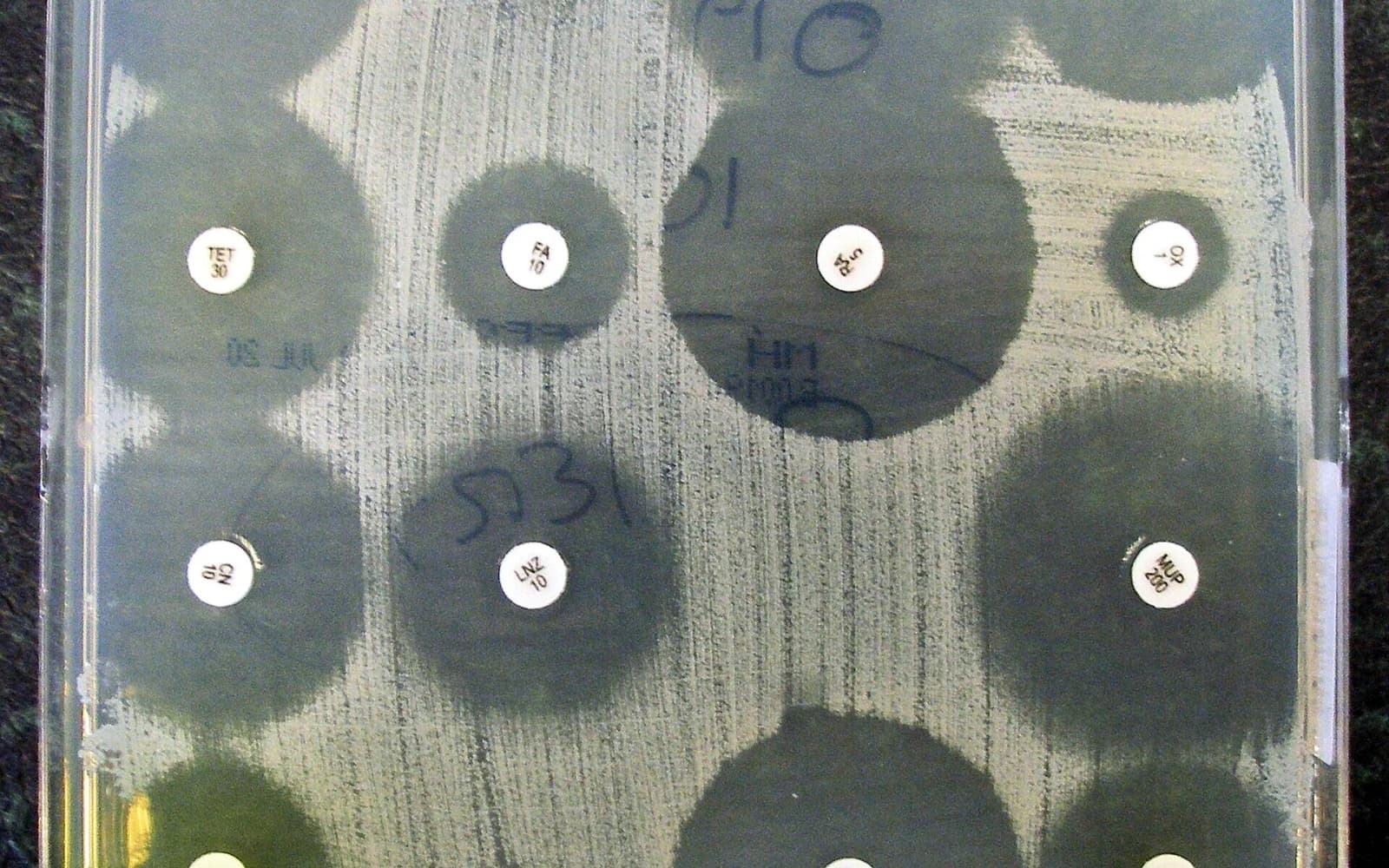
Photo source · Graham Beards (cropped), CC BY-SA 4.0