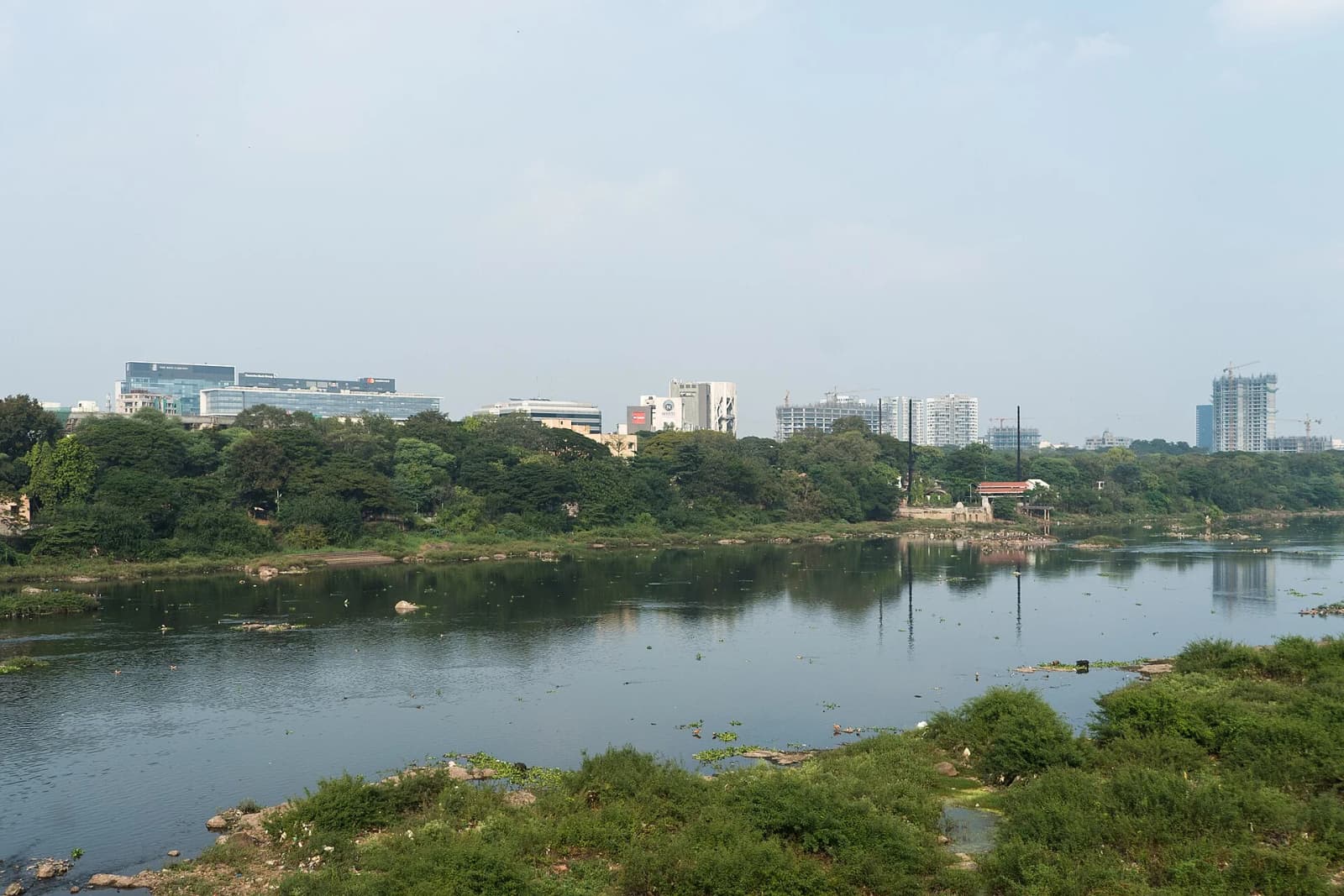
Union Jal Shakti Minister C R Patil on 19 November 2026 reviewed the project to clean up the Mula-Mutha river in Pune, Maharashtra, and told officials to keep construction and maintenance costs of new sewage treatment plants low while finishing work on time, according to a Press Information Bureau release issued from Pune that evening.
The meeting was held at the Central Water and Power Research Station (CWPRS) in Khadakwasla, Pune. It was attended by Union Minister of State for Cooperation and Civil Aviation Murlidhar Mohol, Union Minister of State for Jal Shakti Raj Bhushan Choudhary, Pune Mayor Manjushri Nagpure, Pune Municipal Commissioner Naval Kishore Ram and Pawan Kumar, Joint Secretary of the National River Conservation Directorate (NRCD) in the Jal Shakti Ministry, among others.
What is the Mula-Mutha project?
It is a river pollution abatement project for the Mula-Mutha in Pune, run under the Centre's National River Conservation Plan, which aims to cut the amount of untreated sewage reaching the river. The release refers to it as PARMM, short for Pollution Abatement of River Mula-Mutha at Pune.
Under the project, 11 sewage treatment plants (STPs) with a combined capacity of 396 million litres a day (MLD) are being built. Additional Municipal Commissioner Pavneet Kaur told the meeting that five of them, with 111 MLD capacity, are complete and work on the rest is in progress.
How much of Pune's sewage is treated today?
Only about 60% of it, according to the figures presented. Commissioner Naval Kishore Ram said the city generates about 980 MLD of sewage every day, while the Pune Municipal Corporation currently has capacity to treat 591 MLD.
To close the gap, the corporation plans new treatment plants with a total capacity of 535 MLD, funded through the Centre's Urban Challenge Fund, the AMRUT scheme, the hybrid annuity model and the corporation's own funds. The commissioner said the project aims to add 285 MLD of treatment capacity by March 2027.
What did the minister ask for?
Patil asked for details of construction costs and operation and maintenance spending on the STPs. Citing projects carried out under the Namami Gange programme, he said the plants should be planned so that building costs stay economical and steps are taken to reduce upkeep expenses.
He directed that tenders and contracts for the plants should include replacement and upgrading of mechanical machinery and equipment, as needed, over a seven-year period. He also suggested incentive provisions in tenders to ensure quality of work and completion within deadlines.
The meeting also reviewed the sewer network, technical difficulties, monitoring through SCADA systems, GIS mapping, and public awareness efforts such as river festivals organised by the corporation.
What did the ministers see at Vadgaon?
After the meeting, Patil and other officials inspected the 26 MLD sewage treatment plant at Vadgaon. The release says the minister was satisfied with the quality of the treated water and said it could be reused.
He said planning was needed to use treated water for gardens, construction, green areas and other non-drinking purposes, which would reduce dependence on drinking water supplies.
Why it matters
The release says the projects, once implemented, will reduce the untreated sewage released into the Mula-Mutha and allow treated water to be reused. Mohol said effective implementation would help reduce pollution and that work to rejuvenate the river would also be taken up. Mayor Nagpure said stopping pollution and reviving the river was important for the city and that the corporation was committed to it.
What happens next?
All the STPs except the one at Botanical Garden are planned to be completed by March 2027, and sewer line work is targeted for completion by October 2027, Kaur said. The release also notes plans to generate power using gas engines at the Bhairoba STP.
Photo source · Alexey Komarov, CC BY-SA 4.0