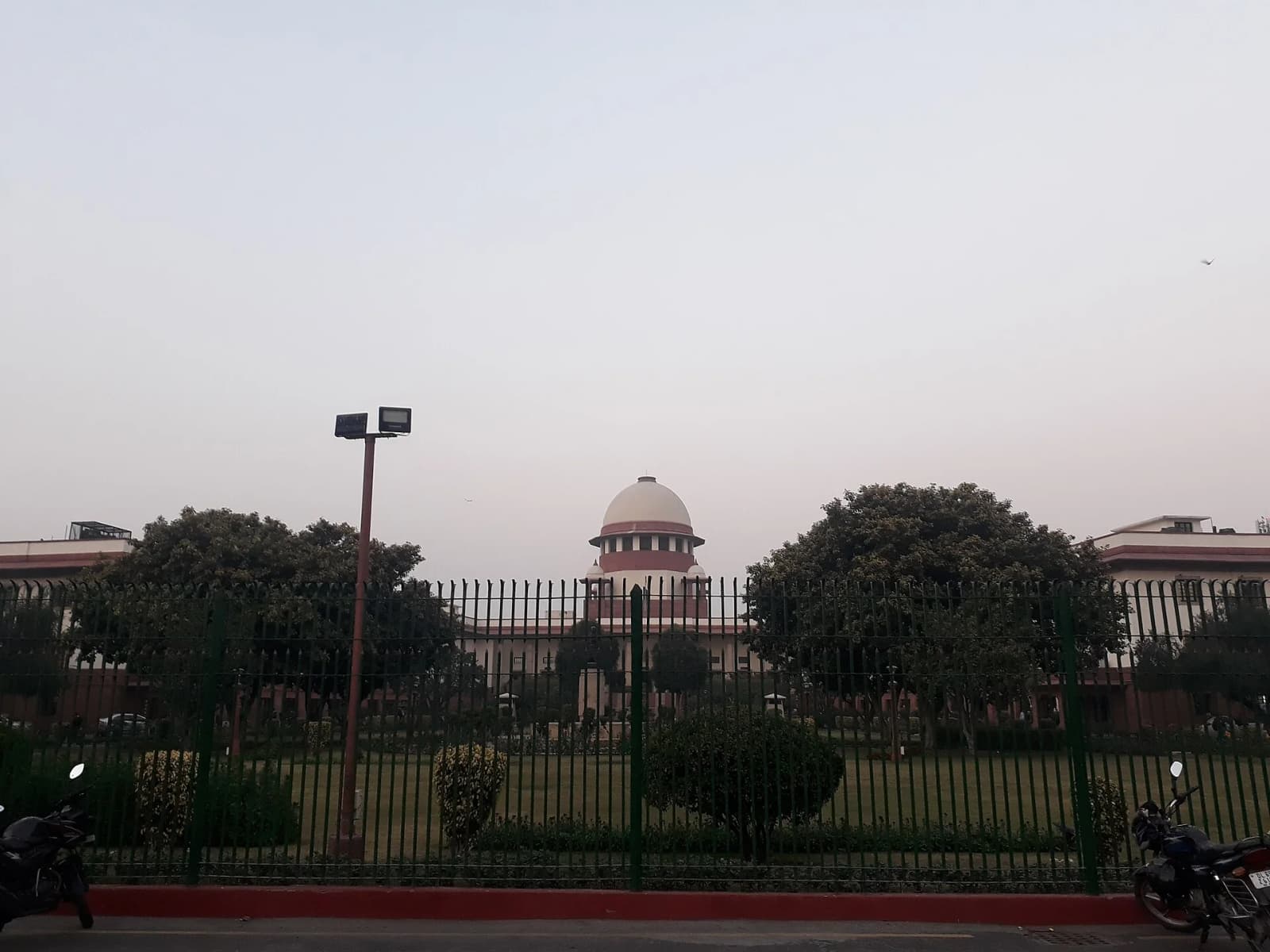
The Supreme Court of India on 19 November 2026 refused to extend to 2026 law graduates the "deemed" one year of Bar practice it had earlier granted to aspirants for the post of Civil Judge (Junior Division), holding that fresh graduates must first gain real experience at the Bar. A bench of Chief Justice of India (CJI) Surya Kant, Justice Joymalya Bagchi and Justice V Mohana was hearing a challenge to an Andhra Pradesh High Court ruling, LiveLaw reported.
What was the case about?
The petition arose from the 25 September 2026 notification for recruitment to 119 posts of Civil Judge (Junior Division) in Andhra Pradesh, according to Verdictum. The notification allowed only those who had obtained their law degree more than a year before it was issued, which shut out candidates who graduated, or secured provisional enrolment with a State Bar Council, within that year.
A group of such 2026 graduates went to the High Court arguing that all law graduates were eligible, whether or not a year had passed since graduation. The High Court dismissed their pleas. It held that the Supreme Court had not waived the one year of practice itself, and that the only one-time relief was that candidates who had completed that year need not produce a separate Certificate of Practice for it. The case before the Supreme Court is titled Satyala Anjanapriya v. High Court of Andhra Pradesh at Amaravati.
What is the 'deemed practice' benefit?
It is a transitional concession created in the Bhumika Trust v. Union of India case. In May 2025, the Supreme Court had made three years of legal practice mandatory for entry-level judicial posts. In August 2026, while refusing to review that ruling, it cut the requirement to one year of practice for recruitment notifications issued from 1 April 2027, followed by one year of training at a judicial academy and a one-year clerkship under judges after selection.
For notifications issued in the transition window from 20 May 2025 to 31 March 2027, the court waived the practice requirement. Candidates selected in this window are to serve first as trainee judicial officers for a year and then complete a one-year structured clerkship, LiveLaw reported.
What did the Chief Justice say?
Senior Advocate Pinky Anand, appearing for the petitioner, asked the bench to extend the benefit to 2026 graduates, pointing to the distinction the court had drawn in Bhumika Trust for fresh graduates. CJI Surya Kant asked how newly enrolled graduates of 2026 could be made eligible. He explained that more than a year had passed between the original 2025 judgment and the revised ruling of August 2026, so the court presumed that 2025 graduates had spent that year working in law offices, chambers and courts, and treated it as practice. "You are a 2026 graduate. Where is the one-year practice?" he said, as quoted by Verdictum.
The bench added that these were young graduates who should be allowed to work and gain experience at the Bar, and said the court had already done what it could to encourage them, news agency PTI reported via ThePrint.
What does it mean for judicial aspirants?
For the Andhra Pradesh recruitment, the High Court's cut-off stands, so 2026 graduates who had not completed a year since graduation or enrolment by the notification date remain outside it. More broadly, the hearing signals that the court will not stretch the deemed-practice relief beyond the 2025 cohort it was designed for. Reports did not specify the exact form of the final order, and the written order was not yet available.
Photo source · Pinakpani, CC BY-SA 4.0