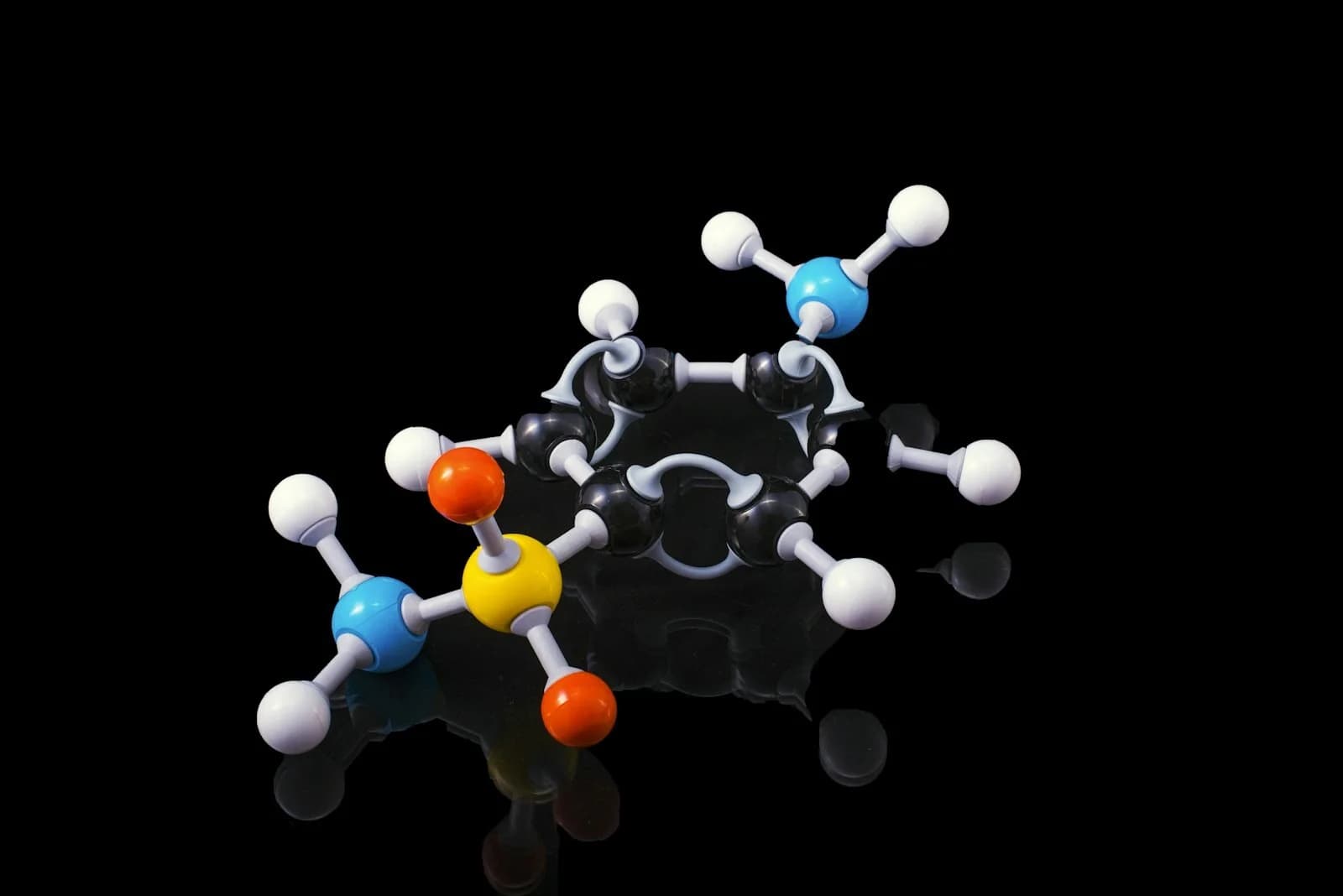
OpenAI on Friday, 20 November 2026, released MedChemBench, a new test that measures how well artificial intelligence models reason through problems from medicinal chemistry, the science of designing and improving drug molecules. The company said its newest model, GPT-6.2 Astra, earned 84.5% of the available credit at its "xhigh" reasoning setting, but scored only about half the credit on two of the hardest skills: choosing between candidate compounds and predicting their numerical properties.
What is MedChemBench?
MedChemBench is a set of 99 problems built from 117 published research papers and patents, covering 761 distinct molecular structures. Instead of asking quiz-style questions, it usually hands the model the information that researchers had at a particular point in a real drug-discovery programme and asks it to reason forward from there.
The problems fall into four groups, according to OpenAI:
- Molecular structures: reconstructing molecules with the correct connections between atoms and the correct three-dimensional arrangement (stereochemistry).
- Scientific reasoning: explaining results from the evidence provided, such as why one compound was picked over another.
- Ranking and selection: choosing or ranking compounds to meet stated requirements.
- Property prediction: matching reported numerical values and categories, including measured and calculated properties.
Predictions earn partial credit depending on how close they come to measured values, and each category has its own scoring rules. The full method is set out in an accompanying research paper.
How did the models score?
OpenAI tested eleven of its models at different reasoning-effort settings. At the shared "xhigh" setting, the results reported were:
- GPT-6.2 Astra: 84.5%
- GPT-6 Astra: 83.3% (rising to 83.8% at the higher "max" setting)
- GPT-6.1 Sol: 82.0%
- GPT-6.1 Terra: 75.1%
- GPT-5.6 Sol: 58.2%
The jump from GPT-5.6 Sol to the GPT-6 family is the clearest pattern in the table, and OpenAI said higher reasoning settings generally improved scores. The strength was uneven, though. On reconstructing molecular structures, Astra earned 95.4% of the credit, but on compound selection and numerical property prediction it earned only about half.
Why does it matter?
Drug discovery depends on many rounds of small decisions: which molecule to make next, which to drop, and whether a promising compound might, in OpenAI's words, be "poorly absorbed or break down too quickly in the body." A benchmark tied to real research decisions gives drug companies and academic labs a way to judge whether AI tools are ready to help with that work, rather than just answering textbook chemistry questions. OpenAI described the benchmark as "one step towards helping scientists develop better medicines."
The weak spots matter too. Choosing the right compound and predicting its properties are exactly the steps where mistakes are expensive, so the results suggest the models are not yet a substitute for laboratory measurement or for chemists' judgement.
What are the limits?
OpenAI listed several caveats. The models answered each problem in a single attempt, with no tools, no feedback and no new experiments, which is unlike how chemists actually work. Because the problems come from published papers and patents, OpenAI said it cannot rule out that the models saw the source material during training. The announcement page also does not report a comparison with human experts, and it does not say whether the dataset or code will be released publicly. All scores come from OpenAI's own testing of its own models and have not been independently reproduced.
What next?
The release adds to a wave of AI-for-science claims from leading labs this month, at a time when investors are reassessing AI valuations, as seen in the sharp fall in Asian tech stocks on 20 November. Whether MedChemBench becomes a widely used yardstick will depend on other model developers and independent researchers adopting it and testing their own systems against it.